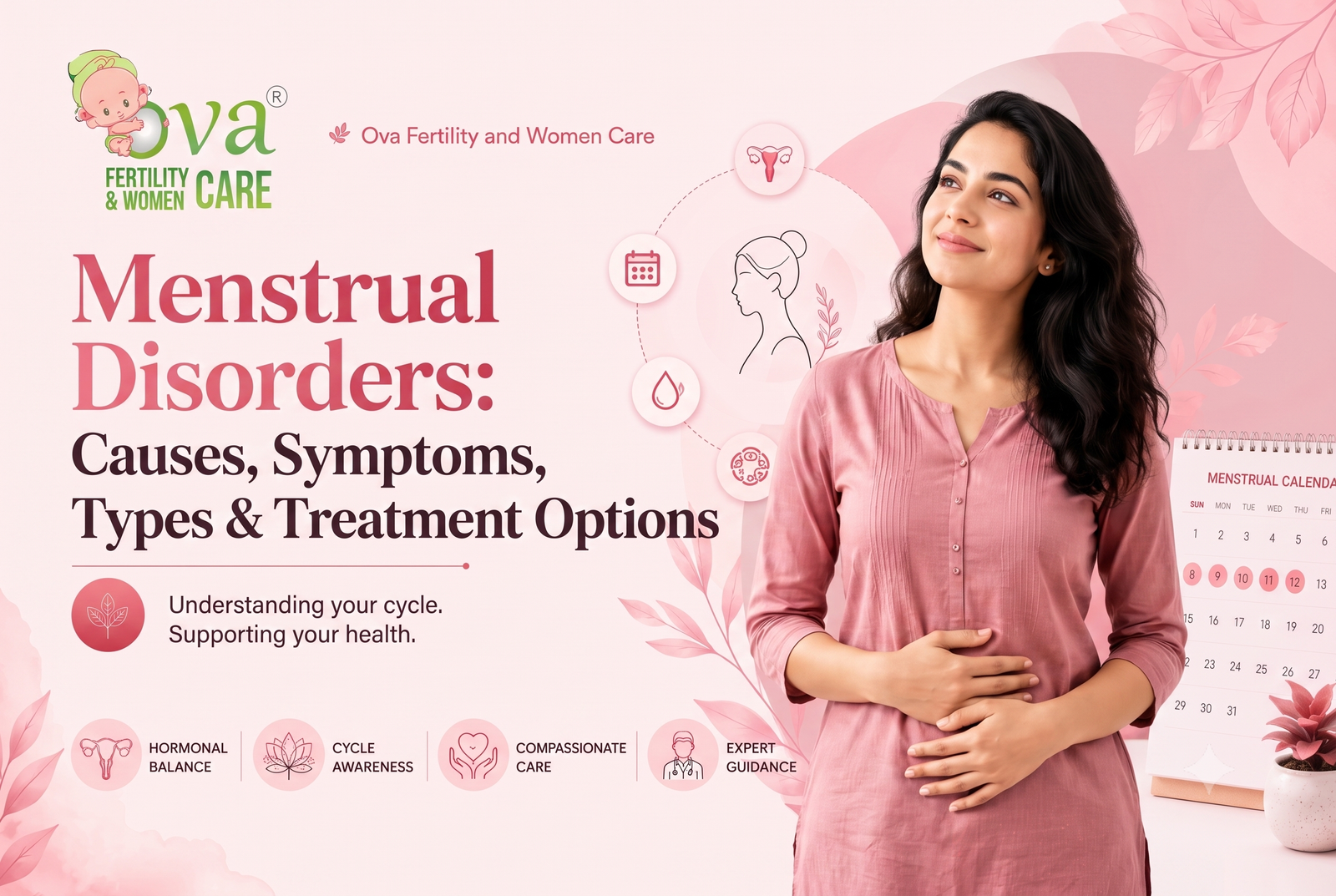


Menstrual disorders are very common, but many women still avoid talking about them. Some women quietly manage heavy bleeding every month. Some feel severe cramps and think it is “normal period pain.” Some miss periods for months and keep waiting for the cycle to settle on its own. But periods are not just a monthly routine. They are an important sign of a woman’s hormonal, reproductive, and overall health.
A normal period pattern can be different for every woman. One woman may get her period every 28 days, while another may have a 32-day cycle. Some may bleed for three days, while others may bleed for five to seven days. What matters most is your usual pattern. If your cycle suddenly becomes irregular, very painful, too heavy, too light, or absent for a long time, your body may be trying to tell you something.
At Ova Fertility and Women Care, menstrual health is seen as an important part of women’s care. Period problems may look small at first, but they can be connected with PCOS, hormonal imbalance, thyroid issues, fibroids, endometriosis, fertility concerns, adolescent health, or menopause-related changes. With the right diagnosis and timely care, most menstrual problems can be managed well.
This blog will help you understand menstrual disorders in simple language — what they are, why they happen, when to worry, and what treatment options may be available.
What Are Menstrual Disorders?
Menstrual disorders are conditions that affect the normal menstrual cycle. These problems may change the timing, flow, pain level, or regularity of periods.
In simple words, menstrual disorders may include:
- Irregular periods
- Heavy menstrual bleeding
- Painful periods
- Missed periods
- Very light periods
- Bleeding between periods
- Periods lasting longer than usual
- Bleeding after menopause
- PMS symptoms that affect daily life
A period problem may happen once in a while due to stress, travel, lack of sleep, sudden weight change, or illness. But if the problem keeps repeating, becomes severe, or affects your routine, it is better to consult a gynecologist.
Many women delay treatment because they feel shy, scared, or unsure whether their symptoms are serious. But period problems are medical concerns, not something to feel embarrassed about.
Why Menstrual Health Matters
Your menstrual cycle is controlled by hormones, ovaries, uterus, brain signals, thyroid function, lifestyle, and general health. So, when periods become irregular or painful, it may not be just a “period issue.” It may be linked with a deeper health concern.
Healthy periods can indicate that ovulation is happening properly, hormones are balanced, and the reproductive system is working well. On the other hand, menstrual disorders may sometimes point toward:
- Hormonal imbalance
- PCOS or PCOD
- Thyroid problems
- Uterine fibroids
- Endometriosis
- Adenomyosis
- Pelvic infection
- Stress-related hormonal changes
- Perimenopause
- Fertility-related concerns
This is why menstrual health should not be ignored. A timely check-up can help prevent unnecessary complications and support better reproductive health.
Common Types of Menstrual Disorders
Menstrual disorders do not look the same in every woman. One woman may have regular periods but severe pain. Another may have no pain but very heavy bleeding. Someone else may miss periods for two or three months.
Let’s understand the common types.
1. Irregular Periods
Irregular periods mean your menstrual cycle does not follow a predictable pattern. Your period may come too early, too late, skip months, or vary a lot each time.
Common signs of irregular periods include:
- Periods coming before 21 days
- Periods coming after 35 days
- Missing periods for two or more months
- Flow changing suddenly
- Period dates becoming unpredictable
- Spotting between periods
- Long gaps between cycles
Irregular periods are common during puberty, after childbirth, during breastfeeding, and near menopause. But they can also happen because of PCOS, thyroid imbalance, stress, weight gain, sudden weight loss, or hormonal changes.
If irregular periods happen frequently, it is important to understand whether ovulation is happening properly. This becomes even more important if you are planning pregnancy.
2. Heavy Menstrual Bleeding
Heavy menstrual bleeding means the period flow is more than usual and starts affecting daily life. Some women need to change pads frequently, avoid travelling, wake up at night to change protection, or feel weak after every cycle.
Heavy bleeding may include:
- Soaking pads very quickly
- Passing large blood clots
- Bleeding for more than seven days
- Feeling tired, dizzy, or weak
- Needing double protection
- Avoiding daily activities during periods
- Low hemoglobin or anemia
Heavy bleeding should not be ignored, especially if it happens for many cycles. It may be linked with fibroids, hormonal imbalance, adenomyosis, thyroid issues, polyps, or other uterine conditions.
At Ova Fertility and Women Care, evaluation for such concerns may include clinical examination, ultrasound, blood tests, and further gynecological assessment if required.
3. Painful Periods
Pain during periods is common, but severe pain is not something you should keep tolerating every month.
Mild cramps may happen because the uterus contracts during menstruation. But if the pain is intense, increasing with time, or affecting school, work, sleep, or daily routine, it needs attention.
Painful periods may cause:
- Lower abdominal cramps
- Back pain
- Thigh pain
- Nausea
- Vomiting
- Headache
- Loose motions
- Weakness
- Pain that does not improve with basic care
Severe period pain may be linked with endometriosis, fibroids, adenomyosis, pelvic infection, or other gynecological conditions.
A simple way to understand it is this: if your period pain regularly stops you from living your normal day, it should be evaluated.
4. Missed Periods
A missed period can happen due to pregnancy, stress, excessive exercise, sudden weight loss, PCOS, thyroid imbalance, breastfeeding, or hormonal changes.
Missing one period once in a while may not always be serious. But if periods stop for two to three months or keep becoming delayed, it is better to consult a gynecologist.
Missed periods may be linked with:
- Pregnancy
- PCOS
- Thyroid disorders
- Excessive stress
- Low body weight
- Obesity
- Hormonal imbalance
- Ovarian function changes
- Certain medicines
For unmarried girls and young women, missed periods can feel stressful or embarrassing to discuss. But gynecologists handle these concerns professionally and confidentially. It is always better to ask than to keep worrying silently.
5. Bleeding Between Periods
Bleeding between periods is also called spotting or intermenstrual bleeding. It may appear as light brown spotting, pink discharge, or fresh bleeding before the next period.
Possible causes may include:
- Hormonal changes
- Ovulation-related spotting
- Contraceptive-related changes
- Cervical infection
- Polyps
- Fibroids
- Endometrial changes
- Pelvic infection
Occasional spotting may not always be serious, but repeated spotting should be checked. Bleeding after intercourse or bleeding after menopause should always be evaluated by a gynecologist.
6. Very Light Periods
Some women notice that their period flow becomes much lighter than usual. It may look like spotting instead of proper bleeding.
Very light periods may happen due to:
- Stress
- Low body weight
- Hormonal imbalance
- PCOS
- Thyroid changes
- Perimenopause
- Certain contraceptives
- Poor ovulation
If your periods have always been light and your health is otherwise normal, it may not be a major concern. But if your usual flow suddenly becomes very light for several cycles, it is worth checking.
7. PMS and Severe Mood Changes
Many women experience mild mood changes, breast tenderness, bloating, cravings, or irritability before periods. But if symptoms become intense and affect daily life, relationships, work, or emotional health, they should not be ignored.
PMS symptoms may include:
- Mood swings
- Irritability
- Anxiety
- Low mood
- Bloating
- Breast pain
- Food cravings
- Headache
- Sleep disturbance
- Tiredness
Hormonal changes, stress, sleep quality, diet, and lifestyle can all play a role. A gynecologist can help identify whether symptoms are part of PMS or need further care.
Causes of Menstrual Disorders
There are many possible causes of menstrual disorders. Choosing the right treatment starts with identifying the actual cause behind the condition.That is why self-medication or ignoring the symptoms is not a good idea.
Hormonal Imbalance
Hormones control your menstrual cycle. Estrogen and progesterone help regulate ovulation and the growth of the uterine lining. If these hormones are not balanced, periods may become irregular, heavy, delayed, painful, or absent.
Hormonal imbalance may happen due to:
- PCOS
- Thyroid disorders
- Stress
- Weight changes
- Poor sleep
- Excessive exercise
- Perimenopause
- Certain medicines
Hormonal imbalance is one of the most common reasons behind menstrual problems.
PCOS or PCOD
PCOS is a common condition that affects ovulation and hormone balance. Women with PCOS may not ovulate regularly, which can lead to irregular periods or delayed periods.
Common signs of PCOS may include:
- Irregular periods
- Weight gain
- Acne
- Facial hair growth
- Hair thinning
- Oily skin
- Difficulty losing weight
- Difficulty conceiving
- Darkening of skin around neck or underarms
PCOS can affect each woman differently, and the symptoms may vary from person to person.Some women with PCOS are overweight, while others are lean. Some may have acne and facial hair, while others may mainly have irregular periods.
At Ova Fertility and Women Care, PCOS-related menstrual concerns can be evaluated with proper history, ultrasound, hormone assessment, lifestyle guidance, and fertility planning if needed.
Thyroid Problems
The thyroid gland plays an important role in metabolism and hormone balance. If thyroid levels are too high or too low, periods may become irregular, heavy, light, or delayed.
Thyroid-related symptoms may include:
- Weight gain or weight loss
- Tiredness
- Hair fall
- Mood changes
- Dry skin
- Palpitations
- Irregular cycles
- Heavy bleeding
A simple blood test can help detect thyroid imbalance. Once treated, menstrual cycles may improve in many cases.
Fibroids
Fibroids are non-cancerous growths in the uterus. They are common in women of reproductive age. Some fibroids do not cause any symptoms, while others can cause heavy bleeding, pain, pressure, or fertility concerns.
Fibroid symptoms may include:
- Heavy periods
- Prolonged bleeding
- Pelvic heaviness
- Frequent urination
- Back pain
- Pain during periods
- Difficulty conceiving in some cases
Treatment depends on the size, number, location of fibroids, symptoms, age, and pregnancy plans.
Endometriosis
Endometriosis is a condition where tissue similar to the uterine lining grows outside the uterus. It can cause severe pain and may also affect fertility.
Common symptoms may include:
- Severe period pain
- Pelvic pain
- Pain during intercourse
- Pain during bowel movements during periods
- Heavy bleeding
- Difficulty conceiving
Many women keep tolerating endometriosis pain for years because they are told period pain is normal. But severe, repeated pain needs medical care.
Adenomyosis
Adenomyosis happens when tissue similar to the uterine lining grows into the muscle wall of the uterus. It may cause painful periods, heavy bleeding, and pelvic discomfort.
It is more common in women in their 30s and 40s, but symptoms can vary. Ultrasound and clinical evaluation can help in diagnosis.
Pelvic Infections
Pelvic infections can affect the uterus, fallopian tubes, ovaries, or surrounding pelvic organs. They may cause irregular bleeding, pelvic pain, abnormal discharge, fever, or pain during intercourse.
Untreated infections may affect reproductive health, so early diagnosis and treatment are important.
Stress and Lifestyle Factors
Stress can affect the connection between the brain, hormones, and ovaries. This may disturb ovulation and delay periods.
Lifestyle factors that may affect periods include:
- Poor sleep
- High stress
- Crash dieting
- Sudden weight gain
- Sudden weight loss
- Excessive exercise
- Poor nutrition
- Irregular routine
Lifestyle changes alone may not solve every menstrual disorder, but they can support better hormonal health.
Puberty and Adolescent Menstrual Problems
During the first few years after periods start, cycles may be irregular because the body is still adjusting hormonally. However, very heavy bleeding, severe pain, prolonged cycles, or missing periods for many months should be evaluated.
At Ova Fertility and Women Care, adolescent health is part of women’s care. Young girls may need proper guidance about period hygiene, cycle tracking, pain management, anemia prevention, PCOS symptoms, and emotional comfort.
Menopause and Perimenopause-Related Changes
As women approach menopause, periods may become irregular. Flow may become heavier, lighter, shorter, or delayed. This phase is called perimenopause.
However, not every bleeding change should be assumed to be menopause-related. Very heavy bleeding, frequent bleeding, bleeding after intercourse, or bleeding after menopause needs evaluation.
Ova Care also supports women through menopausal health concerns, helping them understand body changes with the right medical guidance.
Symptoms That Need a Gynecologist Consultation
Some period changes can be observed for a short time, but some symptoms should not be ignored.
You should consult a gynecologist if you have:
- Periods that are very irregular
- No periods for three months
- Very heavy bleeding
- Bleeding for more than seven days
- Severe period pain
- Bleeding between periods
- Bleeding after intercourse
- Bleeding after menopause
- Large clots during periods
- Weakness, dizziness, or tiredness
- Pelvic pain even without periods
- Difficulty conceiving
- Repeated delayed periods
- Sudden change in cycle pattern
Early consultation can help detect the cause and avoid unnecessary complications.
How Menstrual Disorders Are Diagnosed
Diagnosis starts with understanding your symptoms properly. A gynecologist may ask about your period dates, flow, pain, clots, pregnancy plans, lifestyle, weight changes, acne, hair growth, stress, and medical history.
You may be asked about:
- Age when periods started
- Cycle length
- Number of bleeding days
- Flow pattern
- Pain level
- Clots
- Spotting between periods
- Last menstrual period
- Pregnancy history
- Contraceptive use
- Weight changes
- Hair growth or acne
- Thyroid history
- Family history
Tests may include:
- Pregnancy test if needed
- Hemoglobin test
- Thyroid profile
- Hormonal tests
- Blood sugar or insulin-related tests
- Pelvic ultrasound
- Infection screening
- Pap smear if required
- Hysteroscopy in selected cases
- Laparoscopy in selected cases
At Ova Fertility and Women Care, services like ultrasound, gynecology, laparoscopy, hysteroscopy, fertility care, and lifestyle support can help in evaluating menstrual and reproductive health concerns properly.
Treatment Options for Menstrual Disorders
Treatment depends on the cause, age, symptoms, fertility plans, and overall health. The treatment for a teenager with irregular periods will be different from the treatment for a woman with fibroids or a woman trying to conceive.
There is no single treatment for all menstrual disorders. The right approach is personalized.
Lifestyle Management
Lifestyle management is often helpful, especially when menstrual problems are linked with PCOS, stress, weight changes, or hormonal imbalance.
Helpful lifestyle steps include:
- Eating balanced meals
- Maintaining a healthy weight
- Avoiding crash diets
- Sleeping properly
- Exercising regularly
- Managing stress
- Reducing processed foods
- Treating anemia
- Following medical advice
Ova Care’s women’s health approach also includes lifestyle management services such as diet, exercise, counselling, and support.
Medical Treatment
Medicines may be suggested depending on the cause of the menstrual disorder.
Treatment may include:
- Pain relief medicines for cramps
- Medicines to reduce heavy bleeding
- Hormonal tablets to regulate cycles
- Progesterone support
- Thyroid medication if thyroid imbalance is present
- Iron supplements for anemia
- Antibiotics if infection is present
- PCOS-related medication if needed
You should not self-medicate for period problems. Medicines should be taken only after proper consultation because the cause can differ from woman to woman.
Hormonal Treatment
Hormonal treatment may be used when periods are irregular, heavy, delayed, or linked with PCOS, endometriosis, or ovulation problems.
The purpose is not only to make periods regular. The real focus is to treat the underlying cause and support long-term reproductive health.
Hormonal treatment may be considered for:
- Irregular cycles
- PCOS-related periods
- Heavy bleeding
- Painful periods
- Endometriosis-related symptoms
- Ovulation-related issues
- Perimenopause-related bleeding changes
The type of hormonal treatment depends on age, symptoms, medical history, and pregnancy plans.
PCOS Treatment
If PCOS is causing menstrual disorders, treatment may include lifestyle changes, weight management, hormonal regulation, acne or hair growth treatment, and fertility planning if required.
For women trying to conceive, treatment may focus on ovulation tracking, ovulation induction, ultrasound monitoring, and fertility support.
PCOS needs long-term management, not just one-time period correction. A proper plan can help improve menstrual health, skin symptoms, weight-related concerns, and fertility outcomes.
Treatment for Heavy Bleeding
Heavy bleeding treatment depends on the cause. If bleeding is due to hormonal imbalance, medicines may help. If fibroids or polyps are present, further treatment may be needed.
Treatment may include:
- Medicines to reduce bleeding
- Hormonal treatment
- Iron correction
- Ultrasound evaluation
- Hysteroscopy if needed
- Fibroid treatment if required
- Further gynecological care based on diagnosis
The important thing is to find the cause instead of repeatedly taking temporary medicines.
Treatment for Painful Periods
Treatment for painful periods depends on whether the pain is primary or linked with another condition like endometriosis, fibroids, adenomyosis, or infection.
Treatment may include:
- Pain relief medicines
- Hormonal treatment
- Lifestyle changes
- Heat therapy and supportive care
- Ultrasound evaluation
- Laparoscopy in selected cases
- Endometriosis management if diagnosed
Severe pain should not be accepted as a monthly routine. Proper care can improve quality of life.
Hysteroscopy for Menstrual Disorders
Hysteroscopy is a procedure that allows the doctor to look inside the uterus using a thin camera. It may be advised if there is abnormal bleeding, suspected polyps, fibroids inside the uterine cavity, repeated pregnancy loss, or fertility-related concerns.
Hysteroscopy may help diagnose and treat certain causes of abnormal uterine bleeding.
Laparoscopy for Menstrual Disorders
Laparoscopy is a less invasive surgical method used to identify and treat selected gynecological problems with small incisions.It may be useful in cases of endometriosis, ovarian cysts, fibroids, pelvic pain, or fertility-related issues.
At Ova Fertility and Women Care, gynecology and endoscopy services include laparoscopy and hysteroscopy, which may be helpful for selected menstrual and reproductive health conditions.
Menstrual Disorders and Fertility
Menstrual health and fertility are closely connected. Regular periods often suggest regular ovulation, but this is not always guaranteed. Irregular, delayed, or absent periods may mean ovulation is not happening every month.
If you are trying to conceive and have irregular periods, it is better to consult early. Waiting for many months without understanding ovulation can delay the right treatment.
Menstrual disorders may affect fertility when linked with:
- PCOS
- Endometriosis
- Fibroids
- Thyroid imbalance
- Poor ovulation
- Low ovarian reserve
- Pelvic infection
- Hormonal imbalance
At Ova Fertility and Women Care, fertility and gynecology services work together, which is helpful because many women first come with irregular periods and later discover that ovulation or fertility needs attention too.
Can Menstrual Disorders Be Prevented?
Not all menstrual disorders can be prevented. Some conditions are hormonal or structural and need medical care. But healthy habits can reduce risk and help maintain better cycle health.
You can support menstrual health by:
- Tracking your cycle
- Eating nutritious food
- Maintaining a healthy weight
- Sleeping well
- Exercising regularly
- Managing stress
- Avoiding self-medication
- Treating thyroid or PCOS early
- Consulting a gynecologist for repeated symptoms
- Not ignoring heavy bleeding or severe pain
Small changes can make a big difference, especially when started early.
Period Tracking: A Simple Habit That Helps
Tracking your period helps you understand your own pattern. It also helps the doctor diagnose problems better.
You can note:
- First day of period
- Number of bleeding days
- Flow level
- Pain level
- Clots
- Spotting
- Mood changes
- Headache or nausea
- Missed period dates
- Any unusual discharge
- Medicines taken
- Pregnancy plans
You do not need anything complicated. A simple calendar or period tracking app can help.
People Also Ask: Are Irregular Periods Always Serious?
No, irregular periods are not always serious. They can happen due to stress, travel, puberty, breastfeeding, or lifestyle changes. But if irregular periods continue for many months, happen with acne or weight gain, or affect fertility planning, they should be checked.
People Also Ask: Can PCOS Cause Menstrual Disorders?
Yes, PCOS is one of the common causes of irregular periods. It can affect ovulation and hormone balance. Women with PCOS may have delayed periods, acne, facial hair growth, weight gain, or difficulty conceiving. Proper diagnosis and treatment can help manage symptoms.
People Also Ask: When Should I Worry About Heavy Periods?
You should consult a gynecologist if your bleeding is very heavy, lasts more than seven days, includes large clots, causes weakness, or affects daily routine. Heavy bleeding can sometimes lead to anemia and should be evaluated.
People Also Ask: Can Severe Period Pain Impact Fertility?
Painful periods do not always affect fertility. But severe pain may sometimes be linked with endometriosis, fibroids, or pelvic infection, which can affect fertility in some women. If pain is intense or increasing, a gynecologist consultation is important.
People Also Ask: Can Lifestyle Changes Improve Menstrual Disorders?
Yes, lifestyle changes may help, especially in PCOS, stress-related irregular periods, weight-related hormonal imbalance, and mild cycle disturbances. However, lifestyle changes should be combined with medical evaluation when symptoms are severe or repeated.
Why Choose Ova Fertility and Women Care for Menstrual Health?
Ova Fertility and Women Care offers care for women across different stages of life — from adolescence and menstrual concerns to fertility, pregnancy, maternity, gynecology, and menopause.
For menstrual disorders, this complete approach is important because period problems may be connected with many areas of women’s health.
Ova Care supports women with:
- Gynecology consultation
- Menstrual disorder evaluation
- PCOS and hormonal health support
- Ultrasound assessment
- Fertility evaluation if needed
- Laparoscopy
- Hysteroscopy
- Adolescent health guidance
- Menopausal health support
- Lifestyle management
- Counselling and patient support
The focus is not only on treating symptoms but also on understanding the cause and guiding the patient with comfort and clarity.
Conclusion
Menstrual disorders are common, but they should not be ignored. Irregular periods, heavy bleeding, painful cramps, missed periods, spotting, or sudden cycle changes can affect your comfort, confidence, fertility, and overall health.
Sometimes the cause may be simple. Sometimes it may be related to PCOS, thyroid imbalance, fibroids, endometriosis, stress, infection, or menopause-related changes. The only way to know clearly is through proper evaluation.
At Ova Fertility and Women Care, women receive compassionate, personalised, and complete care for menstrual health and reproductive concerns.Whether you are a teenager facing irregular periods, a woman dealing with heavy bleeding, someone struggling with painful cycles, or planning pregnancy with irregular ovulation, timely consultation can help you take the right next step.
Your periods should not control your life every month. With the right care, menstrual disorders can be understood, treated, and managed better.