




Robotic Surgery in Thane
Robotic gynecological surgery is an advanced form of minimally invasive surgery used for selected women’s health conditions where precision, visibility, and controlled movement are important. At Ova Fertility & Women Care, robotic surgical care in Thane is offered for carefully selected gynecological conditions such as fibroids, pelvic masses, abnormal bleeding, endometriosis, pelvic pain, complex adhesions, and selected pelvic reconstructive needs.
A common concern patients have is whether the robot performs the operation by itself. It does not. Robotic surgery is surgeon-controlled. The gynecological surgeon operates from a console and guides robotic instruments with precise hand movements. The robotic system translates those movements into fine, controlled actions inside the body. This allows the surgeon to work through small incisions while seeing the surgical field with magnified, high-definition vision.
Robotic surgical technology is not needed for every gynecological problem. It is most useful when the condition is complex, the anatomy is delicate, suturing is difficult, or the surgeon needs improved access in a confined pelvic space. The decision should be based on diagnosis, symptoms, age, reproductive goals, medical fitness, previous surgeries, and the expected benefit over standard laparoscopy or open surgery.
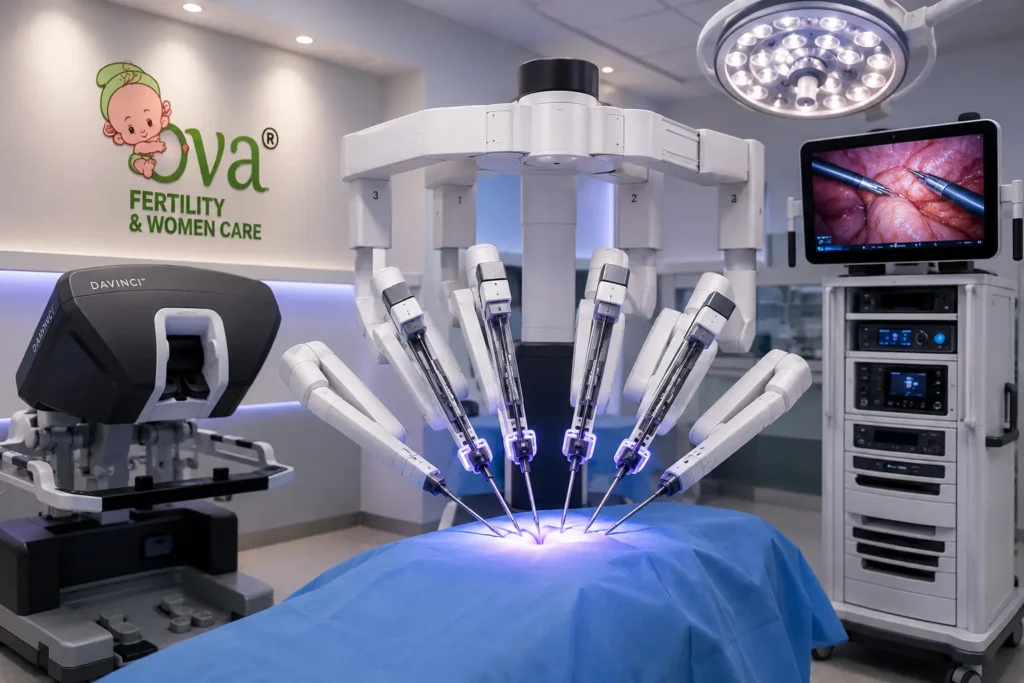
What Is Robotic Gynecological Surgery?
Robotic gynecological surgery is a computer assisted surgery technique that helps the surgeon perform complex procedures through small incisions. A camera provides a magnified three-dimensional view, while robotic arms hold specialized instruments. These instruments can move with greater flexibility than conventional straight laparoscopic instruments. On your current page, this advantage is described through the Endo-Wrist instrument, which moves more like a human wrist and can support better dexterity, precision, control, and suturing during complex surgery.
In traditional open surgery, the surgeon makes a larger incision to access the uterus, ovaries, tubes, or pelvic organs. In conventional laparoscopy, surgery is done through small incisions, but the instruments are straight and have limited wrist-like movement. Robotic surgery builds on minimally invasive principles and adds enhanced surgical precision, improved ergonomics, three-dimensional visualization, and refined instrument control.
The aim is not to use technology for its own sake. The aim is to perform the right operation with the least necessary tissue trauma, better access, and safe surgical judgement.
Conditions That May Be Treated With Robotic Surgery
Robotic surgical procedures may be considered for a range of gynecological conditions. These include fibroids, abnormal uterine bleeding due to structural causes, adenomyosis in selected cases, endometriosis, ovarian cysts, pelvic adhesions, pelvic masses, chronic pelvic pain, prolapse, and selected complex gynecological surgeries.
The suitability of robotic surgery depends on the individual case. A small simple cyst may not need robotic surgery. A large fibroid, deep endometriosis, dense adhesions, obesity, narrow pelvis, previous surgeries, or difficult suturing requirement may make robotic assistance more useful. The surgeon reviews imaging, symptoms, examination findings, fertility wishes, age, hemoglobin level, medical conditions, and prior treatment before advising the approach.
A good robotic surgery consultation should always answer three questions: Is surgery necessary? Is robotic surgery better than another approach in this case? What are the risks, recovery expectations, and alternatives?
Robotic Hysterectomy
Robotic hysterectomy is removal of the uterus using robot assisted surgery. It may be considered for selected women with large fibroids, abnormal bleeding not responding to treatment, adenomyosis, uterine prolapse, chronic pelvic pain, or other gynecological conditions where uterus removal is medically appropriate.
Not every woman with heavy bleeding needs hysterectomy. Medical treatment, hormonal therapy, minor procedures, or other options may be suitable depending on age, diagnosis, and future plans. Hysterectomy is advised only when the uterus is the source of persistent symptoms or disease and conservative options are unsuitable, ineffective, or not preferred.
Robotic hysterectomy may offer smaller incisions, reduced blood loss, less postoperative pain, shorter hospital stay, and faster recovery in suitable patients compared with open surgery. The exact benefit depends on uterine size, previous surgeries, adhesions, obesity, medical condition, and surgical complexity.
Robotic Myomectomy
Robotic myomectomy is removal of fibroids while preserving the uterus. It may be considered for women with symptomatic fibroids who want uterine preservation. Symptoms may include heavy bleeding, anemia, pelvic pressure, frequent urination, painful periods, backache, abdominal enlargement, or reproductive concerns.
Myomectomy requires careful dissection and secure suturing of the uterus after fibroid removal. This is where robotic surgical technology may be useful because wristed instruments and three-dimensional vision can support controlled suturing in selected cases. Uterine repair is an important part of myomectomy, especially for women who may consider pregnancy later.
Robotic myomectomy is not suitable for every fibroid. The number, size, location, depth, symptoms, and reproductive plans must be reviewed. Some fibroids can be observed. Some can be managed medically. Some are better treated by hysteroscopic, laparoscopic, robotic, or open surgical methods depending on case factors.
Robotic Endometriosis Surgery
Endometriosis can cause painful periods, chronic pelvic pain, painful intercourse, bowel discomfort during periods, ovarian cysts, adhesions, and distorted pelvic anatomy. In advanced cases, endometriotic tissue may involve delicate areas near the ovaries, tubes, bowel, bladder, ureters, and pelvic sidewall.
Robotic endometriosis surgery may help in selected complex cases because improved visualization and instrument articulation can support precise dissection around delicate structures. The goal is to remove or treat disease while preserving healthy tissue as much as possible. This is especially important when ovaries are involved, because unnecessary damage to ovarian tissue can affect ovarian reserve.
Endometriosis surgery requires careful planning. The surgeon considers pain severity, imaging findings, previous surgeries, ovarian reserve, age, cyst size, organ involvement, and reproductive goals. A fertility-preserving approach is essential for women who want future pregnancy.
Robotic Pelvic Reconstruction
Robotic pelvic reconstruction may be considered in selected cases of pelvic organ prolapse or pelvic support defects. Prolapse can cause vaginal bulge, pelvic heaviness, urinary symptoms, bowel discomfort, or sexual discomfort. Treatment may include pelvic floor exercises, pessary support, vaginal procedures, laparoscopic surgery, robotic surgery, or open surgery depending on severity and patient preference.
Robotic pelvic reconstruction may allow precise suturing and mesh or tissue-based support in selected procedures such as sacrocolpopexy. The decision must be individualized because pelvic floor surgery depends on age, symptoms, sexual activity, previous surgeries, medical fitness, and the type of prolapse.
Patients should be counselled clearly about recovery, recurrence risk, urinary symptoms, sexual function, and long-term follow-up.
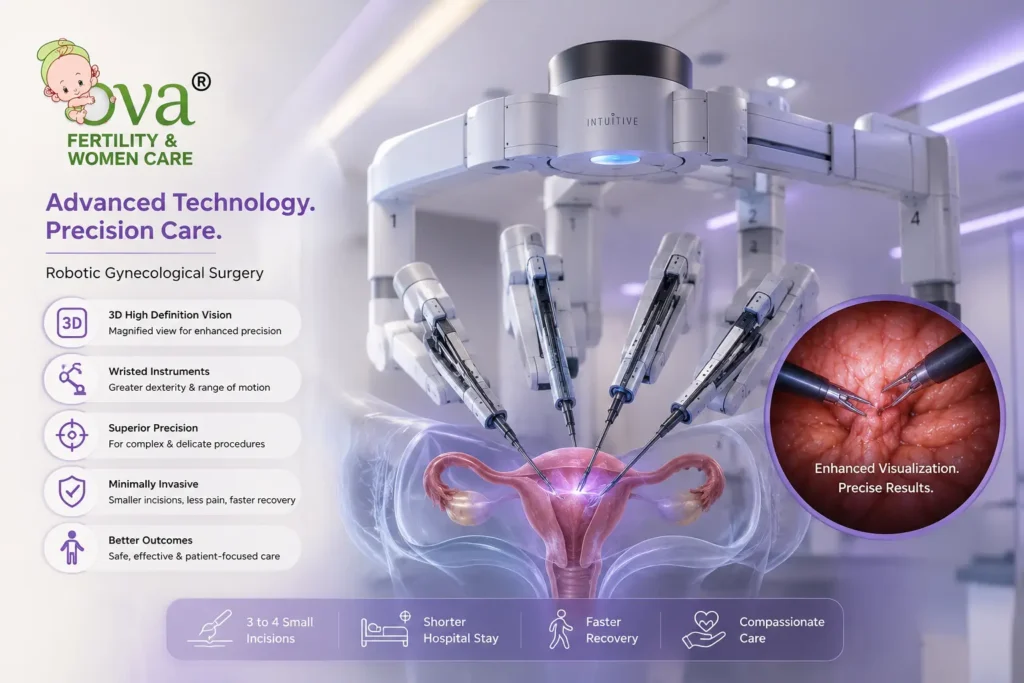
How Robotic Surgery Works
Before surgery, the patient undergoes evaluation. This may include clinical examination, ultrasound, MRI when needed, blood tests, anesthesia fitness, medical review, and discussion of surgical goals. The doctor explains whether robotic surgery is recommended, what procedure is planned, what organs may be treated, whether fertility preservation is relevant, and whether there is any possibility of conversion to open surgery.
During surgery, the patient is under anesthesia. Small incisions are made, and a camera and instruments are placed.Robotic arms are controlled by a console by the surgeon. The system provides magnified 3D vision and fine instrument movement. An assistant team remains at the patient’s side throughout the operation.
After the procedure, the patient is monitored in recovery. Pain control, diet, walking, urine output, bleeding, wound sites, and vital signs are observed. Hospital stay depends on the procedure and clinical condition.
Robotic Surgery Versus Laparoscopy and Open Surgery
Open surgery uses a larger incision and may be necessary in some complex cases. It gives direct access but usually involves more pain, larger scarring, longer hospital stay, and longer recovery compared with minimally invasive surgery.
Conventional laparoscopy uses small incisions and is highly effective for many gynecological procedures. It may be sufficient for simple to moderately complex cases. However, straight instruments, two-dimensional limitations in some systems, restricted movement, and surgeon fatigue can make complex pelvic surgery more demanding.
Robotic surgery also uses small incisions but adds three-dimensional visualization, wristed instruments, improved dexterity, better ergonomics, and more precise suturing capability. Your current Ova page correctly highlights that robotic instruments offer increased dexterity and precision compared with conventional laparoscopy, especially because the instrument tips can move in a wrist-like manner.
The best approach is not the same for every patient. A skilled surgeon chooses the safest and most effective method for the specific disease, anatomy, and patient goals.
Benefits of Robotic Gynecological Surgery
In suitable patients, robotic gynecological surgery may offer smaller incisions, less visible scarring, less blood loss, reduced pain, shorter hospital stay, faster return to routine activity, improved visualization, greater surgical precision, easier suturing, and better control during complex pelvic procedures.
Your current page compares open surgery and robotic surgery by incision size, pain duration, hospital stay, recovery, and return to activity. This is a useful patient-facing comparison. Robotic surgery may allow 3 to 4 small incisions instead of one large open incision, shorter hospital stay in selected cases, and faster functional recovery.
These benefits should be understood responsibly. Recovery still depends on the type of surgery, disease severity, patient health, anesthesia, blood loss, surgical findings, and post-operative care. Robotic surgery can reduce tissue trauma, but it is still real surgery and requires proper recovery.
Who May Be a Suitable Candidate?
Robotic surgery may be considered for women with complex fibroids, deep endometriosis, dense adhesions, pelvic masses, obesity, prior abdominal surgeries, difficult pelvic anatomy, need for precise suturing, uterine preservation goals, or complex hysterectomy requirements. It may also be useful when the surgeon expects robotic wristed instruments to provide better access or control than conventional laparoscopy.
Suitability is assessed after reviewing symptoms, scan findings, medical history, previous surgeries, reproductive goals, age, hemoglobin, anesthesia risk, and patient preference. The surgeon also considers whether the expected benefit justifies the cost and procedure time.
A patient should not be told that robotic surgery is automatically superior. It is superior only when it offers a meaningful advantage for that case.
Who May Not Be Suitable?
Robotic surgery may not be suitable for all patients. Emergency surgery, severe cardiopulmonary disease, inability to tolerate the required surgical position, extensive disease needing open access, very large masses with suspicion of malignancy, unstable medical condition, or situations where robotic benefit is low may require another approach.
Some cases are better treated with medicines, observation, hysteroscopic procedures, conventional laparoscopy, open surgery, or referral to a higher specialized unit depending on the diagnosis. Responsible robotic surgical care includes explaining alternatives, not pushing one method for every patient.
Risks and Limitations
Robotic surgery is generally safe when performed by trained surgeons in appropriate cases, but it carries risks. Possible risks include bleeding, infection, anesthesia complications, injury to bladder, bowel, ureter, blood vessels or surrounding organs, blood clots, wound problems, urinary difficulty, delayed recovery, conversion to open surgery, and It is possible for the underlying condition to return in some cases.
There are also technology-related considerations. Robotic surgery needs specialized equipment, trained staff, surgical expertise, and proper case selection. It may cost more than standard laparoscopy. It may not improve outcomes if the case is simple or if the problem can be managed without surgery.
Patients should receive balanced counselling. The right question is not “Is robotic surgery advanced?” The right question is “Is robotic surgery the best option for my condition?”
Fertility-Preserving Robotic Surgery
Some women need gynecological surgery but want to preserve the uterus, ovaries, or future reproductive potential. In such cases, surgical planning must be especially careful. Robotic myomectomy, selected endometriosis surgery, ovarian cyst surgery, and adhesion surgery may be planned with fertility preservation in mind.
Fertility-preserving surgery means removing disease while protecting healthy reproductive tissue as much as possible. For example, during ovarian cyst surgery, the surgeon aims to remove the cyst while preserving normal ovarian tissue. During fibroid surgery, uterine repair must be strong and precise.The removal of endometrial disease must be balanced with the preservation of ovarian reserve during endometriosis surgery.
Robotic surgery can support precision in selected fertility-preserving cases, but reproductive outcomes depend on many factors beyond the surgery itself.
Pre-Surgery Evaluation
A good surgical outcome begins before the operation. Pre-surgery evaluation may include detailed history, physical examination, ultrasound, MRI when needed, Pap smear or endometrial evaluation when indicated, blood tests, urine tests, ECG, chest evaluation, anesthesia fitness, medical specialist review, and blood arrangement planning for selected cases.
The doctor reviews medicines, allergies, diabetes, blood pressure, thyroid disease, heart disease, kidney disease, clotting risk, previous surgeries, and previous anesthesia complications. Patients are advised about fasting, admission timing, medicines to continue or stop, and expected hospital stay.
The consultation should also include discussion of consent. Patients should understand the planned procedure, alternatives, risks, possible findings, and what decisions may be made during surgery if unexpected findings appear.
Recovery After Robotic Surgery
Recovery depends on the procedure. Many patients experience less pain and faster movement compared with open surgery, but rest and follow-up are still necessary. Patients may be encouraged to walk early to reduce clot risk. Diet is advanced as tolerated. Pain medicines are given as needed. Wound sites are checked before discharge.
Return to work depends on the type of surgery and physical demands of the job. Some women recover within a few weeks after minor or moderate procedures, while more complex surgery may require longer. Heavy lifting, strenuous exercise, intercourse, and travel should be resumed only after doctor advice.
Patients should contact the doctor urgently for fever, heavy bleeding, severe abdominal pain, vomiting, fainting, wound redness or discharge, urinary difficulty, leg swelling, chest pain, or breathlessness.
Questions to Ask Before Robotic Surgery
Before agreeing to robotic surgery, ask why robotic assistance is recommended, what alternatives exist, what procedure is planned, whether fertility preservation is possible, how many incisions are expected, what organs may be removed or preserved, what risks apply to your case, what recovery will look like, and what follow-up is needed.
You should also ask whether there is a chance of conversion to open surgery, whether blood transfusion may be needed, and how the surgery may affect periods, hormones, sexual health, urinary function, or future pregnancy depending on the procedure.
Clear answers help patients make informed decisions.
Ova Fertility & Women Care provides robotic surgery in Thane for advanced gynecological care with a focus on clinical judgement, precision, safety, and patient understanding. The current robotic surgery page already identifies important focus areas such as fibroids, pelvic masses, abnormal bleeding, endometriosis, and pelvic pain, and highlights robotic advantages such as better visualization, instrumentation, dexterity, control, precision, and faster suturing.
At Ova, robotic surgery is not presented as a routine answer for every woman. It is considered when the diagnosis, anatomy, symptoms, and surgical goals suggest that advanced robotic techniques may provide meaningful benefit. Patients are counselled about the disease, the planned operation, alternatives, risks, recovery, and expected outcome.
Gynaecology & Endoscopy
Let's Meet Up
contact
Frequently Asked Questions
IVF involves fertilizing eggs and sperm in a laboratory, followed by embryo transfer to the uterus.
No. The robot does not operate independently. During the surgery, the surgeon controls the robotic instruments.
It may be used for selected cases of fibroids, endometriosis, pelvic pain, abnormal bleeding, ovarian cysts, pelvic masses, prolapse, and complex gynecological conditions.
It can be better in selected complex cases because of improved visualization, wristed instruments, dexterity, and suturing precision. For simple cases, standard laparoscopy may be sufficient.
Benefits may include smaller incisions, less pain, less blood loss, shorter hospital stay, quicker recovery, better visualization, and improved precision in suitable patients.
Risks may include bleeding, infection, anesthesia complications, organ injury, blood clots, conversion to open surgery, and delayed recovery. The doctor explains case-specific risks before surgery.
It is possible to perform fertility-preserving procedures with robotics, including myomectomy, ovarian cyst removal, and endometriosis surgery, in selected cases.Suitability depends on the diagnosis.
Recovery depends on the procedure and patient condition. Many women recover faster than open surgery, but full recovery varies and should follow the surgeon’s advice.
Robotic surgery usually uses small incisions, so scars are generally smaller than open surgery scars. Healing depends on skin type, procedure, and wound care.
A specialist consultation, examination, imaging, and medical review are needed. The surgeon will compare robotic surgery with medical treatment, laparoscopy, open surgery, or observation.
Related Searches:
Intrauterine Insemination (IUI) Treatment in Thane, Pre-Implantation Genetic Testing in Thane, Blastocyst Culture And Transfer Clinic in Thane, Laser Assisted Hatching Treatment in Thane, Egg/Sperm/Embryo Cryopreservation Freezing, Endoscopy In Fertility Treatments, Pregnancy Care, Birthing, Ultrasound In Pregnancy, High Risk Pregnancy Treatment Care With ICU Facility, Laparoscopic Surgery, Hysteroscopic Surgery, Menopause, Puberty Adolescence Treatment, Oncofertility,Male Infertility Treatment in Thane, best ivf hospital, ivf specialist, ivf doctor in thane, fertility treatment in thane, dr. snehal kohale ivf specialist

Unexplained Infertility: What It Means When Routine Tests Are Normal
For many couples, receiving normal fertility test reports but still not achieving pregnancy can feel confusing and frustrating. When standard evaluations do not identify a clear reason for difficulty conceiving, doctors may describe the situation as unexplained infertility. This does not mean that there is no reason behind the fertility

Thyroid and Infertility: How TSH Can Affect Ovulation and Pregnancy Planning
When couples are planning a pregnancy, doctors often evaluate different hormones that play a role in reproductive health. Among these, thyroid hormones are important because they influence metabolism, menstrual cycles, ovulation, and pregnancy preparation. The connection between thyroid and infertility is mainly related to how thyroid hormone imbalance can affect

High Prolactin and Infertility: How Prolactin Can Affect Ovulation
When couples are trying to conceive, doctors often evaluate several hormones that influence reproductive health. One of these important hormones is prolactin. While prolactin is best known for its role in breast milk production, abnormal levels can also affect reproductive hormones and ovulation. The connection between high prolactin and infertility