




Blastocyst Culture And Transfer Clinic in Thane
Home » Blastocyst Culture and Transfer in Thane | IVF Success with Advanced Embryo Selection
Why The Ova Care Is Trusted as the Best Fertility and Maternity Hospital

Personalized Support

High Success Rate

24/7 Availablity

5000+ Successful Pregnancies

16+ Years of Experienced Experts

Affordable & Ethical Treatment
Blastocyst Culture And Transfer Clinic in Thane
Blastocyst culture is an advanced embryo laboratory technique used in selected assisted conception cycles to allow embryos to grow beyond the early cleavage stage and reach day five or day six development before transfer or freezing. At Ova Fertility & Women Care, blastocyst culture in Thane is offered with careful patient selection, close embryo development monitoring, and specialist counselling so couples understand why extended culture is Before beginning treatment, it is important to know what benefits it might provide, as well as what limitations it might have.
A blastocyst is a more developed embryo, usually containing around 70 to 100 cells. By this stage, the embryo has started differentiating into two important cell groups: the inner cell mass, which later forms the baby, and the trophectoderm, which later contributes to the placenta. Because the embryo has continued developing for a longer period in the laboratory, reaching the blastocyst stage can give the embryology team additional information about its developmental potential. This is why blastocyst transfer in Thane is commonly discussed when embryo selection is important.
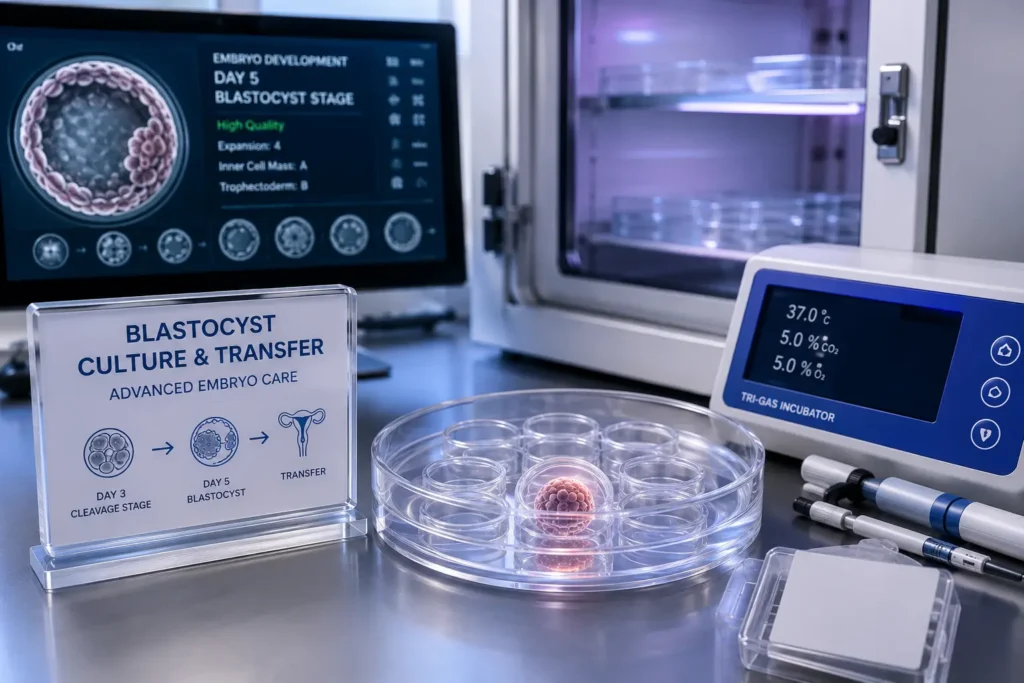
Why Blastocyst Culture Requires a Skilled Laboratory
Extended embryo culture is not simply “waiting for day five.” It requires stable incubator conditions, appropriate culture media, controlled temperature, pH balance, humidity, gas concentration, careful handling, and trained embryology supervision. Embryos are sensitive to small changes in the laboratory environment. A high quality embryo culture laboratory in Thane must therefore maintain consistency throughout fertilization, cleavage, compaction, blastulation, grading, vitrification, warming, and transfer planning.
At Ova, the decision to continue embryos to blastocyst stage is made only after reviewing the couple’s clinical profile, number of fertilized eggs, embryo development pattern, age, previous treatment history, and transfer strategy. Extended culture is most useful when it helps answer a practical question: which embryo is most suitable for transfer, whether single blastocyst transfer is appropriate, or whether embryo freezing should be planned.
Transfer of embryos on Day 3 versus transfer of blastocysts on Day 5
Early embryos are often assessed on day two or day three, when they are usually at the cleavage stage. A day three embryo may have around six to eight cells. A day five embryo has ideally reached the blastocyst stage and has undergone more complex development. Day 5 embryo transfer in Thane may be recommended when embryos are growing well and the laboratory team expects that extended culture may improve selection.
The advantage of day five transfer is not that every blastocyst will implant. The advantage is that embryos that reach this stage have passed additional developmental checkpoints. This may help the team identify embryos with stronger growth characteristics. Blastocyst stage embryo transfer in Thane may also allow better synchronization between the embryo and the uterine lining, because in natural conception the embryo usually enters the uterus around the blastocyst stage.
However, day three transfer may still be suitable in selected cases, especially when there are very few embryos or when the clinical team believes earlier transfer is safer for that cycle. A responsible clinic should not present day five transfer as automatically superior for every patient.
Who May Benefit from Blastocyst Culture?
Blastocyst culture may be considered when there are enough normally fertilized embryos to allow extended observation and selection. In cases where single blastocyst transfer is being planned, or cases where embryo development pattern needs closer evaluation, it may be beneficial for couples who have previously failed embryo transfers.
It may also be discussed when embryo biopsy is planned, because biopsy is commonly performed at the blastocyst stage. That said, embryo genetic testing has its own dedicated indications and counselling. On this page, the focus remains on blastocyst culture and transfer rather than genetic testing.
Patients with repeated cleavage-stage transfers and no pregnancy may benefit from a cycle review that includes embryo progression, uterine lining, sperm quality, egg quality, stimulation response, transfer technique, and laboratory factors. Blastocyst transfer success enhancement in Thane depends on selecting the right patient and refining the full treatment plan, not merely changing the transfer day.
Who May Not Be Ideal for Extended Culture?
Blastocyst culture is not suitable for every cycle. If very few embryos are available, keeping them in culture until day five may increase the chance of having no embryo for transfer if development stops. Some embryos that may have been considered for earlier transfer may not reach blastocyst stage in the laboratory. This does not always mean the decision was wrong; it reflects biological selection and embryo competence. But couples must understand this possibility before consenting.
Patients with poor embryo development in previous cycles, very low egg numbers, advanced reproductive age, or limited fertilization may need individualized discussion. In some cases, an earlier transfer or a freeze-all approach may be more appropriate. At Ova, the decision is explained before culture is extended so patients are not surprised by cycle outcomes.
How Blastocyst Development Happens
After fertilization, the embryo begins dividing. On day one, the embryology team checks fertilization. On day two, the embryo may have two to four cells. On day three, it may have six to eight cells. On day four, cells compact into a morula. On day five or day six, a blastocyst may form with a fluid-filled cavity, inner cell mass, and trophectoderm. Embryo development monitoring in Thane allows the laboratory team to observe this progression and communicate important findings to the doctor.
Not all fertilized eggs become blastocysts. Some embryos stop growing before day five because of egg factors, sperm factors, chromosomal issues, metabolic limitations, or developmental arrest. This is one of the main reasons blastocyst culture provides useful information, but it is also the reason couples need realistic counselling.
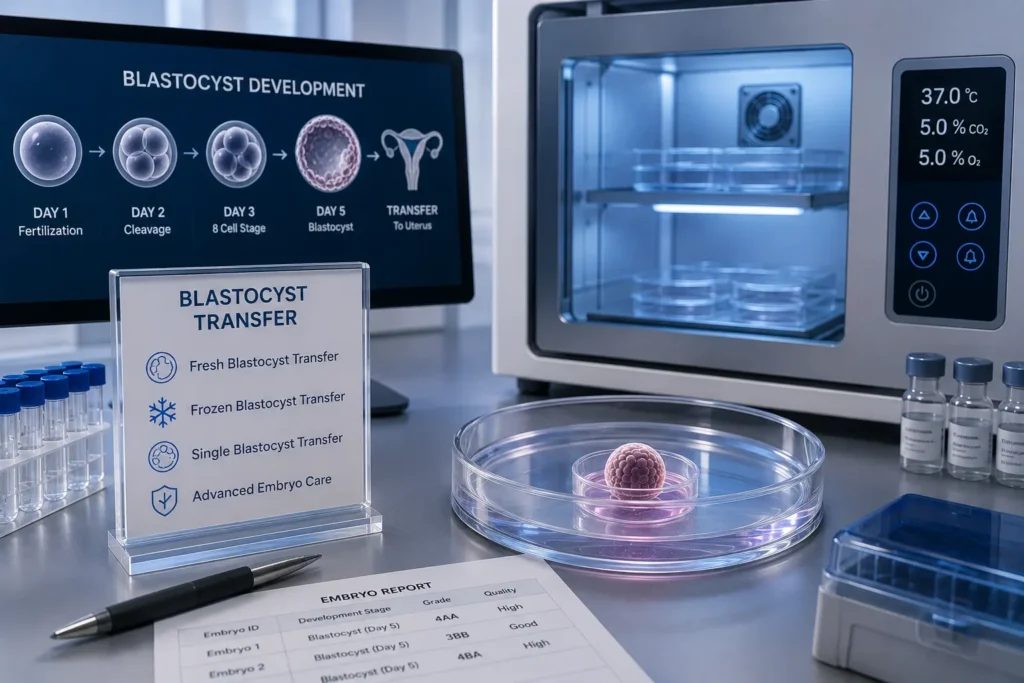
Fresh Blastocyst Transfer in Thane
Fresh blastocyst transfer means the embryo is transferred in the same stimulation cycle, usually around day five after egg collection, if the patient’s condition is suitable. It may be considered when the uterine lining is appropriate, hormone levels are acceptable, ovarian response is safe, and there is no medical reason to postpone transfer.
A fresh transfer may not always be the best option. If there is risk of ovarian hyperstimulation, high progesterone, thin lining, fluid in the cavity, illness, excessive response, or a need to wait for further planning, freezing the blastocyst may be safer. The final decision is made after combining embryo quality with the woman’s clinical condition.
Frozen Blastocyst Transfer in Thane
Frozen blastocyst transfer involves vitrifying suitable blastocysts and transferring one in a later cycle after uterine preparation. When the body needs recovery after stimulation, hormone conditions are not ideal, embryos have been biopsied, or an endometrial preparation cycle is planned, this may be recommended.
Vitrification has become an important part of modern embryo care, but freezing and warming still require careful laboratory handling. Patients are counselled about embryo survival after warming, timing of transfer, medicines, lining monitoring, and post-transfer instructions. Frozen blastocyst transfer in Thane should be planned with the same attention to detail as a fresh transfer.
Single Blastocyst Transfer and Multiple Pregnancy Reduction
One of the important advantages of blastocyst culture is that it can support single blastocyst transfer in Thane for suitable patients. When a good-quality blastocyst is available, transferring one embryo may provide a reasonable chance while reducing the risk of twins or higher-order multiple pregnancy. Multiple pregnancy may appear attractive to some couples after years of trying, but medically it carries increased risk of miscarriage, preterm birth, high blood pressure, diabetes, low birth weight, neonatal intensive care, and delivery complications.
The number of embryos transferred should be decided after reviewing age, embryo quality, previous cycles, uterine factors, and medical safety. At Ova, embryo transfer planning is discussed carefully so couples understand why one embryo may sometimes be the safer and more responsible choice.
Understanding Blastocyst Grading
Blastocyst grading helps the embryology team describe embryo appearance. It usually considers how expanded the blastocyst is, the quality of the inner cell mass, and the quality of the trophectoderm. A well-expanded blastocyst with a good inner cell mass and trophectoderm is generally considered more favourable, but grading is not a guarantee of pregnancy.
Embryo grading is a tool, not a verdict. A top-grade embryo may not implant, and a moderate-grade embryo may still lead to pregnancy. The doctor interprets grading together with age, clinical history, uterine lining, previous outcomes, and laboratory observations. This balanced explanation prevents patients from becoming overly anxious about one letter or number in an embryo report.
Benefits of Blastocyst Culture and Transfer
The main benefit of extended embryo culture in Thane is improved embryo selection in suitable cases. By observing embryos for a longer period, the team may identify those with stronger developmental potential. Blastocyst transfer may improve synchronization with the uterine environment, support single embryo transfer, and reduce the need to transfer multiple early-stage embryos. It may also help in cycles where embryo biopsy or freezing is part of the plan.
Another benefit is cycle learning. If embryos consistently stop before blastocyst stage, the doctor may review egg quality, sperm DNA factors, stimulation protocol, laboratory history, and future planning. This information can be valuable for couples who have faced repeated unsuccessful cycles.
Limitations and Honest Counselling
Blastocyst culture does not guarantee implantation, pregnancy, or live birth. Success depends on maternal age, egg quality, sperm quality, embryo genetics, uterine receptivity, endometrial preparation, medical conditions, and previous history. Some embryos do not reach blastocyst stage, and a planned transfer may be cancelled if no suitable embryo develops. Extending culture may lead to fewer frozen embryos available.
There is also a small possibility of monozygotic twinning after embryo manipulation or blastocyst transfer, although this remains uncommon. Patients should be told about this in clear terms. Honest counselling protects couples from unrealistic expectations and builds trust in the medical process.
What Happens During Your Consultation?
During consultation at Ova, the doctor reviews age, ovarian reserve, semen parameters, previous cycle records, number of eggs collected, fertilization rate, day three embryo quality, prior transfer outcomes, uterine lining, medical history, and any previous freezing or thawing results. This review helps decide whether blastocyst culture is suitable for the next cycle.
Couples are encouraged to bring old embryo reports if available. Details such as number of mature eggs, fertilized embryos, cleavage-stage grades, blastocyst formation rate, embryo transfer day, luteal support, and pregnancy test results are useful. A good decision often depends on understanding what happened in earlier attempts.
Cycle Review After an Unsuccessful Transfer
If a blastocyst transfer does not result in pregnancy, the cycle should be reviewed rather than repeated automatically. The doctor may reassess stimulation response, egg maturity, fertilization rate, blastocyst formation, embryo grade, endometrial thickness, transfer difficulty, luteal support, thyroid status, metabolic factors, and sperm-related concerns.
Sometimes the next step is another blastocyst transfer. Sometimes it is uterine cavity assessment, protocol adjustment, sperm testing, laboratory review, or frozen transfer planning. This review gives couples a rational next plan and reduces the frustration of repeating treatment without understanding what can be improved.
Why Choose Ova for Blastocyst Culture in Thane?
Ova Fertility & Women Care provides advanced blastocyst transfer in Thane with a patient-specific approach. The goal is not to offer extended culture to everyone, but to use it where it improves decision-making. Our team focuses on embryo development monitoring, controlled culture conditions, doctor-embryologist communication, transfer timing, uterine preparation, and post-transfer support.
The centre is accessible for patients from Kasarvadavali, Ghodbunder Road, Manpada, Waghbil, Hiranandani Estate, Kolshet, Majiwada, Vasant Vihar, Pokhran Road, Kalwa, Mulund, Airoli, Dombivli, and nearby areas. Local access matters because embryo transfer planning may require timely scans, medicine adjustments, procedure scheduling, and follow-up.
Questions to Ask Before Blastocyst Transfer
Before agreeing to blastocyst transfer, ask how many embryos are available, whether extended culture is suitable in your case, what happens if embryos do not reach day five, whether fresh or frozen transfer is preferred, how embryo grading is explained, whether single embryo transfer is recommended, and how the uterus will be prepared. These questions help couples make informed choices rather than accepting a routine protocol.
At Ova, counselling is practical and transparent. Patients are told what is known, what remains uncertain, and what choices are available. This is especially important when embryo numbers are limited or when previous treatment has been emotionally difficult.
Fertility Treatments
- Approach To Infertility
- IUI
- IVF-ICSI
- Male Infertility
- Pre-implantation Genetic Testing (PGT)
- Blastocyst Culture and Transfer
- Laser Assisted Hatching
- Egg/Sperm/Embryo Freezing
- Donor Egg Donor Sperm Donor Embryo and Surrogacy Treatment
- Need of Endoscopy in fertility treatments
Let's Meet Up
contact
Frequently Asked Questions
Blastocyst culture is extended embryo culture where embryos are grown in controlled laboratory conditions until day five or day six, when they may reach the blastocyst stage.
Day five transfer may help select embryos with stronger developmental potential, but it is not better for every patient. The decision depends on embryo number, quality, age, previous history, and clinical judgement.
No. Blastocyst transfer can support embryo selection in suitable cases, but pregnancy also depends on egg quality, sperm quality, embryo genetics, uterine lining, medical conditions, and transfer factors.
If embryos stop developing before day five, there may be no embryo available for transfer or freezing. This risk is discussed before extended culture is chosen.
Fresh transfer happens in the same egg-collection cycle. Frozen transfer happens later after vitrification and uterine preparation. The doctor recommends the safer option based on embryo and patient factors.
Single blastocyst transfer is often preferred in suitable patients because it can reduce multiple pregnancy risk while still allowing transfer of a carefully selected embryo.
Yes. Some embryos reach blastocyst stage on day six and may still be suitable for freezing or transfer depending on quality, clinical history, and laboratory assessment.
It may be considered for patients with enough embryos for selection, previous unsuccessful transfers, planned single embryo transfer, or cases where extended embryo development information may guide treatment.
No. It may not be suitable when embryo numbers are very low or when earlier transfer is clinically preferred. Individual counselling is essential.
Ova provides Thane-based care with embryo development monitoring, expert counselling, fresh and frozen transfer planning, and individualized recommendations based on clinical and embryology findings.
Related Searches:
Intrauterine Insemination (IUI) Treatment in Thane, Pre-Implantation Genetic Testing in Thane, Blastocyst Culture And Transfer Clinic in Thane, Laser Assisted Hatching Treatment in Thane, Egg/Sperm/Embryo Cryopreservation Freezing, Endoscopy In Fertility Treatments, Pregnancy Care, Birthing, Ultrasound In Pregnancy, High Risk Pregnancy Treatment Care With ICU Facility, Laparoscopic Surgery, Hysteroscopic Surgery, Menopause, Puberty Adolescence Treatment, Oncofertility,Male Infertility Treatment in Thane, best ivf hospital, ivf specialist, ivf doctor in thane, fertility treatment in thane, dr. snehal kohale ivf specialist
Our Latest Articles

Unexplained Infertility: What It Means When Routine Tests Are Normal
For many couples, receiving normal fertility test reports but still not achieving pregnancy can feel confusing and frustrating. When standard evaluations do not identify a clear reason for difficulty conceiving, doctors may describe the situation as unexplained infertility. This does not mean that there is no reason behind the fertility
Thyroid and Infertility: How TSH Can Affect Ovulation and Pregnancy Planning
When couples are planning a pregnancy, doctors often evaluate different hormones that play a role in reproductive health. Among these, thyroid hormones are important because they influence metabolism, menstrual cycles, ovulation, and pregnancy preparation. The connection between thyroid and infertility is mainly related to how thyroid hormone imbalance can affect
High Prolactin and Infertility: How Prolactin Can Affect Ovulation
When couples are trying to conceive, doctors often evaluate several hormones that influence reproductive health. One of these important hormones is prolactin. While prolactin is best known for its role in breast milk production, abnormal levels can also affect reproductive hormones and ovulation. The connection between high prolactin and infertility