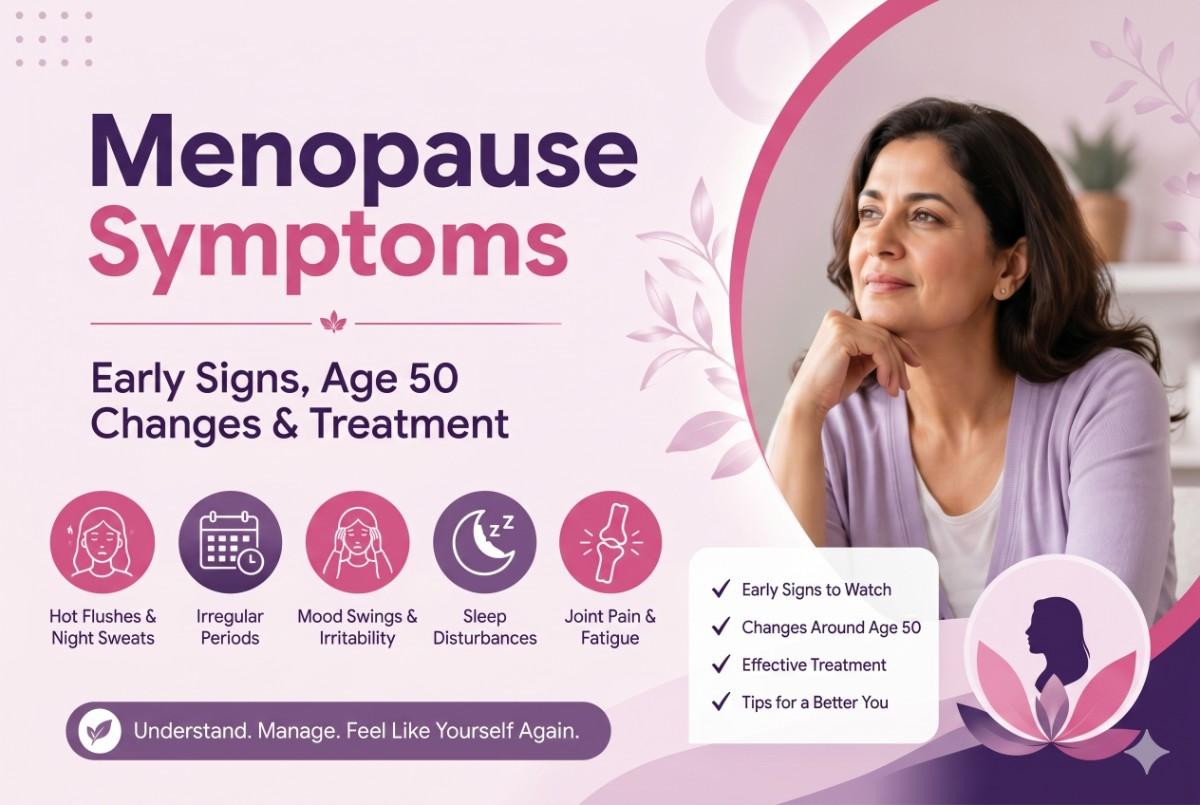


Menopause symptoms can feel confusing at first. One day your body feels normal, and suddenly you’re dealing with irregular periods, mood shifts, or unexpected hot flushes. For many women, these changes begin slowly, often years before menopause officially happens.
Understanding what’s happening inside your body can make this phase much easier to manage. Whether you’re noticing early signs or already experiencing changes around age 50, knowing what to expect—and what to do—can help you feel more in control.
What Is Menopause?
Menopause is a natural stage in a woman’s life when menstrual cycles permanently stop. It is officially diagnosed after 12 consecutive months without a period.
Most women reach menopause between 45 and 55 years, with the average being around 50. However, the symptoms can start much earlier during a phase called perimenopause.
Early Menopause Symptoms You Should Not Ignore
Before menopause fully sets in, your body starts giving subtle signals. These early menopause symptoms often go unnoticed or are mistaken for stress or lifestyle issues.
Common early signs include:
- Irregular periods (early or delayed cycles)
- Changes in flow (lighter or heavier bleeding)
- Mood swings or irritability
- Difficulty sleeping
- Sudden fatigue
- Reduced concentration
These symptoms occur due to fluctuating hormone levels, especially estrogen.
Most Common Menopause Symptoms
As menopause progresses, symptoms become more noticeable. Not every woman experiences all of them, but some of the most common menopause symptoms include:
1. Hot Flushes (Hot Flashes)
A sudden feeling of heat spreading across the face and body, often accompanied by sweating and redness.
2. Night Sweats
Excessive sweating during sleep that can disturb your rest and leave you feeling exhausted.
3. Vaginal Dryness
Reduced estrogen levels can cause dryness, discomfort, or pain during intercourse.
4. Mood Changes
You may feel anxious, low, or easily irritated without a clear reason.
5. Sleep Disturbances
Difficulty falling asleep or staying asleep is very common.
6. Weight Gain
Metabolism slows down, making it easier to gain weight, especially around the abdomen.
7. Hair Thinning and Skin Changes
Hair may become thinner, and skin may feel drier or less elastic.
Menopause Symptoms at Age 50
For many women, menopause symptoms peak around age 50. This is when hormone levels drop significantly, leading to more noticeable physical and emotional changes.
What you may experience:
- More frequent hot flushes
- Increased night sweats
- Joint and muscle pain
- Lower energy levels
- Reduced libido
- Memory lapses or “brain fog”
These changes can feel overwhelming, but they are a normal part of the transition.
If symptoms are affecting your daily life, it’s important to seek proper guidance and care. You can explore detailed treatment options here:
👉 https://theovacare.com/menopause/
Why Do Menopause Symptoms Happen?
The root cause of menopause symptoms is hormonal imbalance, especially a drop in estrogen and progesterone.
These hormones regulate many functions in your body, including:
- Body temperature
- Mood stability
- Bone health
- Reproductive system
- Sleep cycle
When hormone levels decline, your body takes time to adjust, leading to the symptoms you experience.
How Long Do Menopause Symptoms Last?
There is no fixed timeline. Every woman’s experience is different.
- Early symptoms can start 3–5 years before menopause
- Most symptoms last 4–7 years
- Some women may experience mild symptoms for longer
The intensity usually reduces over time as your body adapts.
Effective Treatments for Menopause Symptoms
Managing menopause symptoms is possible with the right approach. Treatment depends on how severe your symptoms are.
1. Hormone Replacement Therapy (HRT)
HRT is one of the most effective treatments. It replaces the hormones your body no longer produces.
Benefits:
- Reduces hot flushes
- Improves sleep
- Helps with mood stability
However, it should always be taken under medical supervision.
2. Lifestyle Changes
Small changes can make a big difference:
- Regular exercise (walking, yoga)
- Balanced diet rich in calcium and vitamins
- Avoid caffeine and spicy foods
- Maintain a healthy weight
3. Natural Remedies
Some women prefer natural ways to manage symptoms:
- Herbal supplements (after doctor consultation)
- Meditation and stress management
- Adequate hydration
4. Medical Support
If symptoms are severe, consulting a specialist is important. Personalized treatment can help manage symptoms more effectively and improve your quality of life.
For professional guidance and care, visit:
👉 https://theovacare.com/menopause/
How to Cope Emotionally with Menopause
Menopause is not just physical—it can affect your emotional well-being too.
Here’s what can help:
- Talk openly with family or friends
- Join support groups
- Practice relaxation techniques
- Focus on self-care
Remember, this phase is temporary, and support is available.
Diet Tips to Reduce Menopause Symptoms
Your diet plays a major role in how your body handles menopause.
Include:
- Calcium-rich foods (milk, yogurt)
- Leafy greens
- Nuts and seeds
- Fruits rich in antioxidants
Avoid:
- Processed foods
- Excess sugar
- Alcohol and caffeine
A balanced diet can help reduce symptoms like fatigue and mood swings.
When Should You See a Doctor?
You should consult a doctor if:
- Symptoms interfere with daily life
- Periods stop suddenly before age 40
- You experience severe mood changes
- There is heavy or irregular bleeding
Early guidance can prevent complications and make this transition smoother.
Final Thoughts
Menopause symptoms may feel uncomfortable, but they are a natural part of life. The key is understanding your body and taking the right steps at the right time.
With proper care, support, and treatment, you can manage this phase confidently and continue living a healthy, active life.