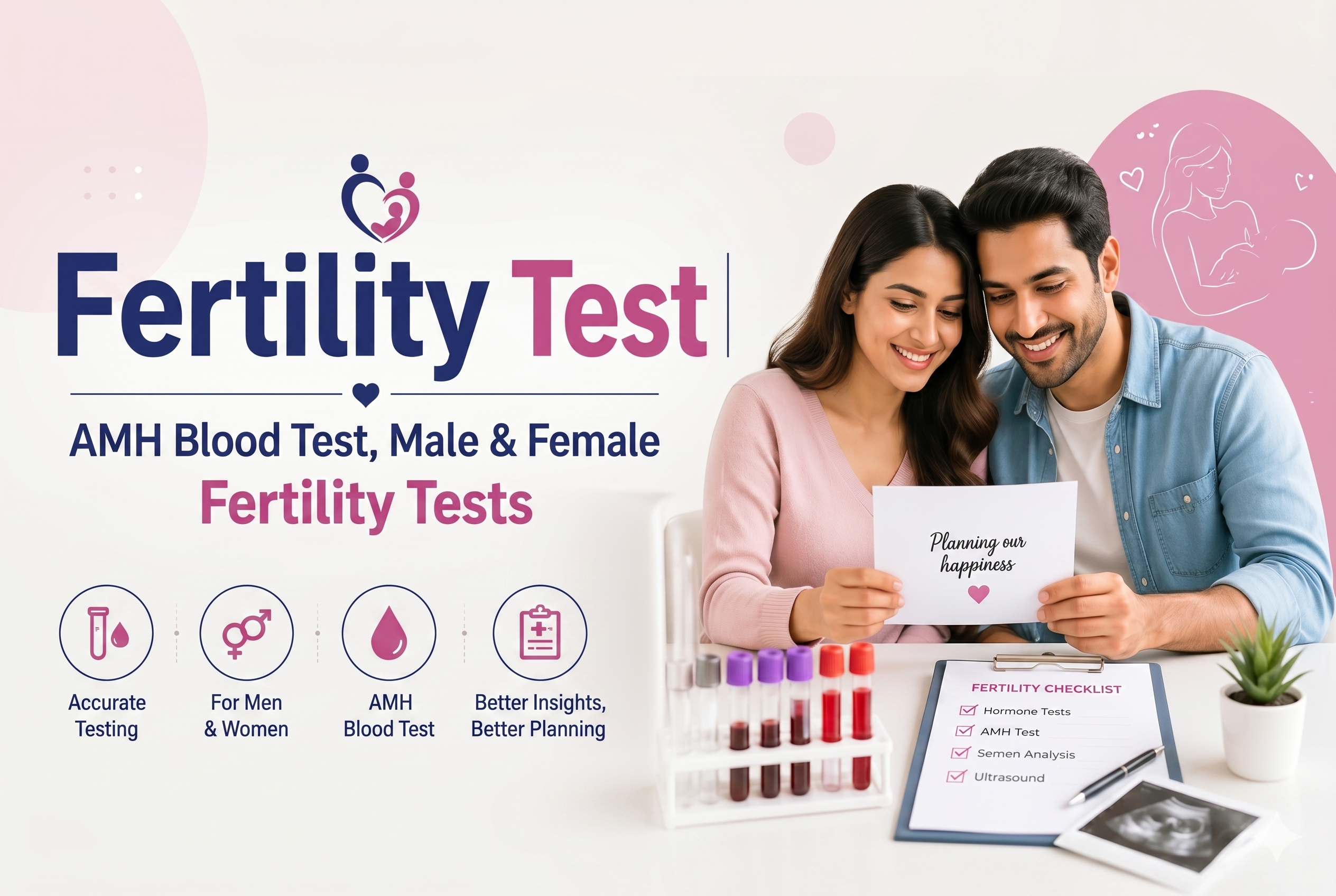



A fertility test is usually the first real step toward understanding what’s happening inside your body. But here’s something many people don’t realize early on-fertility is not just about one partner. Both partners should be tested, as male factors contribute to nearly 30–50% of infertility cases.
Whether you’ve just begun planning or have been trying for a while, these tests give clarity-no guessing, no assumptions.
In this guide, you’ll learn:
- What a fertility test actually means
- The role of the AMH blood test
- Fertility tests for both women and men
- When you should consider testing
- What your results really indicate
Let’s keep it simple and real.
What Is a Fertility Test?
A fertility test is a group of medical checks that help doctors understand your ability to conceive. It’s not just one test-it’s a combination of evaluations that look at hormones, reproductive organs, and overall health.
For some people, fertility issues are obvious. For others, everything seems normal on the surface. That’s where proper testing helps-because it shows what’s not visible.
Why Fertility Testing Matters
Many couples wait too long, hoping things will work naturally. While patience is fine, timing matters-especially with age.
Here’s why fertility testing is useful:
- Identifies hidden issues early
- Helps avoid unnecessary delays
- Gives a clear direction for treatment
- Improves chances of successful pregnancy
It’s not about rushing. It’s about being informed.
When Should You Take a Fertility Test?
You don’t need to wait forever to get checked.
Consider testing if:
- You’ve been trying for 12 months (or 6 months if above 35)
- Periods are irregular or missing
- You have a known medical condition (PCOS, thyroid issues, etc.)
- There’s a history of miscarriage
- You just want clarity before planning
A lot of couples now choose early testing just to avoid surprises later.
Fertility Tests for Women
Female fertility depends on several factors-egg quality, hormones, uterus health, and more. That’s why multiple tests are usually recommended.
1. AMH Blood Test (Key Fertility Indicator)
The AMH (Anti-Müllerian Hormone) test is one of the most talked-about fertility tests today.
What it tells you:
- Your ovarian reserve (number of eggs left)
- Your reproductive potential
Why it matters:
- Helps plan pregnancy timing
- Guides IVF or egg freezing decisions
Simple understanding:
- Higher AMH → More egg reserve
- Lower AMH → Reduced egg reserve
It doesn’t guarantee pregnancy-but it gives a strong direction.
2. Hormone Blood Tests
These tests check hormone levels that control ovulation.
Common hormones tested:
- FSH (Follicle Stimulating Hormone)
- LH (Luteinizing Hormone)
- Estrogen
- Progesterone
- Thyroid hormones
If even one of these is off, it can affect ovulation.
3. Ultrasound Scan
A pelvic ultrasound helps visualize:
- Ovaries
- Uterus
- Follicles (egg sacs)
Doctors can check:
- Egg development
- PCOS signs
- Uterine abnormalities
4. HSG Test (Fallopian Tube Check)
The Hysterosalpingography (HSG) test checks whether your fallopian tubes are open.
Why it matters:
- Blocked tubes = sperm and egg can’t meet
- One of the most common hidden causes of infertility
5. Ovulation Tracking
Some women don’t ovulate regularly-even if periods seem normal.
Ovulation tracking includes:
- Blood tests
- Ultrasound monitoring
- Ovulation kits
Fertility Tests for Men
Male fertility is equally important-but often ignored.
The good part? Testing is simple.
1. Semen Analysis (Primary Test)
This is the most important male fertility test.
It evaluates:
- Sperm count
- Sperm movement (motility)
- Sperm shape (morphology)
Even minor changes here can impact fertility.
2. Hormone Testing
In some cases, doctors may check:
- Testosterone
- FSH
- LH
These help understand sperm production issues.
3. Physical Examination
A doctor may check for:
- Varicocele (swollen veins in testes)
- Structural issues
AMH Test Meaning (In Simple Words)
Let’s clear the confusion.
The AMH test doesn’t measure fertility directly.
It measures how many eggs are left, not how good they are.
Think of it like this:
- It tells you your “egg quantity,” not quality
- It helps estimate how long you can wait
This is why many women in their late 20s or early 30s take it-even if they’re not planning pregnancy immediately.
Understanding Fertility Test Results
Getting tested is one thing-understanding results is another.
Here’s a simple breakdown:
For Women:
- Normal AMH: Good ovarian reserve
- Low AMH: Reduced egg count
- Irregular hormones: Ovulation issues
For Men:
- Normal semen report: Healthy sperm function
- Low count/motility: Reduced chances of natural conception
Important:
One abnormal result doesn’t mean infertility. It just means you need the right guidance.
What Happens After a Fertility Test?
Once reports are ready, your doctor will suggest the next step.
This may include:
- Lifestyle changes
- Medications
- Timed intercourse
- IUI or IVF (if needed)
The goal is always simple:
Find the easiest and safest way to help you conceive.
Where Should You Get a Fertility Test Done?
Choosing the right clinic matters more than people think.
You need:
- Accurate testing
- Experienced doctors
- Honest guidance (not pushy treatment plans)
If you’re considering expert evaluation and a complete approach, you can explore services at
https://theovacare.com/ivf-clinic-in-mumbai/
A good clinic won’t just test you-it will guide you properly based on your results.
Common Myths About Fertility Testing
Myth 1: Only women need testing
Reality: Male factors contribute to almost 40-50% of cases.
Myth 2: Fertility tests are painful
Reality: Most tests are simple blood tests or scans.
Myth 3: You should test only after years of trying
Reality: Early testing saves time and stress.
Myth 4: Normal reports guarantee pregnancy
Reality: Fertility is complex-multiple factors matter.
Simple Tips to Improve Fertility Naturally
Even before or after testing, small lifestyle changes can help:
- Maintain a healthy weight
- Eat balanced, nutrient-rich food
- Reduce stress levels
- Avoid smoking and alcohol
- Sleep properly
These don’t replace treatment-but they support your fertility journey.
Planning Ahead: Why Early Testing Is Smart
Many couples today are choosing to test early-not because something is wrong, but because they want clarity.
Benefits:
- Better planning
- More options (like egg freezing)
- Less emotional pressure later
If you’re serious about understanding your reproductive health, early testing gives you control.
For a more detailed consultation and structured evaluation, you can also visit
https://theovacare.com/ivf-clinic-in-mumbai/