




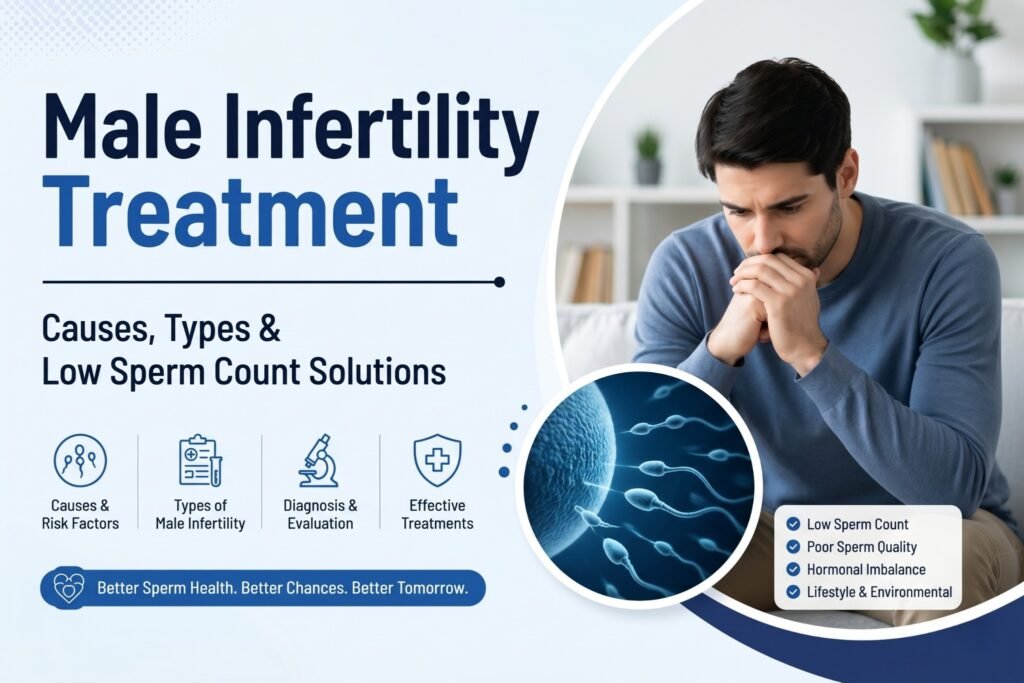
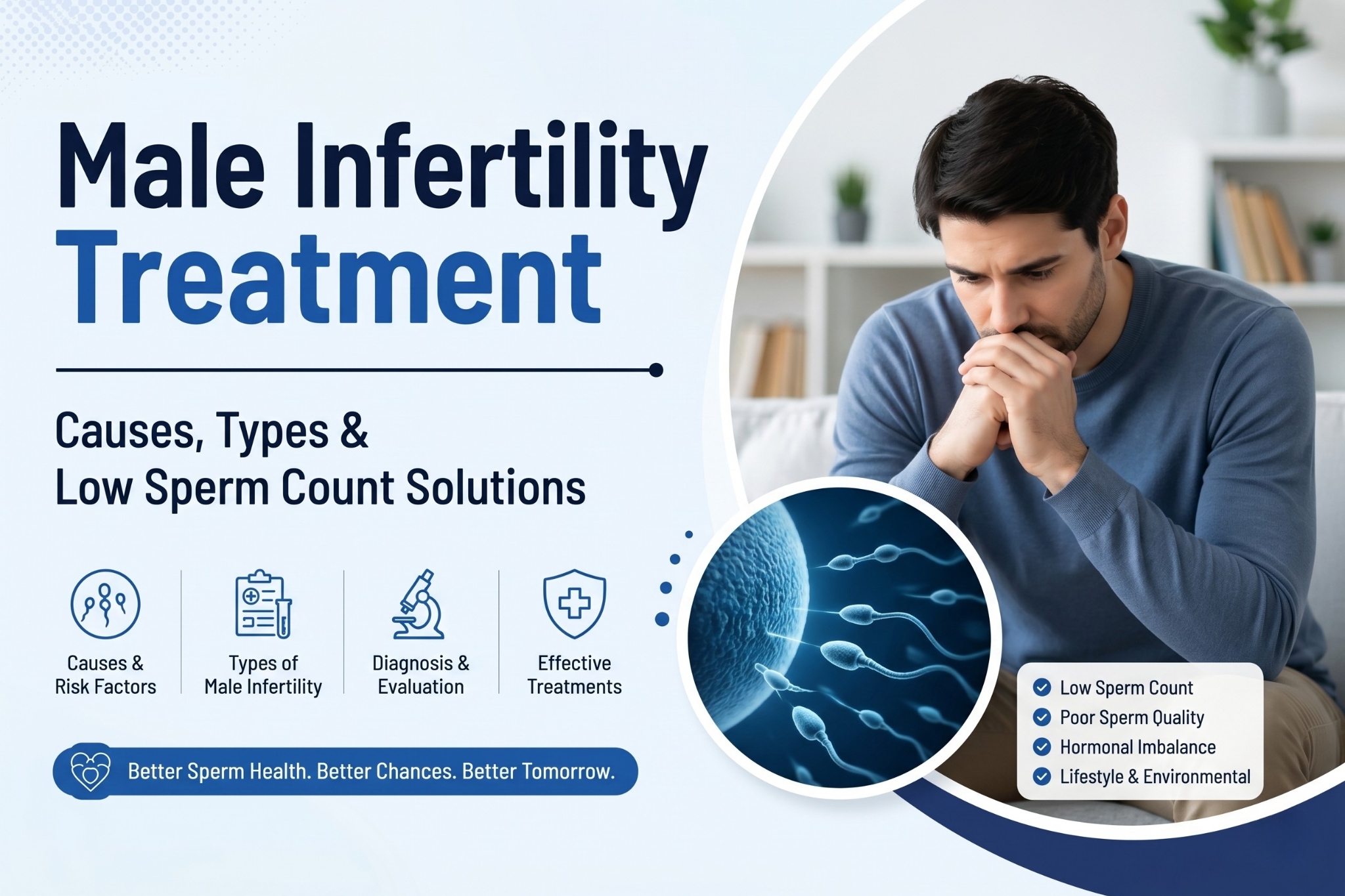
Male infertility treatment is no longer a confusing or uncomfortable topic – it’s a medical condition that can be understood, diagnosed, and treated with the right approach. Many couples struggle to conceive, and in nearly half of those cases, male factors play a role. The good news? Most causes are treatable, and modern fertility care offers practical solutions that actually work.
If you’ve been trying for a while without success, or you’ve been diagnosed with low sperm count or other issues, this guide will walk you through everything in a simple, clear way.
What is Male Infertility?
Male infertility refers to a man’s inability to contribute to pregnancy due to problems with sperm production, function, or delivery.
For a natural pregnancy to happen:
- Sperm must be produced in healthy numbers
- They should have good movement (motility)
- They must be properly shaped (morphology)
- And they should be delivered effectively
If any of these steps are affected, fertility may be reduced.
Common Causes of Male Infertility
Understanding the cause is the first step toward the right male infertility treatment.
1. Low Sperm Count (Oligospermia)
This is one of the most common issues. Fewer sperm reduce the chances of fertilizing an egg.
2. Poor Sperm Motility
Even if sperm count is normal, weak or slow movement makes it difficult for sperm to reach the egg.
3. Abnormal Sperm Shape
Sperm with unusual shapes may struggle to fertilize the egg effectively.
4. Hormonal Imbalance
Hormones like testosterone play a key role in sperm production. Any imbalance can impact fertility.
5. Varicocele
This is swelling of veins in the scrotum, which can affect sperm quality and production.
6. Infections
Certain infections can interfere with sperm health or block sperm delivery.
7. Lifestyle Factors
Daily habits can quietly affect fertility:
- Smoking
- Alcohol consumption
- Stress
- Poor diet
- Lack of sleep
8. Genetic Conditions
Some men are born with conditions that affect sperm production.
Types of Male Infertility
Male infertility isn’t a single condition—it can show up in different forms.
1. Primary Infertility
When a couple has never been able to conceive.
2. Secondary Infertility
When pregnancy has occurred in the past, but not anymore.
3. Obstructive Infertility
Sperm is produced but blocked from reaching semen.
4. Non-Obstructive Infertility
Sperm production itself is low or absent.
Signs You Should Not Ignore
Male infertility often has no obvious symptoms, but some warning signs include:
- Difficulty conceiving after 1 year of trying
- Low sexual desire
- Erectile issues
- Pain or swelling in testicles
- Reduced facial or body hair (hormonal issues)
If you notice any of these, it’s worth getting evaluated early.
How Male Infertility is Diagnosed
Diagnosis is simple and non-invasive in most cases.
1. Semen Analysis
This is the most important test. It checks:
- Sperm count
- Motility
- Morphology
2. Hormone Testing
Blood tests help identify hormonal imbalances.
3. Ultrasound
Used to detect structural problems like varicocele.
4. Genetic Testing
Recommended in certain cases of severe infertility.
Male Infertility Treatment Options
The right male infertility treatment depends on the underlying cause. A personalized approach always gives better results.
1. Lifestyle Improvements
Sometimes small changes can make a big difference:
- Quit smoking
- Reduce alcohol intake
- Maintain a healthy weight
- Manage stress
- Eat a balanced, nutrient-rich diet
These changes improve overall sperm health over time.
2. Medications
Doctors may prescribe medicines to:
- Balance hormones
- Treat infections
- Improve sperm production
3. Surgical Treatments
Certain conditions require minor procedures.
Varicocele Surgery
Correcting enlarged veins can improve sperm quality.
Blockage Repair
If sperm flow is blocked, surgery can restore it.
4. Assisted Reproductive Techniques (ART)
When natural methods are not enough, advanced fertility treatments help.
IUI (Intrauterine Insemination)
Healthy sperm is directly placed into the uterus to increase chances.
IVF (In Vitro Fertilization)
Egg and sperm are combined outside the body.
ICSI (Intracytoplasmic Sperm Injection)
A single healthy sperm is injected directly into the egg.
These methods are highly effective, especially for low sperm count cases.
Low Sperm Count Treatment: What Actually Works?
Low sperm count is one of the most searched concerns, and rightly so.
Effective solutions include:
- Nutritional supplements (zinc, antioxidants)
- Hormonal therapy
- Lifestyle correction
- Advanced procedures like ICSI
Many men see improvement within 3–6 months when treated properly.
When Should You See a Fertility Specialist?
Don’t wait too long. It’s better to consult early if:
- You’ve been trying for 12 months without success
- Your partner is over 35 (timeline becomes shorter)
- You have known medical issues
For a detailed evaluation and personalized care plan, you can explore expert-guided solutions here:
https://theovacare.com/male-infertility-treatment/
Can Male Infertility Be Prevented?
Not all cases are preventable, but you can reduce risk by:
- Maintaining a healthy lifestyle
- Avoiding heat exposure (tight clothing, hot tubs)
- Managing stress
- Staying active
- Getting regular health checkups
Emotional Impact of Male Infertility
This part often goes unspoken.
Many men feel:
- Stress
- Frustration
- Low confidence
It’s important to understand:
Infertility is a medical condition, not a personal failure
Open communication and the right support system make a big difference.
Success Rates of Male Infertility Treatment
Success depends on:
- Cause of infertility
- Age of partner
- Type of treatment
With modern techniques:
- IUI shows moderate success rates
- IVF & ICSI offer higher success rates
Early diagnosis always improves outcomes
Final Thoughts
Male infertility is more common than most people think—and more treatable than most people expect.
With proper diagnosis, the right male infertility treatment, and a bit of patience, many couples successfully achieve pregnancy.
If you’re unsure where to start, getting expert guidance is the best first step:
https://theovacare.com/male-infertility-treatment/


1 thought on “Male Infertility Treatment | Causes, Types & Low Sperm Count Solutions”
This post is extremely radiant. I really like this post. It is outstanding amongst other posts that I’ve read in quite a while. Much obliged for this better than average post. I truly value it!