




Birthing
Home » Birthing Treatment in Thane | Safe, Comfortable Childbirth
Why The Ova Care Is Trusted as the Best Fertility and Maternity Hospital

Personalized Support

High Success Rate

24/7 Availablity

5000+ Successful Pregnancies

16+ Years of Experienced Experts

Affordable & Ethical Treatment
Birthing
Birth is not only the final stage of pregnancy. It is a carefully monitored medical event, a deeply personal experience, and the beginning of mother and newborn care. At Ova Fertility & Women Care, birthing is supported with obstetrician-led labor care, respectful communication, pain-relief options, delivery-room readiness, newborn assessment, breastfeeding support, and postnatal recovery guidance. Our aim is to help mothers give birth safely, with dignity, privacy, and clear medical support at every stage.
Many women feel anxious about childbirth because they have heard stories about labor pain, sudden decisions, stitches, assisted delivery, or cesarean birth. Good delivery care reduces fear by explaining what may happen before it happens. When a mother understands the stages of labor, pain-relief choices, fetal monitoring, birth positions, pushing, placenta delivery, and post-birth recovery, she feels more prepared and more in control.
Ova’s birthing care is designed for mothers who want a safe delivery environment without losing the emotional warmth of childbirth. We support normal delivery when conditions are suitable, provide painless delivery options when appropriate, and use medical interventions only when they are needed for the safety of the mother or baby.

What Birthing Care Means at Ova
Birthing care includes labor preparation, admission guidance, contraction monitoring, fetal heartbeat assessment, cervical progress review, pain management, delivery support, newborn care, and immediate postnatal monitoring. It is not limited to the moment the baby is born. From prenatal discussions to recovery, breastfeeding, baby assessments, and discharge counseling, birth planning is essential.
At Ova, the mother’s preferences are heard and documented where possible. The clinical team discusses pain-relief choices, birth companion support, vaginal delivery planning, possible need for interventions, emergency readiness, and newborn care. Every birth plan must remain flexible because labor can change, but a prepared mother can still participate in decisions.
Childbirth should be guided by evidence, not fear. Normal delivery is supported when safe. Assisted delivery, induction, or cesarean delivery may be recommended if there is a clear medical reason. The mother and family are informed about the reason, expected benefit, and possible risks before decisions are made, except in urgent emergencies where rapid action is required.
Understanding the Birth Process
The birth process usually begins with regular uterine contractions, softening and opening of the cervix, and the baby moving down through the birth canal. Labor may start gradually, or waters may break before strong contractions begin. Some women experience a mucus show, backache, pelvic pressure, loose motions, or irregular contractions before active labor starts.
Not every pain means labor has started. False contractions may be irregular and settle with rest or hydration. The contractions of true labor are generally more frequent, stronger, and closer together. Mothers are guided during late pregnancy about when to call or come to the hospital.
Safe childbirth practices depend on timely assessment. If there is bleeding, leaking fluid, reduced fetal movements, severe abdominal pain, fever, headache, breathlessness, or concern about the baby’s movements, the mother should seek medical advice promptly.
Stages of Labor
Labor is commonly described in three stages. The first stage begins when contractions lead to cervical opening and continues until the cervix is fully dilated.There are two stages of labor in this stage: early labor and active labor. Early labor may be slower and may last several hours, especially in first-time mothers. Active labor is usually more intense, with stronger contractions and faster cervical progress.
During the first stage, the team monitors contractions, maternal comfort, fetal heartbeat, blood pressure, temperature, and labor progress. The mother may be encouraged to change positions, walk if appropriate, use breathing techniques, rest between contractions, and take fluids if permitted.
The second stage begins when the cervix is fully dilated and the mother starts pushing. As the baby is being born, this is the stage. The team guides pushing, checks fetal response, supports the perineum, and watches for signs that assistance may be needed.
The third stage is delivery of the placenta. After the baby is born, contractions continue so the placenta can separate. The team monitors bleeding, uterine tone, placenta delivery, and the mother’s overall condition. Medicines may be used to reduce bleeding risk when medically appropriate.
Labor Preparation
Labor preparation helps mothers understand what to expect and how to respond. Preparation may include childbirth education, breathing practice, relaxation techniques, pelvic floor awareness, posture guidance, hospital bag planning, breastfeeding basics, and discussion of birth preferences.
A birth plan does not guarantee one fixed type of delivery. Instead, it records what matters to the mother: pain-relief preferences, companion choice, mobility, communication style, breastfeeding wishes, newborn contact, and consent before procedures. The doctor explains what is possible in the hospital setting and what may change if the baby or mother needs urgent care.
At Ova, mothers are encouraged to ask direct questions before labor begins. What are the signs of active labor? When should I come to the hospital? Can I choose pain relief? What happens if progress is slow? When is assisted birth needed? What happens after delivery? Clear answers reduce panic when contractions begin.
Normal Delivery and Vaginal Birth Support
Normal delivery, also called vaginal delivery, is supported when the mother and baby are stable and labor is progressing safely. The body is allowed to work with appropriate monitoring, patience, position support, hydration guidance, and reassurance. The team avoids unnecessary intervention when mother and baby are doing well.
Natural childbirth does not mean a mother must tolerate severe pain without help. It means the delivery process is supported as naturally as possible while keeping safety central. Some mothers choose breathing, movement, massage, and emotional support. Others prefer medical pain relief. Both choices deserve respect.
During vaginal birth, the obstetric team monitors the mother’s progress and the baby’s wellbeing. A change in plan may be necessary if there is distress in the baby, if labor slows down, if the mother becomes exhausted, or if another concern occurs. A safe birth is more important than forcing one type of delivery.
Painless Delivery and Labor Pain Management
Labor pain is real, and fear of pain is one of the common reasons women feel anxious about childbirth. Ova’s current birthing page already mentions epidural support and Entonox as pain-relief options. In this rewritten page, the same strengths are presented more clearly and medically.
An epidural is a pain-relief method given by a trained specialist at the appropriate stage of labor. It can significantly reduce labor pain while allowing the mother to participate in delivery. The doctor and anesthesia team assess suitability before it is given. Blood pressure, fetal heartbeat, and labor progress are monitored after epidural placement.
Entonox is a mixture of nitrous oxide and oxygen inhaled during contractions. It can reduce pain intensity and help some mothers cope better with contractions. It acts quickly and is used only when needed during pain. It may not remove pain completely, but it can provide useful relief for selected mothers.
Non-medical comfort measures may include breathing, position changes, walking when safe, gentle massage, relaxation, reassurance, and continuous support. Labor pain management should be individualized because every mother’s pain tolerance, labor pattern, and medical condition are different.
Labor Monitoring
Labor monitoring protects both mother and baby. The team checks contraction pattern, cervical dilatation, baby’s heart rate, maternal pulse, blood pressure, temperature, fluid color if waters have broken, and overall progress.It depends on the situation whether monitoring is intermittent or continuous.
Fetal heart monitoring helps the team understand how the baby is tolerating contractions. Most babies cope well with labor, but if concerning patterns appear, the doctor may advise additional observation, position change, fluids, oxygen when indicated, or delivery intervention depending on the situation.
Labor monitoring is not meant to make birth feel mechanical. It is the safety framework that allows the team to support vaginal birth confidently while being ready to act when needed.
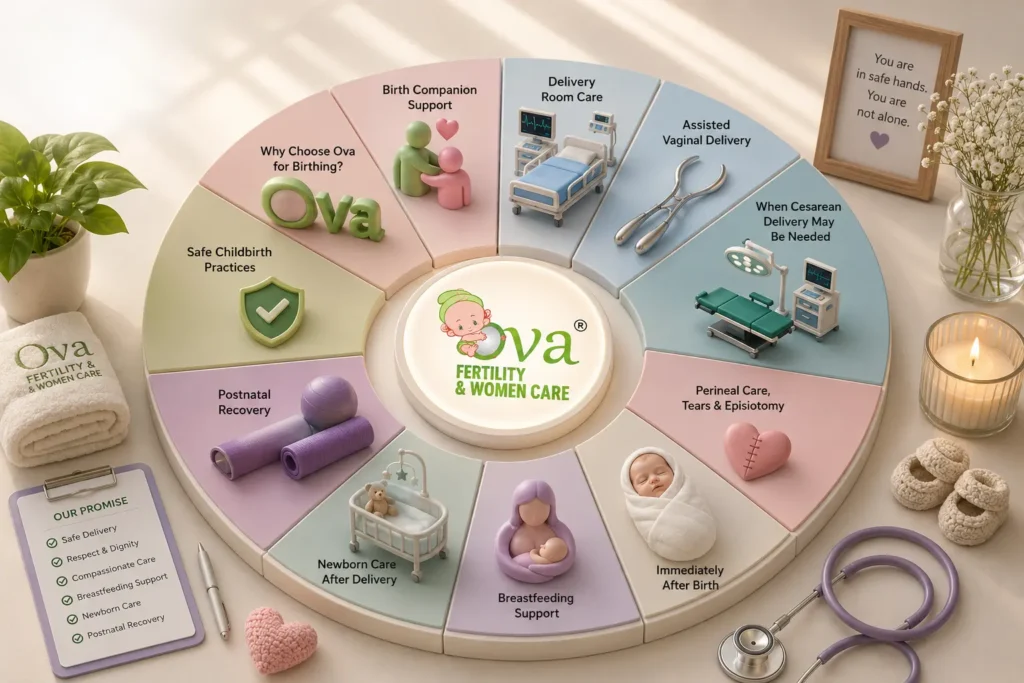
Birth Companion Support
A trusted birth companion can help the mother feel calmer and supported. Depending on hospital policy and clinical situation, a companion may provide reassurance, help with breathing, offer emotional support, communicate preferences, and stay with the mother during appropriate parts of labor.
The companion should understand that labor rooms are medical areas and cooperation with the clinical team is essential. If urgent intervention is needed, safety instructions must be followed immediately. The best birth support combines emotional presence with respect for medical care.
Delivery Room Care
Delivery room care includes maintaining privacy, cleanliness, fetal monitoring, maternal comfort, sterile delivery preparation, safe birth assistance, newborn readiness, and emergency equipment access. The team prepares for expected and unexpected needs because childbirth can change quickly.
The delivery room team may include obstetricians, nurses, anesthesia support when needed, and pediatric/newborn support. Communication is important. Mothers should be informed before examinations, procedures, medicines, or changes in plan whenever possible.
At Ova, respectful maternity care means explaining decisions, preserving dignity, and treating the mother as an active participant in childbirth.
Assisted Vaginal Delivery
Sometimes the baby needs help to be born vaginally. Assisted delivery may involve vacuum or forceps when the baby is low enough in the birth canal and specific conditions are met. Ova’s current page notes that vacuum and forceps must be used correctly to protect the baby and birth canal.
Assisted vaginal delivery may be considered if the mother is exhausted, the baby needs quicker delivery, or pushing is not progressing despite full dilation. It is not used casually. The doctor assesses baby position, station, maternal pelvis, fetal wellbeing, and safety before recommending it.
The mother is informed why assistance is needed. When performed by an experienced team in the correct situation, assisted delivery can avoid delay and help complete a vaginal birth safely.
When Cesarean Delivery May Be Needed
A birthing page should support normal delivery while being honest that cesarean birth may sometimes be the safest option. Cesarean delivery may be advised if labor is not progressing, fetal distress is suspected, placenta position is unsafe for vaginal birth, the baby is in an unsuitable position, there are certain previous uterine surgery concerns, or an emergency develops.
The decision is made for mother and baby safety. A cesarean is not a failure. It is a surgical birth used when vaginal birth may carry higher risk. The doctor explains the reason, anesthesia plan, recovery, baby care, and follow-up wherever time allows.
Ova’s birthing care keeps emergency readiness available so that unexpected decisions can be handled without delay.
Perineal Care, Tears, and Episiotomy
During vaginal birth, the tissues around the vaginal opening stretch as the baby is born. Some women may have natural tears. In selected cases, the doctor may perform an episiotomy, a controlled cut to enlarge the opening and reduce more irregular tearing when clinically needed.
Perineal care is important after birth. Ova’s current page correctly emphasizes proper stitch care to prevent infection and support healing. Gentle sutures, careful repair, hygiene guidance, pain control, sitz bath advice when appropriate, and follow-up help reduce discomfort and long-term problems.
Mothers are also counselled about pelvic floor exercises after medical approval.In addition to supporting healing and bladder control, good postpartum care contributes to regaining pelvic strength as well as sexual comfort.
Immediately After Birth
In the first few hours after birth, the team inspects the baby for breathing, tone, color, and heart rate.If mother and baby are stable, early skin-to-skin contact and breastfeeding support may be encouraged. The umbilical cord is clamped according to clinical protocol. The placenta is delivered and the mother is monitored for bleeding.
The first hour after birth is medically and emotionally important. The mother needs observation, reassurance, hydration when appropriate, perineal care if needed, and help with first feeding. The baby needs warmth, identification, examination, feeding support, and continued monitoring.
Breastfeeding Support
Breastfeeding is natural, but many new mothers need help. Ova’s current page mentions lactation-consultant guidance and the importance of mother-infant bonding. This should remain a major strength of the birthing page.
Early breastfeeding support includes correct latch, comfortable positioning, feeding frequency, recognizing swallowing, managing nipple soreness, understanding colostrum, burping, and knowing when to ask for help. Families are also counselled against myths that create unnecessary fear or pressure.
The aim is to help the mother feed confidently while respecting medical realities. Some babies need additional observation or feeding support; the pediatric team guides this when needed.
Newborn Care After Delivery
Ova’s existing page mentions daily pediatric review and first-dose vaccination before discharge. These are strong trust points for birthing care. Newborn assessment helps detect concerns early, including feeding difficulty, breathing problems, jaundice, heart murmurs, temperature issues, or infection signs.
The pediatrician examines the baby, checks weight, feeding, urine, stool, reflexes, and overall adaptation. Parents are advised about vaccination, cord care, temperature care, safe sleep, feeding cues, and warning signs after discharge.
A safe birthing center should care for both mother and baby, not only complete the delivery.
Postnatal Recovery
Postnatal recovery includes uterine contraction, bleeding reduction, breast changes, perineal or surgical wound healing, bladder and bowel recovery, sleep adjustment, emotional changes, and gradual return to movement. Ova’s current page also mentions postnatal physiotherapy guidance for posture and exercise. This is valuable and should be presented clearly.
A physiotherapist may guide safe posture, back care, abdominal breathing, pelvic floor awareness, and gentle movement. Exercises should be started only as advised, especially after difficult delivery, assisted birth, episiotomy, or cesarean.
The mother should seek medical help for fever, heavy bleeding, foul-smelling discharge, severe pain, wound discharge, breast redness with fever, calf pain, breathlessness, sadness that persists, panic, or inability to care for herself or the baby.
Safe Childbirth Practices
Safe delivery depends on preparation, trained staff, sterile technique, fetal monitoring, maternal observation, pain-relief availability, emergency readiness, and clear communication. It also depends on not delaying intervention when it becomes necessary.
At Ova, birthing care is supported by a multispeciality hospital setting. The current page notes that complicated pregnancies may need different specialties and investigations under one roof. This broader safety support is important because even routine labor can occasionally require rapid medical decisions.
Safety does not mean making birth frightening. It means being prepared while respecting the mother’s natural birth process as much as possible.
Why Choose Ova for Birthing?
Ova Fertility & Women Care provides birthing care in Thane with normal delivery support, painless delivery options, labor monitoring, assisted delivery capability when needed, perineal care, breastfeeding guidance, pediatric review, vaccination support, postnatal physiotherapy guidance, and multispeciality backup. The center is located at 1st Floor, Tieten Medicity Hospital, Kasarvadavali, Ghodbunder Road, Thane West, with appointment access through phone and email listed on the current site.
Patients from Kasarvadavali, Ghodbunder Road, Manpada, Waghbil, Hiranandani Estate, Kolshet, Majiwada, Vasant Vihar, Pokhran Road, Kalwa, Mulund, Airoli, Dombivli, and nearby areas can consult Ova for birth planning, delivery care, labor support, and postnatal guidance.
Maternity Treatments
Let's Meet Up
contact
Frequently Asked Questions
Birthing care includes labor preparation, admission guidance, contraction monitoring, fetal heartbeat assessment, pain relief, delivery support, newborn assessment, breastfeeding guidance, and postnatal recovery care.
Yes. Normal delivery is supported when mother and baby are stable and labor is progressing safely. The team monitors labor and recommends intervention only when clinically needed.
Painless delivery usually refers to labor pain relief using epidural analgesia. It can reduce contraction pain significantly while allowing the mother to participate in birth.
Entonox is a pain-relief option mentioned on Ova’s current birthing page. It is inhaled during contractions and may reduce pain intensity for selected mothers.
Come or call if contractions become regular and strong, waters break, bleeding occurs, fetal movements reduce, severe pain develops, or your doctor has given specific admission instructions.
Birth companion support depends on hospital policy and clinical situation. The team can guide you during birth planning.
If vaginal birth becomes unsafe or labor does not progress, the doctor may advise assisted delivery or cesarean delivery depending on the mother and baby’s condition.
Yes. The pediatrician reviews the baby after birth and during the hospital stay. Ova’s current page also mentions vaccination before discharge.
Yes. Breastfeeding guidance is part of post-birth care, including latch, positioning, feeding frequency, and common early concerns.
Yes. Mothers receive advice on bleeding, stitches, pain relief, hygiene, breastfeeding, movement, warning signs, and follow-up.
Related Searches:
Intrauterine Insemination (IUI) Treatment in Thane, Pre-Implantation Genetic Testing in Thane, Blastocyst Culture And Transfer Clinic in Thane, Laser Assisted Hatching Treatment in Thane, Egg/Sperm/Embryo Cryopreservation Freezing, Endoscopy In Fertility Treatments, Pregnancy Care, Birthing, Ultrasound In Pregnancy, High Risk Pregnancy Treatment Care With ICU Facility, Laparoscopic Surgery, Hysteroscopic Surgery, Menopause, Puberty Adolescence Treatment, Oncofertility,Male Infertility Treatment in Thane, best ivf hospital, ivf specialist, ivf doctor in thane, fertility treatment in thane, dr. snehal kohale ivf specialist
Our Latest Articles

Unexplained Infertility: What It Means When Routine Tests Are Normal
For many couples, receiving normal fertility test reports but still not achieving pregnancy can feel confusing and frustrating. When standard evaluations do not identify a clear reason for difficulty conceiving, doctors may describe the situation as unexplained infertility. This does not mean that there is no reason behind the fertility
Thyroid and Infertility: How TSH Can Affect Ovulation and Pregnancy Planning
When couples are planning a pregnancy, doctors often evaluate different hormones that play a role in reproductive health. Among these, thyroid hormones are important because they influence metabolism, menstrual cycles, ovulation, and pregnancy preparation. The connection between thyroid and infertility is mainly related to how thyroid hormone imbalance can affect

High Prolactin and Infertility: How Prolactin Can Affect Ovulation
When couples are trying to conceive, doctors often evaluate several hormones that influence reproductive health. One of these important hormones is prolactin. While prolactin is best known for its role in breast milk production, abnormal levels can also affect reproductive hormones and ovulation. The connection between high prolactin and infertility