




For many couples, trying to conceive is an exciting journey. However, when pregnancy does not happen after months of regular attempts, it is natural to wonder whether it is time to seek medical guidance.
One of the most common questions couples ask is when to see a fertility specialist.
The answer depends on several factors, including age, medical history, menstrual cycle pattern, previous pregnancies, and any known fertility concerns. While some couples may need evaluation after trying for a year, others may benefit from an earlier consultation.
A fertility consultation does not always mean you need IVF or advanced treatment immediately. Often, the first step is understanding your reproductive health, identifying possible concerns, and deciding whether any treatment or monitoring is needed.
How Long Should You Try for Pregnancy Before Seeking Help?
The recommended time to seek a fertility evaluation depends mainly on age and individual circumstances.
If You Are Under 35 Years
For couples where the woman is under 35 and there are no known fertility concerns, doctors generally recommend trying to conceive for about 12 months before starting an infertility evaluation.
This means having regular unprotected intercourse without pregnancy during that period.
If You Are 35 Years or Older
For women aged 35 and above, fertility evaluation is generally recommended after 6 months of trying because fertility can decline more quickly with age.
Early evaluation helps identify possible issues and avoids unnecessary delays in treatment planning.
If You Are Over 40
Women over 40 may benefit from a more immediate fertility consultation because age-related changes in egg quantity and quality can influence fertility planning.
What Is Infertility?
Infertility is generally described as the inability to achieve pregnancy after regular unprotected intercourse for a certain period.
However, fertility evaluation may be recommended earlier when there are known factors that could affect conception.
These factors may include:
- Irregular or absent periods
- Known ovulation problems
- Previous pelvic surgery
- Endometriosis
- Problems with fallopian tubes
- Male fertility concerns
- Previous cancer treatment affecting fertility
Both partners should be evaluated because fertility challenges can involve male, female, or combined factors.
Signs You May Need a Fertility Specialist Earlier
Waiting for the recommended timeline may not be necessary if certain concerns are already present.
You may consider an earlier fertility doctor consultation if you experience:
1. Irregular Menstrual Cycles
Regular ovulation is important for natural conception.
Irregular periods may suggest issues such as:
- PCOS
- Hormonal imbalance
- Thyroid problems
- Ovulation disorders
If ovulation is unpredictable, a fertility specialist can help identify the cause.
2. History of Pregnancy-Related Problems
You may benefit from earlier evaluation if you have experienced:
- Repeated pregnancy loss
- Previous ectopic pregnancy
- Complications affecting reproductive health
Your doctor can review your history and suggest appropriate investigations.
3. Suspected Male Fertility Concerns
Fertility evaluation should involve both partners.
Male fertility factors may include:
- Low sperm count
- Reduced sperm movement
- Abnormal sperm shape
- Previous testicular problems
A semen analysis is often one of the initial tests used to evaluate male fertility.
4. Previous Pelvic Conditions or Surgeries
Conditions affecting reproductive organs may influence fertility.
These may include:
- Endometriosis
- Fibroids
- Pelvic infections
- Previous ovarian or uterine surgery
In such situations, an earlier assessment may help with planning.
What Happens During a Fertility Consultation?
Many people delay seeing a specialist because they are unsure what happens during the first appointment.
A fertility consultation usually begins with understanding your complete reproductive history.
Your doctor may discuss:
- Age and menstrual history
- Duration of trying to conceive
- Previous pregnancies
- Medical conditions
- Lifestyle factors
- Partner’s fertility history
The goal is to understand possible factors affecting conception.
What Tests May Be Recommended During Fertility Evaluation?
The tests recommended depend on your individual situation.
A fertility specialist may suggest:
Ovulation Assessment
Doctors may evaluate whether ovulation is happening regularly through:
- Menstrual history
- Hormone testing
- Ultrasound monitoring
Ovarian Reserve Testing
Tests such as:
- AMH blood test
- Antral follicle count (AFC)
- Other hormone assessments
may provide information about ovarian reserve.
Fallopian Tube Evaluation
Fallopian tubes need to be open for natural conception.
Doctors may recommend tests such as:
- HSG test
- Other imaging methods
to evaluate tubal health.
Semen Analysis
Male partner evaluation is an important part of fertility assessment.
A semen analysis may check:
- Sperm count
- Movement
- Shape
- Overall sample quality
Infertility After 6 Months: When Does It Apply?
Many couples search for information about infertility after 6 months.
Trying for six months without pregnancy may be a reason to seek evaluation, especially when:
- The woman is 35 years or older
- There are irregular periods
- There is a known fertility condition
- There are male fertility concerns
For younger couples without risk factors, doctors may usually recommend trying longer before starting a full evaluation.
Infertility After 1 Year: When Should You Seek Help?
For couples under 35 with no known fertility concerns, not conceiving after one year of regular unprotected intercourse is a common point when fertility evaluation is recommended.
At this stage, a specialist can help identify whether there are:
- Ovulation concerns
- Sperm-related factors
- Tubal problems
- Uterine factors
- Unexplained fertility issues
Early diagnosis can help couples understand their options.
Does Seeing a Fertility Specialist Mean You Need IVF?
No.
A fertility consultation does not automatically mean IVF is required.
Depending on the findings, treatment options may include:
- Lifestyle guidance
- Ovulation tracking
- Medication for ovulation support
- IUI
- IVF
- Other fertility treatments
The recommended approach depends on the cause, age, fertility history, and personal preferences.
Why Early Fertility Consultation Can Be Helpful
Many couples wait because they hope pregnancy will happen naturally with more time.
However, fertility evaluation can provide useful information about:
- Egg reserve
- Ovulation
- Sperm health
- Reproductive anatomy
Understanding your fertility status earlier may help you make informed decisions about your options.
Questions to Ask During Your Fertility Consultation
Before meeting a fertility specialist, it may help to prepare questions such as:
- Is my age affecting my fertility?
- Are my cycles showing normal ovulation?
- What tests do both partners need?
- How long should we continue trying naturally?
- What treatment options may be suitable for us?
- Are there lifestyle changes that may help?
A clear discussion helps you understand your next steps.
When Should You Consult a Fertility Specialist?
You should consider consulting a fertility specialist if:
- You have been trying without success for the recommended timeframe.
- You are above 35 and have been trying for six months.
- You have irregular periods.
- You have known fertility-related conditions.
- You want to understand your reproductive health.
At Ova Fertility & Women Care, fertility specialists evaluate both partners, review medical history, and recommend appropriate fertility testing or treatment based on individual needs.
For couples looking for professional guidance, infertility evaluation and treatment options in Thane can help you understand the available fertility care pathway.
Final Thoughts
Knowing when to see a fertility specialist can help couples avoid unnecessary delays while trying to conceive. The right time depends on age, health history, and individual fertility factors.
A fertility consultation is not only about treatment; it is about understanding what may be affecting conception and making informed decisions.
If you have been trying to conceive and want clarity about your fertility health, the specialists at Ova Fertility & Women Care can help evaluate your situation and guide you through the next steps.
FAQ
1. Can you have infertility after having one child naturally?
Yes. Secondary infertility can occur even if the first pregnancy happened naturally and without difficulty. Age, ovarian reserve, ovulation, fallopian tube health, sperm factors, uterine conditions, or health changes since the previous pregnancy may influence fertility.
2. What are the common secondary infertility causes?
Possible secondary infertility causes include age-related fertility changes, ovulation problems, reduced ovarian reserve, blocked or damaged fallopian tubes, endometriosis, uterine conditions, and changes in sperm health. Previous pregnancy or surgery may also be relevant in some cases.
3. Why am I having trouble conceiving my second baby when my first pregnancy was easy?
Fertility can change over time. The number and quality of eggs may change with age, new hormonal or reproductive conditions may develop, and sperm health can also change. A previous easy pregnancy therefore does not guarantee that conception will happen as quickly again.
4. Does breastfeeding cause secondary infertility?
Breastfeeding can delay ovulation and the return of regular menstrual cycles in some women, particularly in the months after childbirth. This effect varies considerably. If cycles have returned but pregnancy is still not occurring, other fertility factors may need evaluation.
5. Can secondary infertility be treated?
Yes, treatment options are available, but the right approach depends on the cause. Some couples may need ovulation monitoring or medication, while others may be advised IUI, IVF, ICSI, or treatment for a specific reproductive condition.
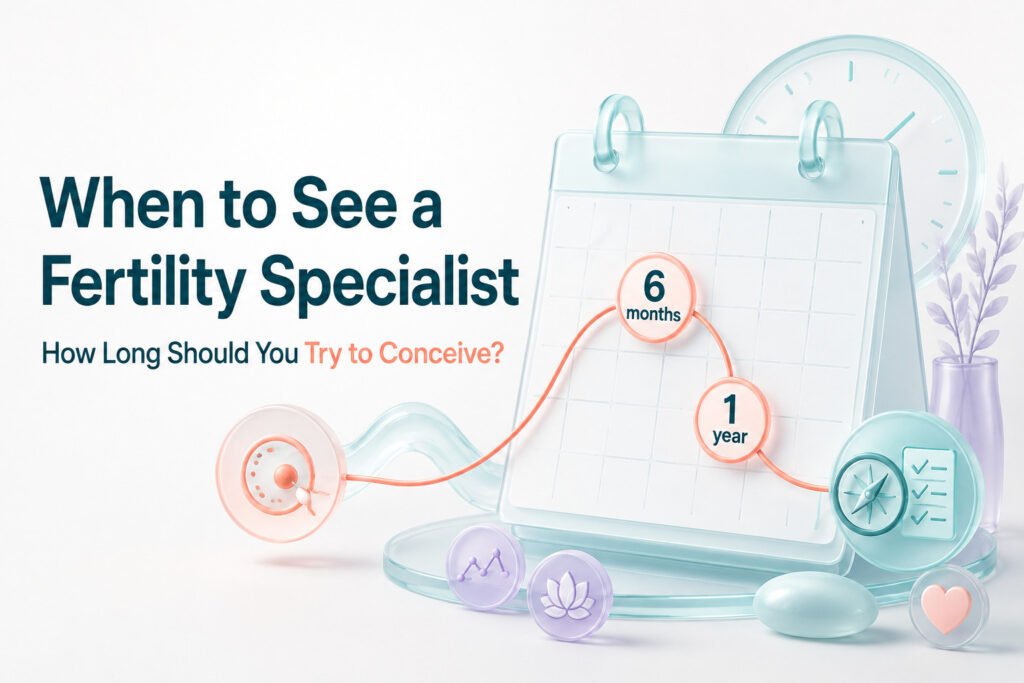
Table Of Content
- How Long Should You Try for Pregnancy Before Seeking Help?
- What Is Infertility?
- Signs You May Need a Fertility Specialist Earlier
- What Happens During a Fertility Consultation?
- What Tests May Be Recommended During Fertility Evaluation?
- Infertility After 6 Months: When Does It Apply?
- Infertility After 1 Year: When Should You Seek Help?
- Does Seeing a Fertility Specialist Mean You Need IVF?
- Why Early Fertility Consultation Can Be Helpful
