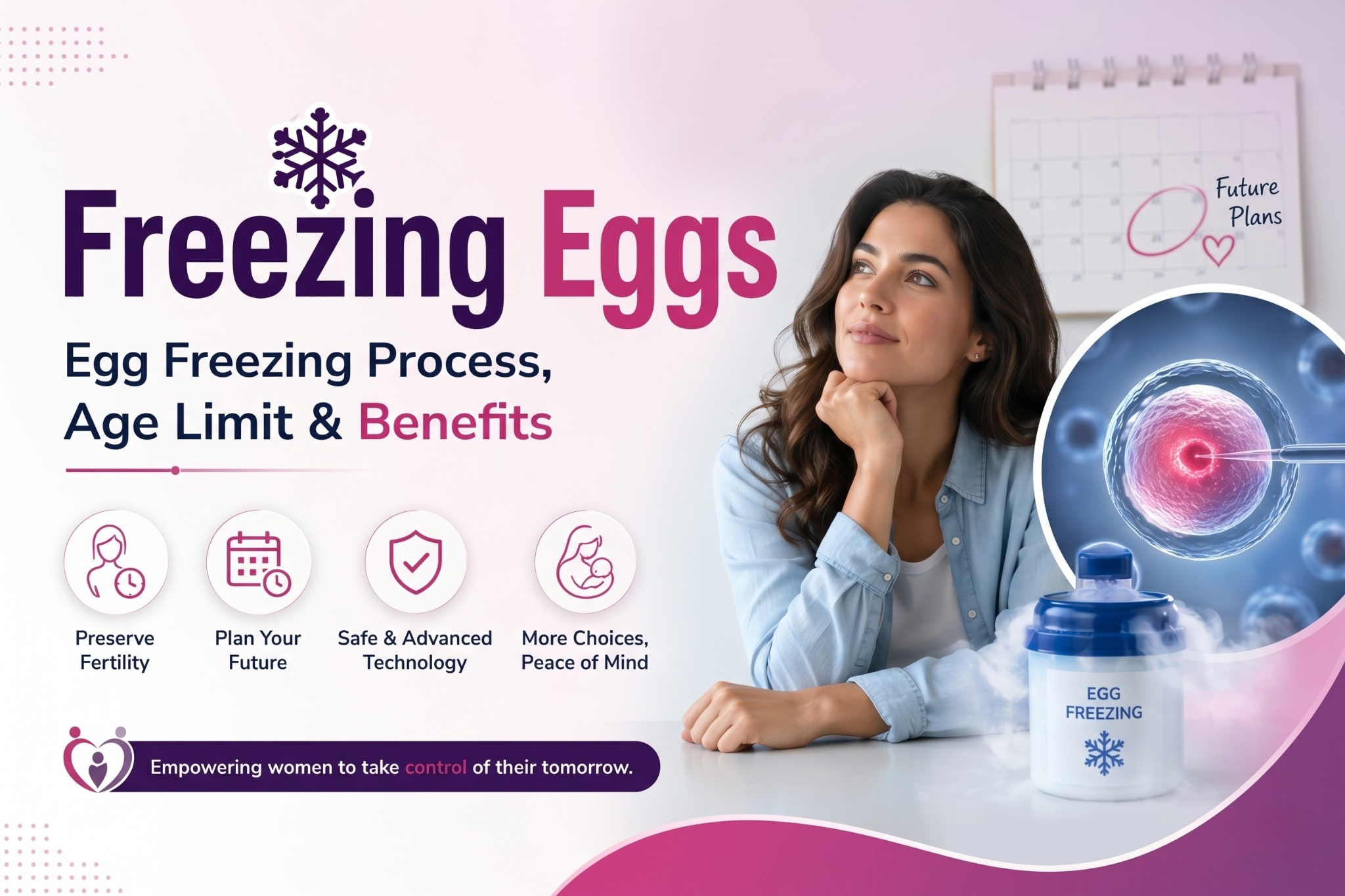


Freezing Eggs: What It Really Means
Freezing eggs is a fertility preservation method that allows women to store their eggs at a younger, healthier stage and use them later when they are ready for pregnancy.
In simple terms, it’s about pausing your biological clock.
This option has become more common for women who:
- Want to delay pregnancy for career or personal reasons
- Are not ready for motherhood yet
- Are undergoing medical treatments like chemotherapy
- Have conditions that may affect fertility (like PCOS or endometriosis)
The idea is straightforward:
Collect healthy eggs today → freeze them → use them later when needed.
Why More Women Are Choosing Egg Freezing
The shift is noticeable. Earlier, fertility preservation was mostly medical. Now, it’s also a lifestyle choice.
Here’s why:
- Career planning: Many women want stability before starting a family
- Late marriages: Timing doesn’t always align with fertility
- Health concerns: Protect fertility before treatments
- Peace of mind: Having a backup plan reduces pressure
It’s not about delaying motherhood forever. It’s about keeping the option open.
The Egg Freezing Process (Step-by-Step)
Understanding the process removes most of the fear. Here’s how it typically works:
1. Initial Consultation & Testing
Your doctor evaluates:
- Hormone levels
- Ovarian reserve (AMH test)
- Ultrasound scan
This helps decide how your body may respond.
2. Ovarian Stimulation (10–12 Days)
You’ll take hormone injections to stimulate your ovaries to produce multiple eggs instead of just one.
During this phase:
- Regular scans monitor growth
- Dosage is adjusted if needed
3. Egg Retrieval Procedure
Once the eggs are ready:
- A minor procedure is done under sedation
- Eggs are collected using a thin needle
It usually takes 15–20 minutes and doesn’t require hospitalization.
4. Freezing (Cryopreservation)
The collected eggs are rapidly frozen using a technique called vitrification.
This ensures:
- High survival rate when thawed
- Minimal damage to egg quality
5. Storage
The eggs are stored in a controlled lab environment until you decide to use them.
When needed:
- Eggs are thawed
- Fertilized with partner or donor sperm (IVF/ICSI)
- Transferred into the uterus
Ideal Age Limit for Freezing Eggs
This is where most people get confused.
There is no strict “cut-off” age, but timing matters a lot.
Best Age Range
- 25 to 35 years → highest egg quality and success rates
After 35
- Egg quality and quantity begin to decline
- More cycles may be needed
After 40
- Chances reduce significantly
- Doctors may recommend alternatives depending on the case
Key point:
Freezing eggs earlier gives better outcomes later.
Does Freezing Eggs Affect Periods?
This is one of the most common concerns.
Short answer: No, it does not affect your long-term menstrual cycle.
During the process:
- Hormone injections may temporarily change your cycle
- Periods may feel slightly different for a month or two
But after that:
- Your natural cycle returns to normal
- No permanent impact on fertility or periods
Benefits of Freezing Eggs
- Control Over Timing
You don’t have to rush into pregnancy decisions.
2. Better Chances Later
Eggs frozen at a younger age retain better quality.
3. Medical Safety Net
Helpful for women undergoing:
- Cancer treatment
- Surgery affecting ovaries
4. Reduced Pressure
It removes the constant worry of “running out of time.”
5. Supports Future IVF Success
Frozen eggs can be used later for IVF with good success rates.
Who Should Consider Freezing Eggs?
You may want to think about it if:
- You’re in your late 20s or early 30s and not planning pregnancy soon
- You have irregular cycles or fertility concerns
- You’ve been diagnosed with conditions affecting fertility
- You want flexibility in life decisions
It’s not for everyone, but for the right person, it can be a strong backup plan.
Is Egg Freezing Safe?
Yes, when done under proper medical supervision.
- The procedure is widely practiced
- Risks are minimal and manageable
- Modern freezing techniques are highly effective
Side effects (if any) are usually mild:
- Bloating
- Mood changes
- Temporary discomfort
Success Rate of Freezing Eggs
Success depends on:
- Age at the time of freezing
- Number of eggs stored
- Overall health
General idea:
- Younger eggs = higher success
- More eggs = better chances
Doctors often suggest freezing multiple eggs to improve outcomes.
Cost and Practical Considerations
While costs vary, you should factor in:
- Stimulation and procedure cost
- Storage charges (yearly)
- Future IVF cost when using eggs
It’s an investment, not just financially but emotionally too.
Where to Get the Right Guidance
Choosing the right clinic matters more than anything.
You need:
- Experienced fertility specialists
- Transparent communication
- Advanced lab setup
If you want to understand the process in detail or explore your options, you can visit this page:
https://theovacare.com/egg-sperm-embryo-cryopreservation/
(Use it as a starting point to understand available services and approach.)
Common Myths About Freezing Eggs
Myth 1: It guarantees pregnancy
Truth: It improves chances, but doesn’t guarantee success.
Myth 2: It’s only for older women
Truth: Younger women benefit more.
Myth 3: It damages fertility
Truth: It does not reduce your natural fertility.
Myth 4: It’s painful
Truth: Most of the process is manageable and done with medical support.
Emotional Side of the Decision
This isn’t just a medical decision.
Many women feel:
- Relief after freezing eggs
- Less pressure around timelines
- More confidence in planning life
At the same time, it’s important to stay realistic and informed.
Final Thoughts
Freezing eggs is about choice, timing, and preparation.
It doesn’t replace natural fertility, but it gives you:
- Flexibility
- A backup plan
- Peace of mind
If you’re unsure, the best step is not to decide immediately —
It’s to get evaluated and understand your options first.
You can also explore more about fertility preservation here:
https://theovacare.com/egg-sperm-embryo-cryopreservation/