




Is Endoscopy Painful Procedure? What to Expect, Recovery & Comfort During Treatment
Is endoscopy painful procedure? This is one of the most common questions women ask when a doctor suggests hysteroscopy, laparoscopy, or fertility-related endoscopy. The thought of a camera, instruments, surgery, or anesthesia can naturally make anyone nervous. Many women start worrying before they even understand what the procedure actually involves.
The simple answer is: endoscopy is usually not a highly painful procedure because it is done with proper anesthesia, sedation, or pain-control support depending on the type of endoscopy. Some women may feel mild discomfort, cramping, bloating, shoulder pain, or tiredness after the procedure, especially after laparoscopy, but severe pain is not expected when the procedure is performed with proper medical care.
At Ova Fertility and Women Care, endoscopy is used in women’s health and fertility care to diagnose and treat internal reproductive concerns through minimally invasive techniques. Ova Care explains that endoscopy in fertility treatment includes diagnostic and operative laparoscopy and hysteroscopy, used to inspect pelvic organs and treat abnormalities when needed.
This blog explains what endoscopy means in gynecology and fertility care, whether it is painful, what happens before and after the procedure, how recovery feels, and when you should contact your doctor.
What Is Endoscopy in Gynecology and Fertility Care?
Endoscopy is a minimally invasive technique used to look inside the body using a thin camera and specialized instruments. In women’s health and fertility care, endoscopy usually refers to procedures like laparoscopy and hysteroscopy.
These procedures help doctors see the uterus, fallopian tubes, ovaries, and pelvic organs more clearly. Sometimes, they are done only to diagnose a condition. In other cases, the doctor may treat the problem during the same procedure.
Ova Fertility and Women Care describes endoscopy in fertility treatments as a minimally invasive surgical technique used for infertility diagnosis and treatment. It includes diagnostic procedures to inspect pelvic organs and operative procedures to treat abnormalities through laparoscopy and hysteroscopy.
Common gynecological endoscopy procedures include:
- Hysteroscopy
- Laparoscopy
- Diagnostic laparoscopy
- Operative laparoscopy
- Diagnostic hysteroscopy
- Operative hysteroscopy
- Laparoscopy and hysteroscopy with dye test for fertility evaluation
These procedures may sound complicated at first, but they are commonly used in modern gynecology because they allow better diagnosis with smaller cuts, less tissue handling, and faster recovery compared to many open surgical methods.
Featured Snippet Answer: Is Endoscopy Painful?
Endoscopy is usually not very painful because it is performed with anesthesia, sedation, or pain-relief support depending on the procedure. In gynecology, hysteroscopy may cause mild cramping afterward, while laparoscopy may cause mild abdominal pain, bloating, or shoulder discomfort for a few days. Most discomfort is manageable with medicines and proper rest.
Why Is Endoscopy Recommended?
A gynecologist may recommend endoscopy when symptoms, ultrasound findings, fertility history, or previous treatment results suggest that a closer internal evaluation is needed.
Endoscopy is often useful because some problems cannot be fully understood from symptoms alone. Even ultrasound may not always give the complete picture. In such cases, hysteroscopy or laparoscopy can help the doctor see the uterus or pelvic organs directly.
Endoscopy may be recommended for:
- Infertility evaluation
- Repeated IVF failure
- Recurrent miscarriage
- Suspected endometriosis
- Fibroids
- Ovarian cysts
- Blocked fallopian tubes
- Pelvic adhesions
- Abnormal uterine bleeding
- Uterine polyps
- Septum or uterine cavity abnormalities
- Chronic pelvic pain
- Painful periods
- Suspected pelvic infection effects
- Fertility-enhancing surgery
Ova Care’s infertility services mention that fertility testing may include tubal tests such as SIS, HSG, laparoscopy, hysteroscopy, and dye test. This shows how endoscopic procedures may be part of a complete fertility evaluation when needed.
Is Endoscopy Painful Procedure During the Procedure?
Most women do not feel pain during the procedure because anesthesia or sedation is used. The type of anesthesia depends on the type of endoscopy and the purpose of the procedure.
For example, hysteroscopy may sometimes be done with lighter anesthesia or sedation depending on the case, while laparoscopy is usually done under anesthesia because it involves looking inside the abdomen and pelvis through small cuts.
During the procedure, the patient is monitored by the medical team. The goal is to keep the procedure safe, controlled, and comfortable.
You may not feel pain during the procedure because:
- Anesthesia or sedation is used
- Pain-control medicines may be given
- The procedure is performed in a controlled setup
- The medical team monitors your comfort and safety
- Minimally invasive methods use smaller access points
The fear before the procedure is often worse than the actual experience. Many women feel nervous before endoscopy, but later say that it was more manageable than they expected.
What Does Pain Feel Like After Endoscopy?
After the procedure, some discomfort is common. The level of discomfort depends on whether you had hysteroscopy, laparoscopy, or an operative procedure where treatment was also done.
After hysteroscopy, you may feel:
- Mild lower abdominal cramps
- Light spotting
- Mild backache
- Period-like discomfort
- Slight tiredness
After laparoscopy, you may feel:
- Mild pain near the small cuts
- Abdominal bloating
- Shoulder-tip pain due to gas used during surgery
- Mild nausea after anesthesia
- Tiredness
- Slight pulling sensation around stitches
- Discomfort while moving for one or two days
This discomfort is usually manageable with prescribed medicines, rest, hydration, and following the doctor’s instructions.
Ova Care’s laparoscopic surgery page highlights that laparoscopy is performed through small cuts and may lead to reduced post-surgery pain and reduced chances of infection compared with traditional methods. It also mentions that patients may return to normal in as less as 48 hours in suitable cases.
Hysteroscopy: Is It Painful?
Hysteroscopy is a procedure used to look inside the uterus. A thin camera is passed through the vagina and cervix into the uterus. Since it does not usually require cuts on the abdomen, recovery is often quicker than laparoscopy.
Hysteroscopy may be diagnostic or operative.
Diagnostic hysteroscopy may be used to check:
- Uterine cavity shape
- Polyps
- Fibroids inside the uterus
- Septum
- Adhesions
- Abnormal bleeding causes
- Repeated miscarriage causes
- IVF failure-related uterine concerns
Operative hysteroscopy may be used to treat:
- Polyps
- Septum
- Adhesions
- Small fibroids inside the uterine cavity
- Certain uterine cavity abnormalities
Pain level in hysteroscopy
During hysteroscopy, anesthesia or pain-control support may be used depending on the procedure. After hysteroscopy, mild cramping similar to period pain may happen. Some women may also have light spotting for a short time.
Most women are able to recover quickly, especially after diagnostic hysteroscopy. Operative hysteroscopy may need slightly more rest depending on the treatment done.
Laparoscopy: Is It Painful?
Laparoscopy is a minimally invasive procedure used to look at the pelvic organs through small cuts on the abdomen. A camera called a laparoscope is inserted through a small opening, and the doctor can examine the uterus, ovaries, fallopian tubes, and surrounding pelvic structures.
Ova Care explains laparoscopy as a modern technique used to perform surgeries through small multiple cuts on the belly instead of traditional open surgery. The page highlights benefits such as reduced post-surgery pain, reduced chances of infection, and faster return to normal activity in suitable cases.
Laparoscopy may be advised for:
- Endometriosis
- Ovarian cysts
- Fibroids
- Blocked tubes
- Pelvic adhesions
- Chronic pelvic pain
- Infertility evaluation
- Ectopic pregnancy in selected cases
- Fertility-enhancing surgery
Pain level in laparoscopy
During laparoscopy, the patient is usually under anesthesia, so pain is not felt during the procedure. After laparoscopy, mild to moderate discomfort may happen for a few days.
Common after-effects include abdominal soreness, bloating, shoulder pain, and tiredness. These usually reduce gradually with medicines and rest.
Why Shoulder Pain Happens After Laparoscopy
Many women are surprised when they feel shoulder pain after laparoscopy. It may feel strange because the procedure was done in the abdomen, not the shoulder.
During laparoscopy, gas is used to gently expand the abdomen so the doctor can see the pelvic organs clearly. Some of this gas can irritate nerves that refer pain to the shoulder area. This is usually temporary.
What helps shoulder pain after laparoscopy?
- Walking slowly as advised
- Staying hydrated
- Taking prescribed medicines
- Gentle movement
- Resting in a comfortable position
- Avoiding heavy activity
Shoulder pain usually improves as the gas is absorbed by the body.
How Sedation and Anesthesia Help Reduce Pain
Sedation and anesthesia are used to make the procedure comfortable and safe. The type depends on whether it is hysteroscopy, laparoscopy, diagnostic, or operative.
Anesthesia helps by:
- Preventing pain during the procedure
- Reducing fear and discomfort
- Helping the doctor perform the procedure safely
- Keeping the patient still during delicate steps
- Supporting smoother recovery planning
Before the procedure, the doctor or anesthesia team may ask about your medical history, allergies, previous anesthesia experience, current medicines, and health conditions.
You should always tell the doctor if you have asthma, heart disease, diabetes, thyroid problems, high blood pressure, drug allergies, or previous anesthesia reactions.
What Happens Before Endoscopy?
Before endoscopy, your doctor will explain why the procedure is needed and what type of endoscopy is planned. You may be asked to undergo some tests before the procedure.
Before endoscopy, you may need:
- Blood tests
- Urine test
- Pregnancy test if required
- Ultrasound
- Fitness evaluation
- Anesthesia assessment
- Fasting for a few hours
- Medicine review
- Consent discussion
- Instructions about admission and discharge
Do not hide any medical history. Even small details may be important for safety.
Inform your doctor if you:
- Are pregnant or may be pregnant
- Take blood thinners
- Have diabetes
- Have thyroid disease
- Have high blood pressure
- Have asthma or breathing issues
- Have any allergy
- Had previous surgery
- Had previous anesthesia problem
- Have fever or infection symptoms
Good preparation reduces anxiety and improves safety.
What Happens During Endoscopy?
The exact steps depend on the procedure.
During hysteroscopy:
The doctor passes a thin camera through the cervix into the uterus. The uterine cavity is gently expanded with fluid so the inside can be seen clearly. If needed, small treatment steps may be done during the same sitting.
During laparoscopy:
Small cuts are made on the abdomen. A laparoscope is inserted through one cut, and small instruments may be inserted through other tiny cuts if treatment is needed. The doctor examines the pelvic organs and treats conditions if planned.
The patient is monitored throughout the procedure.
What Happens After Endoscopy?
After endoscopy, you are moved to a recovery area. The medical team monitors your pulse, blood pressure, breathing, pain level, and general comfort.
You may feel sleepy or slightly tired because of anesthesia. Some women may feel nausea or mild dizziness for a short time. This usually improves as the anesthesia effect wears off.
After the procedure, your doctor may explain:
- What was found during endoscopy
- Whether any treatment was done
- What medicines to take
- How much rest is needed
- When you can eat
- When you can walk
- When you can resume work
- When to avoid intercourse
- When to come for follow-up
- Warning signs to watch for
Follow-up is important because the doctor may discuss biopsy reports, surgical findings, fertility planning, or the next treatment step.
Recovery After Endoscopy
Recovery depends on the type and extent of the procedure. Diagnostic hysteroscopy may have a shorter recovery than operative laparoscopy. A simple procedure may allow faster return to routine, while treatment for endometriosis, fibroids, or cysts may require more rest.
General recovery tips include:
- Take medicines as prescribed
- Rest on the day of procedure
- Avoid heavy lifting until advised
- Drink enough water
- Eat light food if nauseous
- Walk slowly when advised
- Keep the cut area clean if laparoscopy was done
- Avoid self-medication
- Do not ignore fever or severe pain
- Attend follow-up visit
Ova Care’s laparoscopic surgery page notes that one benefit of laparoscopy is reduced post-surgery pain and faster return to normal in suitable cases.
When Can You Resume Normal Routine?
This depends on the procedure and your doctor’s advice.
After diagnostic hysteroscopy:
Some women may resume routine activities within a day or two, depending on comfort and medical advice.
After operative hysteroscopy:
Recovery may take a little longer if a polyp, septum, or fibroid was treated.
After laparoscopy:
Some women may resume light routine within a few days, but heavy exercise, lifting, and strenuous work may need to be avoided for longer. If more complex surgery was done, recovery time may be longer.
Do not compare your recovery with someone else’s. Every procedure and every body is different.
When Should You Contact the Doctor After Endoscopy?
Mild discomfort is common, but some symptoms should not be ignored.
Contact your doctor if you have:
- Severe abdominal pain
- Heavy bleeding
- Fever
- Foul-smelling discharge
- Dizziness or fainting
- Persistent vomiting
- Increasing redness or swelling near cuts
- Pus or discharge from cut site
- Difficulty passing urine
- Severe shoulder pain that does not improve
- Breathlessness
- Pain that worsens instead of improving
Early reporting helps manage complications quickly.
Does Endoscopy Affect Fertility?
Endoscopy is often used to support fertility diagnosis and treatment. In many cases, it helps identify problems that may be affecting conception.
For example, laparoscopy can help detect endometriosis, adhesions, blocked tubes, ovarian cysts, or pelvic abnormalities. Hysteroscopy can help detect uterine cavity issues such as polyps, septum, adhesions, or fibroids inside the uterus.
Ova Care’s page on endoscopy in fertility treatments explains that endoscopy can be diagnostic as well as operative, meaning it can inspect pelvic organs and also treat abnormalities surgically when needed.
Endoscopy may help fertility care by:
- Finding hidden pelvic problems
- Checking fallopian tube condition
- Treating endometriosis in selected cases
- Removing polyps or adhesions
- Improving uterine cavity condition
- Supporting IVF planning
- Helping after repeated pregnancy loss or IVF failure
- Guiding future treatment decisions
This does not mean every woman with infertility needs endoscopy. It is advised when the doctor feels it is necessary based on symptoms, tests, ultrasound, and fertility history.
Is Endoscopy Always Needed Before IVF?
No. Endoscopy is not required for every IVF patient.
Some women can proceed with fertility treatment without hysteroscopy or laparoscopy. Others may need it if there is a suspected uterine or pelvic issue.
Endoscopy may be considered before IVF if there is:
- Repeated IVF failure
- Recurrent miscarriage
- Suspected uterine polyp
- Suspected fibroid affecting the cavity
- Suspected endometriosis
- Hydrosalpinx or tube-related problem
- Chronic pelvic pain
- Abnormal bleeding
- Poor ultrasound findings
- Previous pelvic infection or surgery history
At Ova Fertility and Women Care, endoscopic procedures such as hysteroscopy and laparoscopy are used as part of fertility-enhancing care when clinically needed. Ova Care’s gynecology page mentions minimally invasive endoscopic procedures such as hysteroscopy and laparoscopy that help diagnose and treat internal reproductive conditions with minimal discomfort and faster recovery.
Is Endoscopy Safe?
Endoscopy is generally considered safe when performed by trained doctors in a proper medical setup. Like any procedure, it has some risks, but minimally invasive methods are designed to reduce tissue trauma and support faster recovery.
Possible risks may include:
- Mild bleeding
- Infection
- Pain or cramping
- Reaction to anesthesia
- Injury to nearby organs, rarely
- Need for further treatment if a complex issue is found
Your doctor will explain risks based on your case. A diagnostic hysteroscopy is different from operative laparoscopy, so risk level is not the same for every patient.
How to Reduce Fear Before Endoscopy
Feeling scared before a procedure is normal. Many women worry about pain, anesthesia, reports, fertility, and recovery.
You can reduce fear by:
- Asking your doctor why the procedure is needed
- Understanding whether it is hysteroscopy or laparoscopy
- Asking about anesthesia
- Asking about expected pain after the procedure
- Knowing recovery time
- Keeping a family member informed
- Following fasting and medicine instructions
- Avoiding random online panic stories
- Discussing fertility plans clearly
A calm explanation from the doctor often helps more than over-reading online.
People Also Ask: Is Endoscopy Painful Procedure for Women?
Endoscopy is usually not very painful because anesthesia or sedation is used during the procedure. Afterward, women may feel mild cramps, bloating, abdominal soreness, spotting, or shoulder discomfort depending on whether hysteroscopy or laparoscopy was done.
People Also Ask: How Long Does Pain Last After Endoscopy?
Pain after endoscopy usually improves within a few days. Hysteroscopy may cause mild cramping for a short time. Laparoscopy may cause abdominal soreness, bloating, or shoulder pain for a few days. Recovery depends on the type of procedure and treatment done.
People Also Ask: Is Hysteroscopy More Painful Than Laparoscopy?
Hysteroscopy is usually less invasive because it does not require abdominal cuts. It may cause mild cramping and spotting. Laparoscopy involves small cuts on the abdomen and may cause more post-procedure soreness, bloating, or shoulder discomfort.
People Also Ask: Can I Walk After Endoscopy?
Yes, gentle walking is usually encouraged after many endoscopic procedures once the doctor allows it. Walking slowly can help reduce gas discomfort after laparoscopy. Heavy activity should be avoided until the doctor gives permission.
People Also Ask: Is Endoscopy Helpful for Fertility?
Yes, endoscopy can be helpful in selected fertility cases. It can diagnose and sometimes treat conditions like endometriosis, adhesions, blocked tubes, polyps, fibroids, septum, or uterine cavity problems that may affect conception or IVF success.
Why Choose Ova Fertility and Women Care for Endoscopy Guidance?
Ova Fertility and Women Care provides complete women’s care with fertility, maternity, gynecology, endoscopy, ultrasound, and related services under one roof. The clinic focuses on women’s health through different life stages and provides care from conception to old age with advanced setup and support services.
For endoscopy-related concerns, Ova Care offers gynecology and fertility support where laparoscopy and hysteroscopy may be used to diagnose and treat reproductive health conditions. Its gynecology page highlights minimally invasive endoscopic procedures that help improve fertility outcomes, including hysteroscopy and laparoscopy, with minimal discomfort and faster recovery.
Ova Care supports women with:
- Gynecology consultation
- Fertility evaluation
- Hysteroscopy
- Laparoscopy
- Fertility-enhancing endoscopic procedures
- Ultrasound support
- IVF and ICSI planning when needed
- Menstrual disorder evaluation
- PCOS care
- Pregnancy and maternity services
- Personalized women’s health guidance
The aim is not to suggest endoscopy to every patient. The goal is to recommend it only when it can add value to diagnosis, treatment, fertility planning, or symptom relief.
Conclusion
So, is endoscopy painful procedure? In most cases, the procedure itself is not painful because it is done with anesthesia, sedation, or proper pain-control support. After the procedure, mild discomfort, cramps, bloating, spotting, abdominal soreness, or shoulder pain may happen depending on whether hysteroscopy or laparoscopy was performed. These symptoms are usually manageable and improve with rest, medicines, and proper care.
Endoscopy can be very useful in gynecology and fertility care because it helps doctors see internal reproductive organs more clearly and treat certain problems in a minimally invasive way. It may be advised for infertility, pelvic pain, endometriosis, fibroids, polyps, uterine cavity problems, blocked tubes, repeated IVF failure, or recurrent miscarriage.
At Ova Fertility and Women Care, women can receive guidance for endoscopy-related concerns, including hysteroscopy, laparoscopy, fertility-enhancing procedures, gynecology evaluation, and fertility treatment planning. With the right explanation, preparation, and care, endoscopy can feel much less frightening and more manageable than many women expect.
1. Is endoscopy painful procedure?
2. How painful is hysteroscopy?
3. How painful is laparoscopy?
4. How long does recovery take after endoscopy?
5. Why is endoscopy done for fertility treatment?
6. Can I go home the same day after endoscopy?
7. Is endoscopy available at Ova Fertility and Women Care?
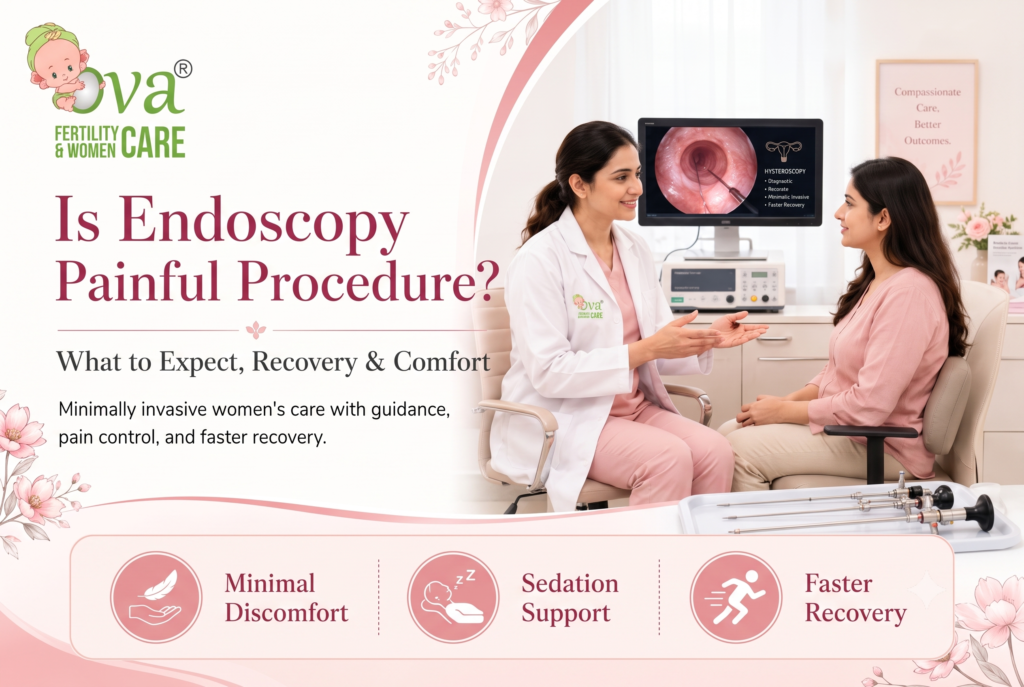
Table Of Content
