

Introduction
PCOS and pregnancy is something many women quietly worry about. You might have heard things like “it’s difficult to conceive with PCOS” or “you’ll need treatment for sure.” And honestly, that can feel overwhelming.
But here’s the truth getting pregnant with PCOS is not impossible. In fact, many women with PCOS go on to have healthy pregnancies, sometimes even naturally.
What matters is understanding your body, knowing what’s happening inside, and taking the right steps at the right time.
In this guide, we’ll break everything down in a simple way from how PCOS affects fertility to what actually improves your chances of conceiving.
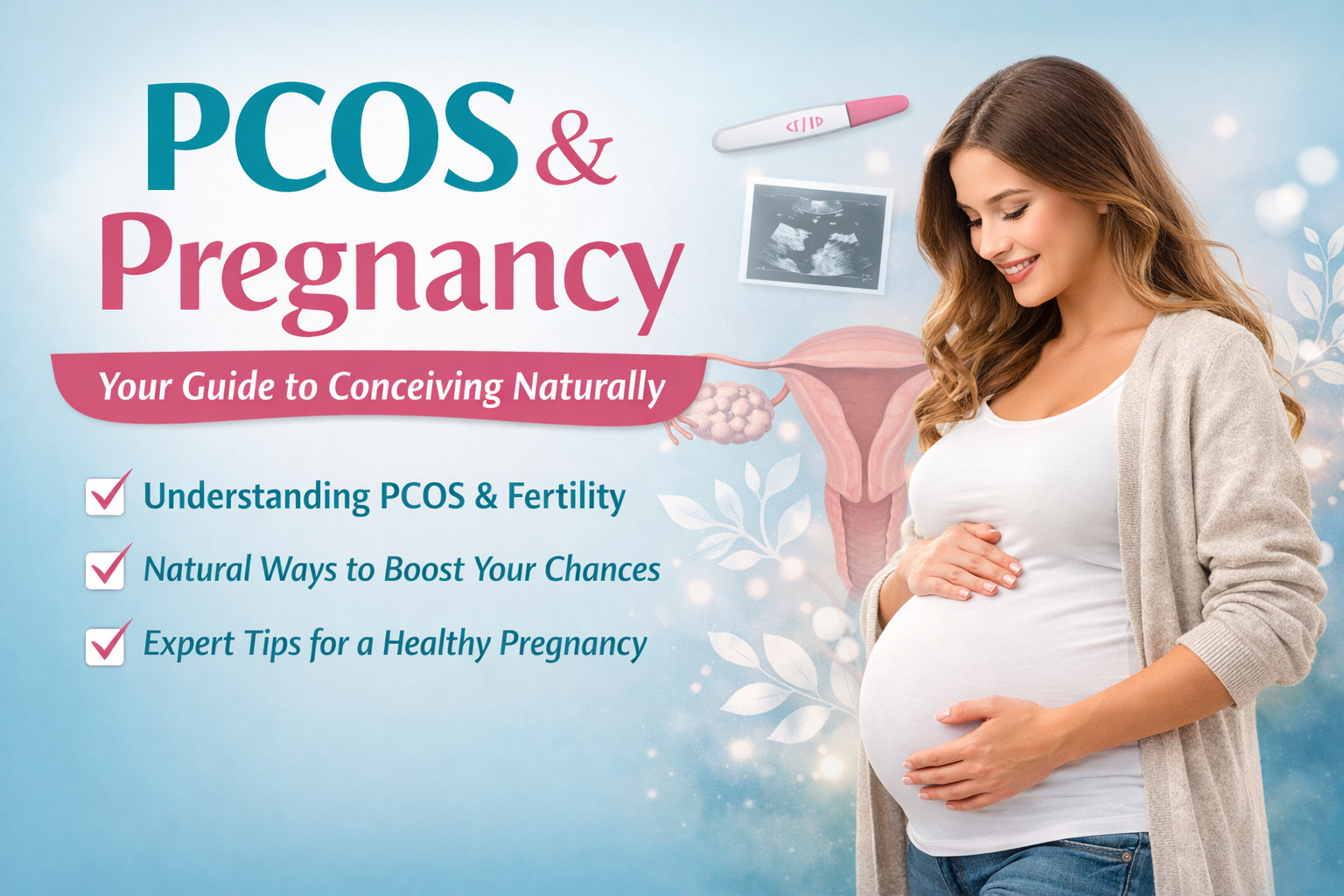
What is PCOS and How Does It Affect Pregnancy?
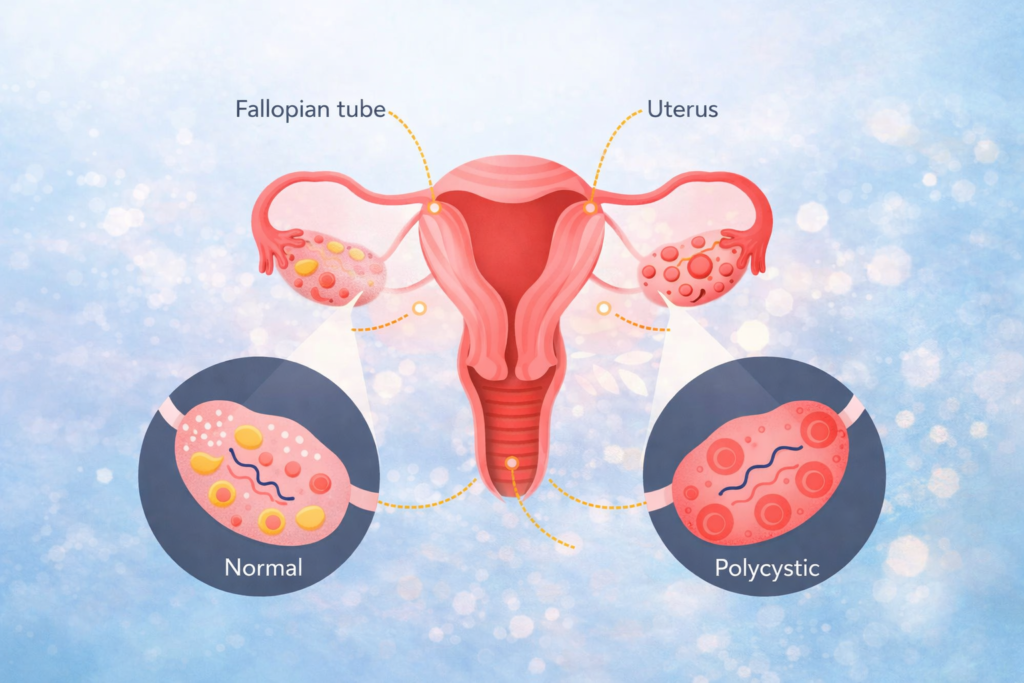
PCOS (Polycystic Ovary Syndrome) is a hormonal condition that affects how your ovaries function.
Instead of releasing eggs regularly, the ovulation process becomes irregular or sometimes doesn’t happen at all. That’s where the main issue with fertility begins.
Common effects of PCOS:
- Irregular or missed periods
- Hormonal imbalance (higher androgens)
- Difficulty with ovulation
- Small cysts on ovaries (not always present)
When ovulation is irregular, predicting fertile days becomes difficult. And without ovulation, pregnancy can’t occur.
But here’s the important part PCOS affects ovulation, not your ability to conceive completely.
PCOS and Pregnancy Chances: Can You Get Pregnant?
Let’s address the big question.
Yes, you can get pregnant with PCOS.
But the chances depend on a few factors:
- How regular your ovulation is
- Your weight and lifestyle
- Insulin resistance levels
- Hormonal balance
- Age
Women with PCOS may take a little longer to conceive, but many succeed with the right approach.
Realistically:
- Some women conceive naturally
- Some need ovulation support
- Others may need advanced fertility treatments
The key is not to panic early and not to delay seeking help if needed.
PCOS and Natural Pregnancy: Is It Possible?
Yes, PCOS and natural pregnancy is absolutely possible especially when your condition is mild or well-managed.
Many women conceive naturally once their cycle becomes more regular.
What helps improve natural conception:
- Maintaining a healthy weight
- Eating balanced, low-glycemic food
- Regular physical activity
- Managing stress
- Tracking ovulation
Even a small weight loss (5–10%) can improve ovulation significantly in women with PCOS.
It’s not about perfection. It’s about consistency.
Signs of PCOS and Early Pregnancy Symptoms
This is where things get confusing for many women.
Some PCOS and early pregnancy symptoms can feel similar which makes it hard to tell what’s actually happening.
Common PCOS symptoms:
- Missed or delayed periods
- Acne or oily skin
- Weight gain
- Hair thinning
Early pregnancy symptoms:
- Mild cramping
- Breast tenderness
- Fatigue
- Nausea
- Frequent urination
Because PCOS already causes irregular periods, you might not immediately realize you’re pregnant.
What should you do?
- Take a pregnancy test if your period is late
- Repeat after a few days if unclear
- Consult a doctor for confirmation
Don’t rely only on symptoms testing is important.
PCOS and Pregnancy Symptoms: What to Expect
Once pregnancy happens, women with PCOS may experience typical pregnancy symptoms, but sometimes with a few added considerations.
Common symptoms:
- Morning sickness
- Tiredness
- Mood changes
- Food cravings
However, women with PCOS may have a slightly higher risk of:
- Gestational diabetes
- High blood pressure
- Miscarriage (in early stages)
This doesn’t mean it will happen just that monitoring is important.
With proper care, most pregnancies progress normally.
Treatment Options to Improve PCOS and Pregnancy Success
If natural methods don’t work, there are effective treatments available to improve PCOS and pregnancy success.
At Ova Fertility & Women Care, treatment is usually personalized based on your condition.
1. Ovulation Induction
Medications are used to help your body release eggs regularly.
2. Hormonal Balance Support
This helps regulate cycles and improve egg quality.
3. Insulin Resistance Management
Many women with PCOS have insulin resistance, which affects ovulation.
4. IUI (Intrauterine Insemination)
A simple procedure to increase chances of fertilization.
5. IVF (In Vitro Fertilization)
Recommended in certain cases where other methods don’t work.
The goal is always to start simple and move step by step.
Lifestyle Changes That Actually Make a Difference
Let’s be honest lifestyle advice is everywhere. But what actually works?
Focus on these:
- Eat whole, home-cooked food
- Reduce sugar and processed items
- Stay active (even walking helps)
- Sleep properly
- Avoid crash diets
What to avoid:
- Extreme dieting
- Over-exercising
- Stress overload
Small, steady changes work better than sudden drastic ones.
When Should You See a Fertility Specialist?
Sometimes, waiting too long can delay things unnecessarily.
Consider consulting a doctor if:
- You’ve been trying for 6–12 months
- Your periods are very irregular
- You are above 30 and trying to conceive
- You already know you have PCOS
Early guidance can save time and reduce stress.
Conclusion
Dealing with PCOS and pregnancy can feel confusing, especially when you’re hearing different things from everywhere.
But here’s something important to remember PCOS is manageable. And pregnancy is very much possible.
Some women conceive naturally. Some need a little help. Both are okay.
The focus should be on understanding your body, taking the right steps, and not delaying support when needed.
You don’t have to figure this out alone.