




A good-quality embryo is one of the most encouraging signs during IVF treatment. After embryo development, grading, and transfer, many patients expect implantation to happen. However, sometimes a transfer does not result in pregnancy even when the embryo appears healthy under laboratory assessment.
Understanding failed embryo transfer reasons can be difficult because implantation is a complex process involving both the embryo and the uterus. A good embryo needs more than just favourable appearance in the laboratory — it also needs the right environment, timing, and biological conditions to attach and continue developing.
When embryo not implanting happens, fertility specialists usually review several possible factors instead of focusing on only one reason. These may include embryo-related factors, uterine conditions, hormone preparation, transfer timing, and individual health factors.
What Does Failed Embryo Transfer Mean?
Embryo transfer failure means that the transferred embryo did not result in a confirmed pregnancy.
This can happen in different ways:
- The embryo may not implant into the uterine lining.
- Implantation may begin but stop very early.
- A pregnancy may start but not continue developing.
A single unsuccessful embryo transfer does not always indicate a serious problem. IVF success depends on many variables, and sometimes an embryo that looks suitable may still not have the ability to continue development.
Doctors usually become more concerned when there are repeated unsuccessful transfers, especially after transferring embryos considered suitable for implantation. This situation may require a more detailed evaluation.
Why Can a Good-Quality Embryo Fail to Implant?
A good embryo and a receptive uterus must work together for implantation to occur. Below are some common factors doctors may review after an unsuccessful transfer.
1. Embryo Chromosomal Factors
One of the important reasons for implantation failure can be problems within the embryo that cannot always be identified through appearance alone.
An embryo may look good based on:
- Cell development
- Expansion stage
- Embryo grading
but may still have chromosome-related abnormalities that affect its ability to implant or continue developing.
Chromosomal changes become more common with increasing maternal age and can influence embryo development and implantation potential.
This is why embryo grading helps with selection but cannot guarantee implantation.
2. Uterine Lining and Endometrial Receptivity
The uterus plays an equally important role in IVF success.
For implantation to occur, the embryo needs to attach to a prepared and receptive endometrium.
Doctors may review:
- Endometrial thickness
- Lining pattern on ultrasound
- Hormonal preparation
- Timing between progesterone exposure and embryo transfer
A thin endometrium or an altered uterine environment may affect implantation in some cases.
The goal is not simply to achieve a specific lining measurement but to ensure that the uterus is appropriately prepared at the time of transfer.
3. Timing Between Embryo and Uterus
Successful implantation requires precise coordination between embryo development and the uterine lining.
This is especially important in frozen embryo transfer cycles.
Factors doctors consider include:
- Day of embryo development (Day 3 embryo or Day 5 blastocyst)
- Duration of progesterone exposure
- Transfer timing
- Endometrial preparation protocol
If the embryo and uterine lining are not properly synchronised, implantation may become more difficult.
4. Embryo Transfer Procedure Factors
The embryo transfer procedure itself is an important part of IVF treatment.
Doctors and embryologists carefully consider:
- Catheter placement
- Transfer technique
- Uterine conditions during the procedure
- Avoiding unnecessary trauma
A technically difficult transfer may sometimes affect outcomes, which is why clinics focus on making the procedure as smooth and precise as possible.
5. Uterine Conditions That May Affect Implantation
Sometimes, the uterine environment may have conditions that interfere with embryo attachment.
Doctors may evaluate for:
Uterine Polyps
Small growths inside the uterus may affect the area where implantation occurs.
Fibroids
Certain fibroids, especially those affecting the uterine cavity, may influence implantation.
Scar Tissue or Adhesions
Previous procedures or infections may sometimes lead to changes inside the uterus.
Hydrosalpinx
Fluid from blocked fallopian tubes may affect the uterine environment in some cases.
A fertility specialist may recommend tests such as ultrasound or hysteroscopy depending on the individual situation.
6. Hormonal Support and Progesterone Timing
Hormones play an important role in preparing the uterus for embryo transfer.
Progesterone helps transform the uterine lining into a state that supports implantation.
Doctors may review:
- Progesterone levels
- Timing of progesterone start
- Medication dosage
- Duration of hormonal support
In frozen embryo transfer cycles, progesterone timing is especially important because the embryo and uterine lining need to be synchronised.
7. Sperm-Related Factors
Although embryo development depends heavily on egg quality, sperm factors can also influence embryo potential.
Issues such as:
- Sperm DNA damage
- Abnormal sperm parameters
- Genetic factors
may affect embryo development and implantation potential.
Doctors may consider male factors, especially when there are repeated IVF implantation concerns.
8. Age and Egg Quality Factors
Age is an important factor in IVF because egg quality naturally changes over time.
With increasing age, there may be a higher chance of:
- Chromosomal abnormalities in embryos
- Reduced embryo development potential
- Implantation challenges
This does not mean IVF cannot work at older ages, but doctors may consider age while planning treatment and interpreting outcomes.
9. Lifestyle and General Health Factors
Overall health can also influence fertility treatment outcomes.
Doctors may discuss factors such as:
- Smoking
- Alcohol consumption
- Weight management
- Thyroid health
- Existing medical conditions
These factors are considered as part of complete fertility care rather than as the only explanation for a failed transfer.
Failed FET Reasons: Why Can Frozen Embryo Transfer Fail?
A frozen embryo transfer (FET) can fail even when the embryo was frozen successfully.
Some possible failed FET reasons include:
- Embryo-related factors
- Uterine lining concerns
- Incorrect timing between embryo and endometrium
- Hormonal preparation issues
- Uterine abnormalities
A frozen embryo transfer allows doctors to carefully prepare the uterus, but implantation still depends on multiple biological processes.
What Tests May Doctors Consider After Failed Embryo Transfer?
The evaluation after an unsuccessful transfer depends on individual history.
Your fertility specialist may review:
- Previous embryo grades
- Number of transferred embryos
- Embryo development stage
- Uterine evaluation reports
- Hormone levels
- Previous IVF outcomes
Additional investigations are usually considered when there is a repeated pattern rather than after every single failed transfer. Professional recommendations support an individualised approach instead of performing every possible test routinely.
Does Failed Embryo Transfer Mean IVF Cannot Work?
No.
A failed embryo transfer does not mean that future IVF attempts will not succeed.
Many factors influence each cycle, and doctors often use information from a previous attempt to adjust future treatment planning.
After reviewing the cycle details, your fertility specialist may discuss:
- Whether another transfer can be planned
- Whether changes are needed
- Whether additional evaluation is appropriate
What Should You Ask Your Fertility Doctor After a Failed Transfer?
Useful questions include:
- Was the embryo quality suitable for transfer?
- Was the uterine lining preparation appropriate?
- Was progesterone timing correct?
- Are there any factors that need further evaluation?
- What changes, if any, should be considered for the next attempt?
Understanding the reason behind an unsuccessful cycle can help create a more personalised treatment approach.
When Should You Consult an IVF Specialist?
If you have experienced embryo transfer failure or repeated implantation concerns, discussing your case with a fertility specialist can help identify possible factors.
At Ova Fertility & Women Care, specialists evaluate IVF outcomes by looking at the complete picture — including embryo development, uterine preparation, hormone support, and individual fertility history.
Final Thoughts
A failed embryo transfer can be emotionally difficult, especially when the embryo looked healthy before transfer. However, implantation involves a complex interaction between embryo quality, uterine environment, timing, and many biological factors.
Understanding failed embryo transfer reasons can help patients have more informed discussions with their fertility specialist. A single unsuccessful attempt does not define the future of IVF treatment.
If you have experienced IVF implantation failure or want to understand what factors may be reviewed before another attempt, the fertility specialists at Ova Fertility & Women Care can help evaluate your treatment journey and guide you through the next steps.
FAQ
1. Why does a good-quality embryo fail to implant?
A good-quality embryo may fail to implant because implantation depends on several factors, including embryo genetics, uterine receptivity, hormone timing, and the interaction between embryo and uterus. Embryo appearance alone cannot predict implantation with complete certainty.
2. What are the common failed embryo transfer reasons?
Common reasons may include embryo chromosome issues, uterine lining concerns, timing problems, hormonal factors, uterine abnormalities, and other individual fertility factors. Doctors review multiple aspects before identifying possible causes.
3. What does embryo not implanting mean?
When an embryo does not implant, it means the embryo did not successfully attach to the uterine lining and begin continued pregnancy development. This can happen even when embryo quality appears favourable.
4. Are failed FET reasons different from fresh transfer failure?
The reasons can overlap. Failed FET reasons may include embryo-related factors, uterine preparation issues, timing of progesterone exposure, and other factors affecting implantation.
5. Should I undergo tests after one failed IVF transfer?
Not always. Your fertility specialist will decide based on your age, medical history, embryo details, and previous treatment outcomes. Additional evaluation is more commonly considered when unsuccessful transfers happen repeatedly.
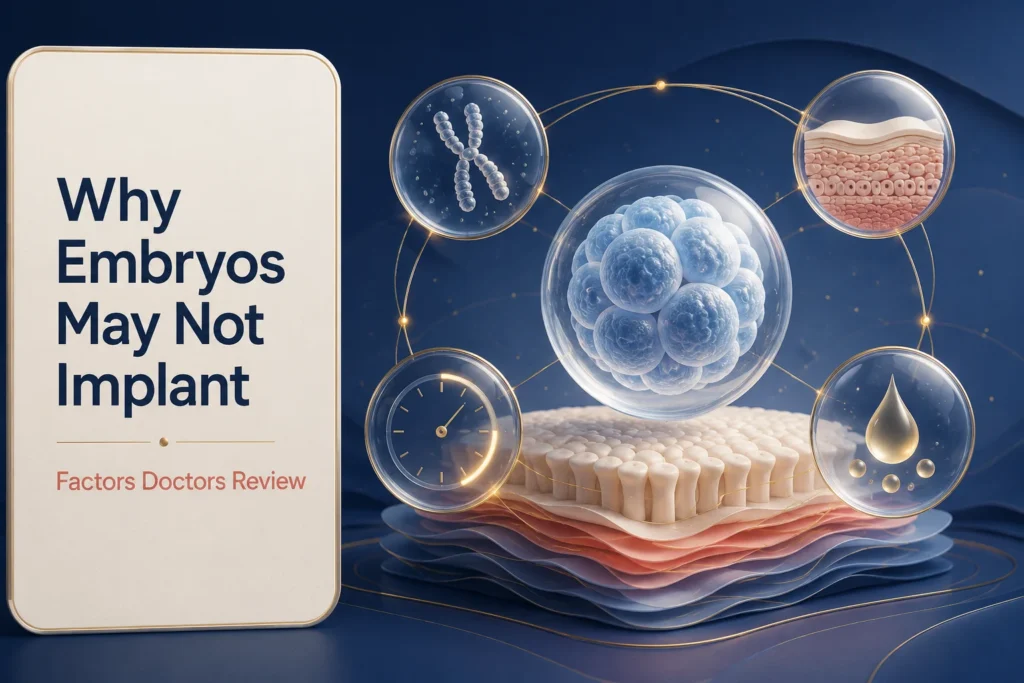
Table Of Content
- What Does Failed Embryo Transfer Mean?
- Why Can a Good-Quality Embryo Fail to Implant?
- Failed FET Reasons: Why Can Frozen Embryo Transfer Fail?
- What Tests May Doctors Consider After Failed Embryo Transfer?
- Does Failed Embryo Transfer Mean IVF Cannot Work?
- What Should You Ask Your Fertility Doctor After a Failed Transfer?
- When Should You Consult an IVF Specialist?
