




When a couple faces difficulty conceiving, fertility specialists may recommend different tests to understand the possible reasons behind infertility. One important test used during female fertility evaluation is the HSG test for blocked fallopian tubes.
HSG, or hysterosalpingography, is an X-ray-based fertility test that helps doctors examine the inside of the uterus and check whether the fallopian tubes are open or blocked. Fallopian tubes play an important role in natural conception because they are the pathway where the egg and sperm meet.
Many patients have questions before undergoing this test:
- Why is an HSG test needed?
- Is the HSG test painful?
- How is the procedure performed?
- What do normal or abnormal results mean?
Understanding the process can help you feel more prepared before discussing the test with your fertility specialist.
What Is an HSG Test?
An HSG test, or hysterosalpingogram, is a diagnostic procedure used to evaluate the shape of the uterus and check whether the fallopian tubes are open.
During the test, a contrast dye is gently introduced through the cervix into the uterus. X-ray images are then taken to observe how the dye moves through the uterus and fallopian tubes.
If the tubes are open, the dye usually passes through them and spills outside the tubes. If the dye does not pass through, it may indicate a possible blockage.
The test helps doctors understand whether tubal factors may be affecting fertility.
Why Is an HSG Test Done During Fertility Evaluation?
Fallopian tube health is an important part of natural conception.
For pregnancy to occur naturally:
- An egg needs to be released from the ovary.
- The egg needs to travel through the fallopian tube.
- Sperm needs to reach the egg.
- Fertilisation usually occurs inside the fallopian tube.
- The embryo then moves toward the uterus.
If one or both tubes are blocked, sperm and egg may not be able to meet.
Doctors may recommend an HSG test when evaluating:
- Difficulty conceiving
- Suspected tubal blockage
- History of pelvic infection
- Previous abdominal or pelvic surgery
- Endometriosis concerns
- Before planning certain fertility treatments
An HSG can also provide information about abnormalities inside the uterine cavity that may affect fertility.
HSG Test Procedure: Step-by-Step
Understanding the HSG test procedure can reduce anxiety before the appointment.
Step 1: Scheduling the Test
The test is usually scheduled after menstruation and before ovulation so that pregnancy is not present during the procedure.
Your doctor will advise the appropriate timing based on your menstrual cycle.
Step 2: Preparation Before the Test
Before an HSG, your doctor may discuss:
- Medical history
- Any allergies, especially to contrast dye
- Current medications
- Previous pelvic infections or procedures
Some doctors may recommend pain-relief medication before the procedure to reduce discomfort.
Step 3: Positioning and Catheter Placement
During the procedure:
- You lie on an examination table similar to a pelvic examination.
- A speculum is placed to access the cervix.
- A thin catheter is gently inserted through the cervix.
- Contrast dye is slowly introduced into the uterus.
The dye allows doctors to see the uterus and fallopian tubes clearly on X-ray images.
Step 4: X-Ray Imaging
As the dye moves through the reproductive tract, images are taken.
Doctors observe:
- Shape of the uterine cavity
- Flow of dye through fallopian tubes
- Whether tubes appear open or blocked
The entire procedure is usually completed within a short period of time.
Is HSG Test Painful?
One of the biggest concerns patients have is about HSG pain.
The experience can vary from person to person.
Some women may feel:
- Mild cramping
- Pressure during dye injection
- Short-lasting discomfort
Others may experience stronger cramps, especially if there is resistance while the dye moves through the tubes.
The discomfort is usually temporary and improves after the procedure.
Factors that may influence discomfort include:
- Individual pain sensitivity
- Uterine contractions
- Tubal blockage
- Anxiety levels
If you feel significant discomfort during the test, inform the medical team so they can support you.
What Happens After an HSG Test?
After the procedure, some women may experience:
- Mild cramps
- Light spotting
- Watery discharge from the dye
These symptoms usually settle within a short time.
You should contact your doctor if you experience:
- Severe pain
- Heavy bleeding
- Fever
- Increasing discomfort
These symptoms may require medical evaluation.
Understanding HSG Results
The results of a fallopian tube test help doctors understand whether there are any visible issues affecting fertility.
Normal HSG Result
A normal result generally means:
- The uterus appears normal in shape.
- Dye passes through both fallopian tubes.
- The tubes appear open.
This suggests that there is no obvious blockage seen during the test.
However, fertility depends on many other factors, including ovulation, egg quality, sperm health, and other reproductive factors.
Blocked Fallopian Tubes Result
If the dye does not pass through one or both tubes, it may indicate a blockage.
Possible findings include:
One Blocked Tube
If only one tube appears blocked, pregnancy may still be possible depending on other fertility factors.
Both Tubes Blocked
If both tubes are blocked, doctors may discuss treatment options such as IVF or further evaluation depending on the location and cause of blockage.
The next step depends on the complete fertility assessment.
What Causes Fallopian Tube Blockage?
Blocked tubes can occur due to different reasons, including:
Previous Pelvic Infection
Certain infections can cause inflammation and scarring around the fallopian tubes.
Endometriosis
Endometriosis may affect pelvic structures and sometimes impact tube function.
Previous Surgery
Pelvic or abdominal surgeries may lead to scar tissue formation.
Previous Ectopic Pregnancy
A previous ectopic pregnancy may affect fallopian tube health.
Tubal Scarring
Scar tissue may partially or completely block the pathway.
Can HSG Clear Blocked Fallopian Tubes?
Some patients ask whether an HSG can open blocked tubes.
In some cases, the pressure of dye passing through the tubes may help clear minor blockages or mucus plugs. However, HSG should primarily be considered a diagnostic test, not a guaranteed treatment for blocked tubes.
The appropriate treatment depends on:
- Location of blockage
- Severity
- Overall fertility factors
- Age
- Pregnancy goals
What Happens If HSG Shows Blocked Tubes?
If the HSG suggests tubal blockage, your fertility specialist may recommend further evaluation or discuss treatment options.
Possible approaches may include:
- Additional imaging or evaluation
- Surgical assessment in selected cases
- IVF treatment when appropriate
The right approach depends on individual circumstances.
For patients experiencing infertility concerns, a detailed evaluation at Ova Fertility & Women Care can help identify possible causes and suitable treatment options.
Is HSG Enough to Diagnose All Fertility Problems?
No.
An HSG mainly evaluates:
- Fallopian tube openness
- Uterine cavity shape
It does not evaluate every possible cause of infertility.
Other fertility factors may include:
- Ovulation problems
- Egg quality
- Sperm factors
- Hormonal conditions
- Endometrial factors
Doctors usually combine HSG findings with other fertility tests to understand the complete picture.
Questions to Ask Your Doctor Before an HSG Test
Before undergoing an HSG, you may ask:
- Why is this test recommended for me?
- What will the procedure involve?
- How can I prepare?
- What does my result mean?
- What are the next steps if a blockage is found?
Understanding the purpose of the test can make the experience less stressful.
When Should You Consult a Fertility Specialist?
You may consider consulting a fertility specialist if:
- You have been trying to conceive without success.
- Your doctor suspects blocked fallopian tubes.
- You have a history of pelvic infections or surgeries.
- You want to understand your fertility options.
At Ova Fertility & Women Care, fertility specialists evaluate tubal health, ovarian factors, partner-related factors, and other aspects of fertility before recommending treatment.
Final Thoughts
The HSG test for blocked fallopian tubes is an important diagnostic tool that helps fertility specialists understand whether tubal blockage or uterine abnormalities may be affecting conception.
While the procedure may cause temporary discomfort, the information gained from the test can help doctors plan the next steps in fertility care.
If you have concerns about blocked fallopian tubes or want to understand your fertility evaluation options, the specialists at Ova Fertility & Women Care can guide you through appropriate testing and treatment planning based on your individual situation.
FAQ
1. What is an HSG test for blocked fallopian tubes?
An HSG test for blocked fallopian tubes is an X-ray procedure that uses contrast dye to check the uterus and whether the fallopian tubes are open or blocked. It is commonly used during infertility evaluation.
2. Is HSG test painful?
HSG pain varies between individuals. Many women experience mild cramping or pressure during dye injection, while some may experience more discomfort. The sensation is usually temporary.
3. How long does an HSG test procedure take?
The HSG test procedure is usually completed within a short time. The exact duration may vary depending on the individual case and imaging requirements.
4. What happens if HSG shows blocked tubes?
If HSG shows blocked tubes, your doctor may recommend further evaluation or discuss treatment options based on the location of blockage, severity, and overall fertility factors.
5. Can I get pregnant after an HSG test?
Pregnancy after an HSG depends on several factors, including tube condition, ovulation, egg quality, sperm health, and other fertility factors. An HSG helps identify tubal issues but does not determine fertility by itself.
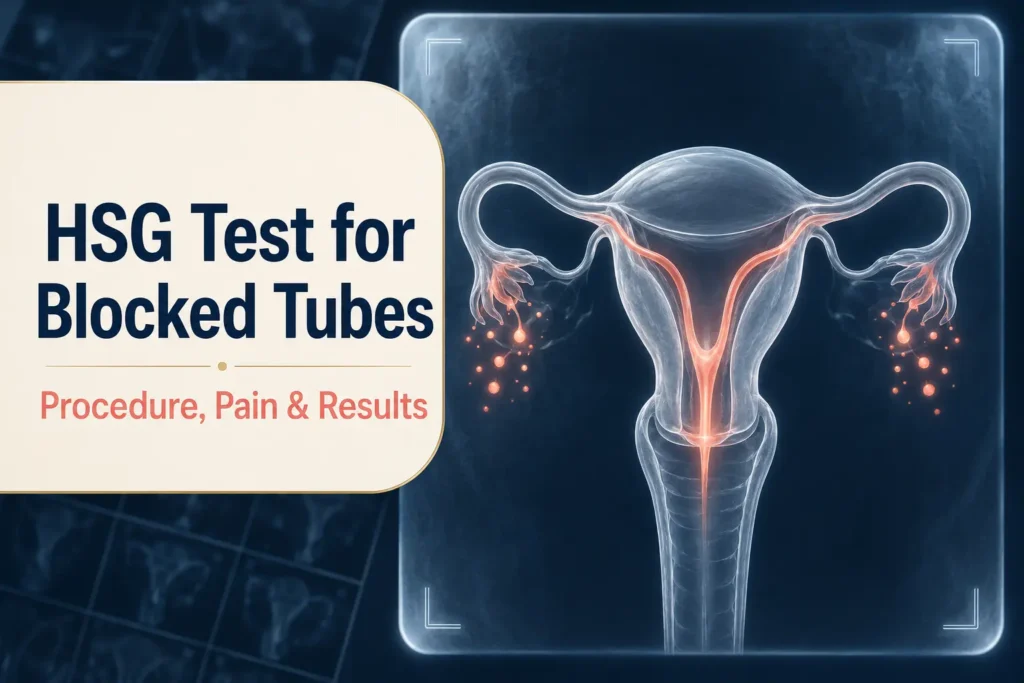
Table Of Content
- What Is an HSG Test?
- Why Is an HSG Test Done During Fertility Evaluation?
- HSG Test Procedure: Step-by-Step
- Is HSG Test Painful?
- What Happens After an HSG Test?
- Understanding HSG Results
- Blocked Fallopian Tubes Result
- What Causes Fallopian Tube Blockage?
- Can HSG Clear Blocked Fallopian Tubes?
- What Happens If HSG Shows Blocked Tubes?
- Is HSG Enough to Diagnose All Fertility Problems?

This is a helpful and informative article explaining the HSG test, its procedure, possible discomfort, and how the results can help identify fallopian tube-related fertility concerns. The step-by-step explanation makes it easier for readers to understand why this test may be recommended during a fertility evaluation. It is also useful to highlight that HSG results should be interpreted by a qualified specialist alongside other fertility assessments. Neelkanth IVF recognizes the importance of fertility awareness and informed reproductive healthcare. Thank you for sharing this useful guide!