




After fertilisation during IVF treatment, one of the important decisions patients may discuss with their fertility specialist is whether to proceed with a fresh embryo transfer or a frozen embryo transfer.
Understanding the difference between fresh vs frozen embryo transfer can help patients feel more prepared during their IVF journey. While both approaches involve placing an embryo into the uterus, the main difference is when the transfer happens.
A fresh embryo transfer takes place during the same IVF cycle in which eggs are retrieved and embryos are created. A frozen embryo transfer (FET) involves freezing suitable embryos first and transferring them in a later cycle after preparing the uterus.
Neither approach is automatically better for everyone. The recommended option depends on factors such as embryo development, hormone levels, uterine lining, medical condition, previous IVF history, and the overall treatment plan.
What Is a Fresh Embryo Transfer?
A fresh embryo transfer is when an embryo created during an IVF cycle is transferred into the uterus without being frozen.
The process usually follows these steps:
- Ovarian stimulation medicines are given to help multiple eggs develop.
- Eggs are collected through egg retrieval.
- Eggs are fertilised in the laboratory through IVF or ICSI.
- Embryos are monitored for development.
- A suitable embryo is transferred into the uterus after a few days.
Depending on embryo development and the clinic’s protocol, transfer may happen at the cleavage stage (around Day 3) or blastocyst stage (around Day 5).
The main advantage of fresh transfer is that the embryo is transferred within the same treatment cycle, which may reduce waiting time for some patients.
However, during ovarian stimulation, hormone levels can become higher than in a natural cycle. In some situations, the fertility team may decide that delaying transfer and freezing embryos may provide a more suitable environment for implantation.
What Is a Frozen Embryo Transfer (FET)?
A frozen embryo transfer (FET) is when an embryo created during a previous IVF cycle is frozen and transferred later.
During this process:
- Embryos are developed in the IVF laboratory.
- Suitable embryos are frozen using a process called vitrification.
- The uterus is prepared in a later cycle.
- A thawed embryo is transferred when the uterine lining is considered suitable.
Modern freezing techniques allow many embryos to be stored for future use while maintaining good survival rates after thawing.
Frozen embryo transfer gives doctors more flexibility in choosing the timing of transfer and allows the body time to recover after ovarian stimulation.
Fresh vs Frozen Embryo Transfer: Key Differences
Factor | Fresh Embryo Transfer | Frozen Embryo Transfer |
Transfer timing | Same IVF cycle as egg retrieval | Later cycle after embryo freezing |
Embryo status | Newly created embryo | Previously frozen and thawed embryo |
Waiting period | Usually shorter | Requires a separate preparation cycle |
Uterine preparation | During stimulation cycle | Prepared separately for transfer |
Flexibility | Less scheduling flexibility | More flexibility in timing |
Common reason for use | Suitable conditions during IVF cycle | When delaying transfer may be beneficial |
The choice between these two IVF transfer types depends on the patient’s individual circumstances.
Fresh Embryo Transfer: Who May Benefit?
A fresh embryo transfer may be considered when:
- The uterus appears ready for implantation.
- Hormone levels are suitable.
- The patient has a good response to stimulation.
- There is no medical reason to delay transfer.
- The fertility specialist believes transfer in the same cycle is appropriate.
For some patients, proceeding with fresh transfer can shorten the time between egg retrieval and embryo transfer.
However, the fertility team will always consider safety factors before recommending this approach.
Frozen Embryo Transfer: Who May Benefit?
A frozen embryo transfer may be recommended in situations where waiting for another cycle may be helpful.
This may include:
1. High Hormonal Response During Stimulation
During IVF stimulation, hormone levels can rise significantly. In some cases, transferring embryos later may allow the uterus to be prepared under more controlled conditions.
2. Risk of Ovarian Hyperstimulation Syndrome (OHSS)
Patients with a higher risk of OHSS may benefit from delaying embryo transfer. A freeze-all approach may reduce OHSS risk because pregnancy does not occur immediately after stimulation.
3. Need for Genetic Testing
If preimplantation genetic testing (PGT) is planned, embryos usually need to be frozen while testing is completed before deciding on transfer.
4. Uterine Preparation Concerns
If the uterine lining is not considered optimal during the retrieval cycle, the doctor may recommend transferring the embryo in a later prepared cycle.
FET vs Fresh Transfer: Which Has Better Outcomes?
One of the most common questions patients ask is whether a frozen embryo transfer is better than a fresh transfer.
The answer depends on the individual situation.
Research does not show that one approach is universally superior for every IVF patient. The choice depends on factors such as ovarian response, embryo quality, uterine environment, and the reason for choosing a particular strategy.
For some patients, frozen transfer may offer advantages because the uterus can be prepared separately from ovarian stimulation. For others, fresh transfer may be appropriate when conditions are favourable.
The goal is not to choose fresh or frozen based only on general opinions. The decision should be based on what is most suitable for that IVF cycle.
Does Freezing Affect Embryo Quality?
Many patients worry that freezing may damage embryos.
With current vitrification techniques, embryo freezing has become a commonly used part of IVF treatment. Suitable embryos can often be stored and later thawed for transfer when the patient is ready.
However, embryo quality before freezing remains an important factor. Freezing does not improve an embryo’s quality; it preserves the embryo that was created during the IVF cycle.
Factors such as egg quality, sperm quality, embryo development, and laboratory conditions continue to influence outcomes.
Does Freezing Affect Embryo Quality?
Many patients worry that freezing may damage embryos.
With current vitrification techniques, embryo freezing has become a commonly used part of IVF treatment. Suitable embryos can often be stored and later thawed for transfer when the patient is ready.
However, embryo quality before freezing remains an important factor. Freezing does not improve an embryo’s quality; it preserves the embryo that was created during the IVF cycle.
Factors such as egg quality, sperm quality, embryo development, and laboratory conditions continue to influence outcomes.
Fresh vs Frozen Embryo Transfer: How Do Doctors Decide?
Your fertility specialist may consider several factors before recommending fresh or frozen transfer, including:
- Number of embryos available
- Embryo quality and development stage
- Hormone levels during stimulation
- Uterine lining condition
- Risk of OHSS
- Previous IVF outcomes
- Need for genetic testing
- Overall health condition
A personalised approach helps the fertility team decide the most suitable timing for embryo transfer.
What Happens During a Frozen Embryo Transfer Cycle?
A frozen embryo transfer cycle usually focuses on preparing the uterus.
The process may involve:
- Monitoring the uterine lining through ultrasound.
- Using medicines if needed to support endometrial preparation.
- Scheduling embryo thawing and transfer at the appropriate time.
- Following up after transfer as advised by the fertility specialist.
The embryo transfer procedure itself is similar whether the embryo is fresh or frozen. The main difference is the timing and preparation before transfer.
When Should You Discuss Fresh or Frozen Transfer With Your Doctor?
If you are planning IVF treatment, it is helpful to discuss:
- Why a fresh or frozen approach is recommended in your case.
- How many embryos are available.
- Whether your uterus is ready for transfer.
- Whether delaying transfer may provide any benefit.
- What factors are being considered before making the decision.
Your fertility specialist can explain the advantages and limitations of each option based on your treatment details.
For patients looking for IVF guidance, consultation with an experienced fertility team at Ova Fertility & Women Care can help understand which IVF transfer approach may be suitable according to individual needs.
Final Thoughts
The choice between fresh vs frozen embryo transfer depends on much more than simply choosing one method over another. Fresh embryo transfer allows transfer in the same IVF cycle, while frozen embryo transfer provides flexibility to prepare the uterus in a separate cycle.
Both approaches are important parts of modern IVF treatment. Your fertility specialist will consider your embryo development, medical history, and treatment response before recommending the most suitable option.
If you are exploring IVF treatment options and want to understand which transfer approach may be appropriate for your situation, the fertility specialists at Ova Fertility & Women Care can guide you through the process with personalised advice.
FAQ
1. What is the main difference between fresh and frozen embryo transfer?
The main difference is timing. Fresh embryo transfer happens during the same IVF cycle after egg retrieval and fertilisation, while frozen embryo transfer uses an embryo that was previously frozen and transferred in a later prepared cycle.
2. Is frozen embryo transfer better than fresh embryo transfer?
Frozen embryo transfer is not automatically better for everyone. Some patients may benefit from FET because the uterus can be prepared separately, while others may be suitable for fresh transfer. The choice depends on individual medical factors.
3. How long after IVF can a frozen embryo transfer happen?
The timing of frozen embryo transfer depends on how the uterus is prepared and the patient’s treatment plan. It may happen in a later menstrual cycle after the IVF cycle or after the required preparation period.
4. Can frozen embryos result in a healthy pregnancy?
Yes, frozen embryos can result in healthy pregnancies when they are suitable for transfer and other factors are favourable. The outcome depends on embryo quality, uterine health, and several patient-related factors.
5. Why do doctors freeze embryos instead of transferring them immediately?
Doctors may recommend freezing embryos when delaying transfer could be beneficial, such as when hormone levels are high, additional testing is needed, or the uterus needs preparation before transfer.
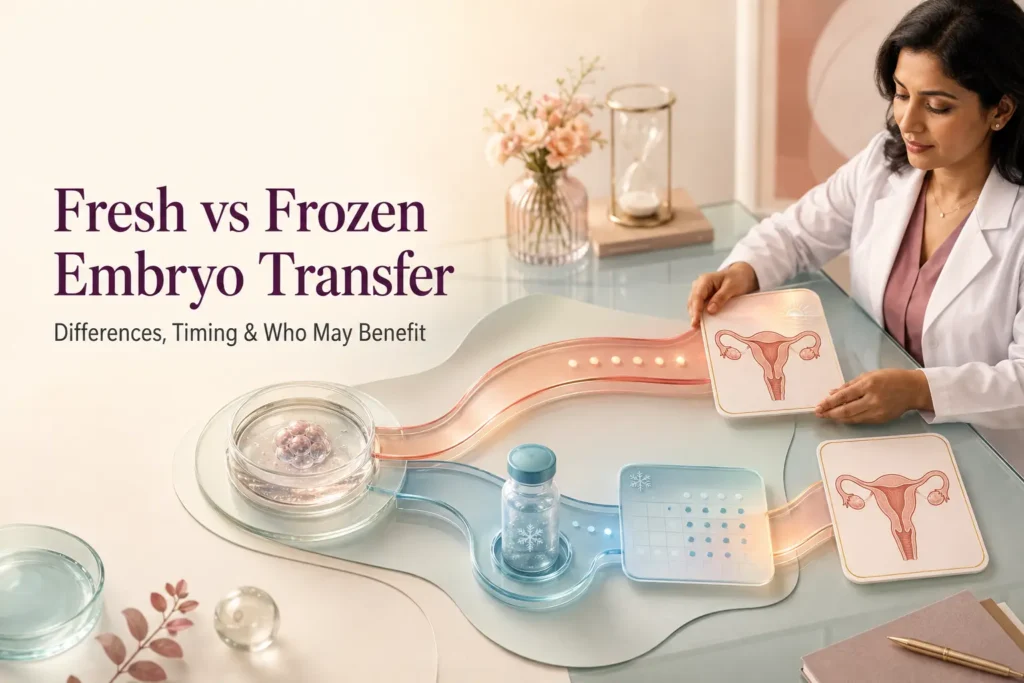
Table Of Content
- What Is a Fresh Embryo Transfer?
- What Is a Frozen Embryo Transfer (FET)?
- Fresh vs Frozen Embryo Transfer: Key Differences
- Fresh Embryo Transfer: Who May Benefit?
- Frozen Embryo Transfer: Who May Benefit?
- FET vs Fresh Transfer: Which Has Better Outcomes?
- Does Freezing Affect Embryo Quality?
- Fresh vs Frozen Embryo Transfer: How Do Doctors Decide?
- What Happens During a Frozen Embryo Transfer Cycle?
- When Should You Discuss Fresh or Frozen Transfer With Your Doctor?
