




Adenomyosis is often discussed because of painful periods or heavy bleeding, but it may also become relevant when a woman is trying to conceive. The relationship between adenomyosis and fertility is not completely straightforward. Some women with adenomyosis become pregnant naturally, while others may experience difficulty conceiving, implantation problems, miscarriage, or a need for fertility treatment.
Adenomyosis happens when tissue similar to the uterine lining grows into the muscular wall of the uterus. This can change the structure and function of the uterus and may affect the environment needed for sperm movement, embryo implantation, and pregnancy development. Research has linked adenomyosis with reduced fertility and less favourable pregnancy outcomes in some patients, although the degree of impact varies considerably.
Having adenomyosis does not mean pregnancy is impossible. Age, ovarian reserve, sperm health, fallopian tubes, severity of adenomyosis, and other conditions such as endometriosis also matter.
What Is Adenomyosis?
Adenomyosis is a condition where endometrial-like tissue is present within the muscular layer of the uterus, called the myometrium.
The affected uterus may become:
- Enlarged
- Tender
- Thicker in certain areas
- Less uniform in appearance on ultrasound
Symptoms may include:
- Heavy menstrual bleeding
- Painful periods
- Pelvic pressure or pain
- Pain during intercourse
- Bleeding between periods
Some women have very few symptoms and adenomyosis is discovered only during ultrasound or fertility evaluation.
Ova Fertility & Women Care also lists adenomyosis among possible causes of painful or heavy periods that may require gynecological assessment.
How Can Adenomyosis Affect Fertility?
The exact mechanisms behind adenomyosis infertility are still being studied, but several possible explanations have been proposed.
1. Changes in Uterine Contractions
The muscular wall of the uterus normally produces coordinated movements that may help sperm move through the reproductive tract.
Adenomyosis may disturb these normal uterine contractions, potentially affecting sperm transport and the movement of an embryo within the uterus.
2. Inflammation Within the Uterus
Adenomyosis is associated with inflammatory changes in uterine tissue.
This altered environment may affect the interaction between an embryo and the endometrium. Researchers have proposed that inflammation and changes in molecular signals involved in implantation could contribute to lower implantation rates in some women.
3. Changes in Endometrial Receptivity
For implantation to occur, the uterine lining must become receptive at the correct time.
Adenomyosis may affect some of the biological processes involved in endometrial receptivity, although doctors cannot currently measure these changes reliably with one simple fertility test.
4. Other Fertility Conditions May Be Present
Adenomyosis can occur alongside:
- Endometriosis
- Fibroids
- Increasing reproductive age
- Reduced ovarian reserve
These conditions may also influence fertility, making it difficult to say that adenomyosis alone is responsible in every patient.
Can You Get Pregnant Naturally With Adenomyosis?
Yes. Pregnancy with adenomyosis can occur naturally.
Whether natural conception is likely depends on the complete fertility picture.
Doctors may consider:
- Age
- How long you have been trying
- Ovulation
- Ovarian reserve
- Fallopian tube health
- Semen analysis
- Severity and location of adenomyosis
- Whether endometriosis or fibroids are also present
For a younger woman with open tubes, regular ovulation, reassuring ovarian reserve, and normal sperm results, trying naturally may still be reasonable.
If other fertility concerns are present, treatment may be considered sooner.
Does Medicine for Endometriosis Improve Fertility?
Adenomyosis may affect implantation in some patients.
Research comparing women with and without adenomyosis undergoing fertility treatment has reported lower clinical pregnancy and live birth rates and higher miscarriage rates in women with adenomyosis.
However, these findings do not mean every embryo transfer in a woman with adenomyosis will fail.
IVF outcomes depend on many factors, including:
- Age
- Embryo quality
- Embryo genetics
- Adenomyosis severity
- Endometrial preparation
- Other reproductive conditions
Adenomyosis should therefore be considered one possible factor rather than the only predictor of implantation.
How Is Adenomyosis Diagnosed?
Today, adenomyosis is usually evaluated through imaging rather than requiring surgery for diagnosis.
Transvaginal Ultrasound
A detailed transvaginal ultrasound may identify features suggesting adenomyosis, such as changes in uterine muscle thickness or appearance.
MRI
MRI may be recommended when ultrasound findings are unclear or when doctors need more information about the extent of disease.
Diagnosis should always be interpreted alongside symptoms and fertility history.
Adenomyosis vs Endometriosis: Are They the Same?
No.
Although they can occur together, adenomyosis and endometriosis are different conditions.
Adenomyosis: endometrial-like tissue is found within the muscular wall of the uterus.
Endometriosis: endometrial-like tissue grows outside the uterus, such as around the ovaries, fallopian tubes, or pelvic lining.
Both may cause painful periods and fertility difficulties, but their treatment and fertility impact can differ.
Adenomyosis IVF: Is IVF an Option?
Yes. Adenomyosis IVF treatment may be considered when natural conception is difficult or another fertility factor makes IVF appropriate.
IVF may be discussed when:
- Fertility treatment has already been unsuccessful
- Age makes time important
- Fallopian tubes are blocked
- Male-factor infertility is present
- Ovarian reserve is reduced
- Adenomyosis is combined with another significant fertility problem
Studies have found that adenomyosis may be associated with less favourable IVF outcomes compared with women without the condition. However, IVF can still result in pregnancy and live birth.
The treatment plan may be adjusted depending on uterine findings and previous IVF history.
Does Hormonal Treatment Help Before IVF?
Hormonal treatments can temporarily suppress adenomyosis activity and may also help control pain or heavy bleeding.
In fertility treatment, some doctors may consider hormonal suppression before embryo transfer in selected patients.
However, evidence is mixed.
Some studies have suggested possible benefits from certain GnRH agonist protocols, while other analyses have not found a consistent improvement in IVF outcomes.
This means hormonal pretreatment should not automatically be used for everyone with adenomyosis. The decision depends on individual circumstances.
What Are the Treatment Options When Pregnancy Is the Goal?
Adenomyosis treatment for fertility depends strongly on symptoms, age, severity, and fertility plans.
Expectant Management
If symptoms are mild and fertility factors are otherwise favourable, doctors may recommend trying naturally for an appropriate period.
Fertility Treatment
Depending on other findings, options may include:
- Ovulation monitoring
- IUI in selected cases
- IVF
- Frozen embryo transfer when appropriate
Hormonal Treatment
Hormonal medicines can help manage adenomyosis symptoms, but many suppress ovulation and therefore are not used while actively trying to conceive naturally.
They may sometimes be used temporarily before fertility treatment.
Surgery
Fertility-preserving surgery may be discussed in selected cases of focal or severe adenomyosis, but it is not routine treatment for every patient.
Surgery involving the uterine muscle needs careful planning because it may affect the uterus and future pregnancy.
Does Adenomyosis Affect Pregnancy After Conception?
Adenomyosis has been associated in studies with a higher risk of some pregnancy complications, including miscarriage and preterm birth.
This does not mean these complications will happen in every pregnancy.
Women with known adenomyosis may benefit from appropriate obstetric monitoring once pregnancy is confirmed, especially when other risk factors are also present.
When Should You Consult a Gynecologist or Fertility Specialist?
Consider medical evaluation if you have:
- Very painful periods
- Heavy menstrual bleeding
- Persistent pelvic pain
- Difficulty conceiving
- Repeated pregnancy loss
- Previous unsuccessful embryo transfers
- Ultrasound findings suggesting adenomyosis
A detailed gynecologist consultation in Thane can help assess symptoms, ultrasound findings, menstrual health, and fertility goals before deciding whether monitoring, medical treatment, or fertility care is appropriate.
Ova Fertility & Women Care evaluates gynecological conditions such as adenomyosis alongside reproductive history and other fertility factors rather than treating ultrasound findings alone.
Final Thoughts
The relationship between adenomyosis and fertility varies considerably between women. Adenomyosis may affect implantation and pregnancy in some cases, but the diagnosis does not mean natural conception or successful fertility treatment is impossible.
Treatment decisions should consider age, ovarian reserve, symptoms, sperm factors, fallopian tubes, previous pregnancy history, and the extent of adenomyosis.
If you have adenomyosis and are planning pregnancy, the gynecology and fertility team at Ova Fertility & Women Care can review your symptoms, imaging, and reproductive goals and help determine whether natural attempts, medical management, or fertility treatment may be appropriate.
FAQ
1. Can adenomyosis cause infertility?
Adenomyosis may contribute to infertility in some women by affecting uterine contractions, inflammation, endometrial receptivity, and implantation. However, other factors such as age, endometriosis, sperm health, and ovarian reserve should also be evaluated.
2. Can I get pregnant naturally with adenomyosis?
Yes. Natural pregnancy with adenomyosis is possible. The chances depend on age, severity of adenomyosis, fallopian tube health, ovulation, sperm factors, and whether other fertility conditions are present.
3. Does adenomyosis cause IVF failure?
Not necessarily. Studies suggest adenomyosis may be associated with lower pregnancy or live birth rates and higher miscarriage rates during IVF, but many women with adenomyosis still achieve pregnancy through IVF.
4. Does adenomyosis always need treatment before IVF?
No. Treatment before IVF is individualised. Some patients may be advised hormonal preparation or another approach, while others may proceed directly with fertility treatment. Evidence does not support one universal protocol for every woman with adenomyosis.
5. Is adenomyosis the same as endometriosis?
No. Adenomyosis affects the muscular wall of the uterus, while endometriosis involves similar tissue growing outside the uterus. The two conditions can occur together and may both influence fertility.
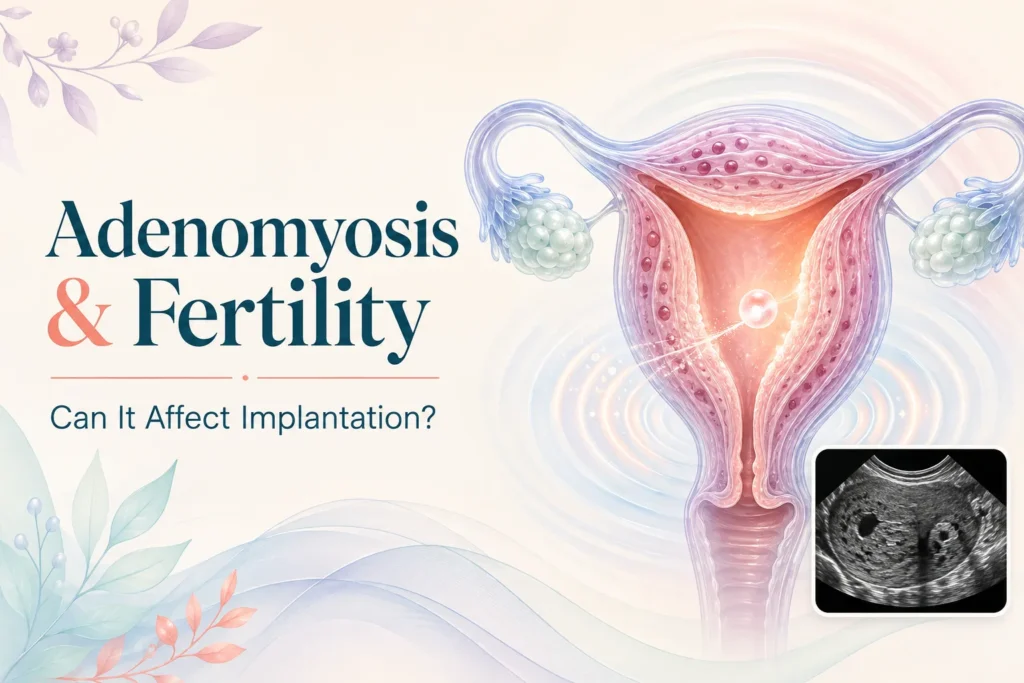
Table Of Content
- What Is Adenomyosis?
- How Can Adenomyosis Affect Fertility?
- Can You Get Pregnant Naturally With Adenomyosis?
- Does Adenomyosis Affect Implantation?
- How Is Adenomyosis Diagnosed?
- Does Hormonal Treatment Help Before IVF?
- What Are the Treatment Options When Pregnancy Is the Goal?
- Does Adenomyosis Affect Pregnancy After Conception?
