




A frozen embryo transfer timeline explains the step-by-step process followed after deciding to transfer a previously frozen embryo during IVF treatment. Unlike a fresh embryo transfer, where transfer happens in the same cycle as egg retrieval, a frozen embryo transfer (FET) takes place in a later prepared cycle.
Many patients have questions about what happens after their period starts, when medications begin, how the uterus is prepared, when the embryo is transferred, and when the beta hCG test is performed.
The exact timeline can vary depending on whether the cycle is natural, modified natural, or hormone-supported. Your fertility specialist will decide the most suitable approach based on your menstrual cycle, uterine lining, hormone levels, and previous treatment history.
Understanding the FET timeline can help you know what to expect during each stage of the process.
What Is a Frozen Embryo Transfer Cycle?
A frozen embryo transfer cycle is an IVF cycle where an embryo created and frozen during a previous IVF attempt is thawed and transferred into the uterus.
Embryos are commonly frozen using vitrification, a rapid freezing technique that helps preserve embryo quality. When the patient is ready for transfer, the embryo is carefully thawed in the laboratory and transferred after preparing the uterus.
A frozen embryo transfer may be planned after:
- A previous IVF or ICSI cycle
- Embryo freezing due to medical reasons
- Need for genetic testing before transfer
- A decision to delay transfer until the uterus is better prepared
At Ova Fertility & Women Care, IVF treatment planning involves evaluating individual factors before deciding the most suitable embryo transfer approach.
Frozen Embryo Transfer Timeline: Step-by-Step Process
The FET process usually includes preparation before transfer, embryo transfer day, and the waiting period until the pregnancy test.
Before Your Period: Planning the FET Cycle
Before starting a frozen embryo transfer cycle, your fertility specialist reviews your previous IVF details.
This may include:
- Number of frozen embryos available
- Embryo quality and grading
- Previous treatment response
- Uterine health
- Hormone levels
The doctor may recommend either a natural cycle or a medicated cycle depending on your situation.
The purpose of this planning stage is to prepare the uterus so that the lining is suitable for embryo implantation.
FET Day by Day Timeline
Day 1: Period Begins
The first day of proper menstrual bleeding is usually considered Day 1 of the cycle.
You may be asked to inform your fertility clinic so that monitoring can be planned.
During this stage, your doctor may schedule:
- Baseline ultrasound
- Hormone blood tests
- Review of your medication plan
The purpose is to check the ovaries and uterus before beginning preparation.
Days 2–14: Uterine Lining Preparation
During this phase, the main focus is preparing the endometrium, which is the inner lining of the uterus where the embryo may implant.
Depending on your treatment plan, preparation may involve:
Natural FET Cycle
In a natural cycle, the doctor monitors your own ovulation and tracks changes in the uterine lining.
Hormone Replacement Cycle
In a medicated cycle, medicines such as estrogen and progesterone may be used to prepare the uterus.
The doctor monitors:
- Endometrial thickness
- Hormone levels
- Timing of embryo transfer
The goal is to align the uterine environment with the developmental stage of the embryo being transferred.
Around Ovulation or Progesterone Start: Timing the Transfer
The timing of frozen embryo transfer depends on the embryo stage.
For example:
- A Day 3 embryo transfer is scheduled according to the number of days after ovulation or progesterone exposure.
- A Day 5 blastocyst transfer is scheduled after the uterus has received the appropriate duration of progesterone support.
This timing is important because the embryo and uterine lining need to be synchronised.
A blastocyst is an embryo that has developed further, usually reaching this stage around Day 5 or Day 6 after fertilisation.
Embryo Transfer Day: What Happens?
The embryo transfer procedure is usually a short and minimally invasive process.
On transfer day:
- The frozen embryo is thawed in the laboratory.
- The embryologist confirms embryo survival after thawing.
- The embryo is placed into the uterus using a thin catheter.
- You may rest briefly after the procedure before going home.
Embryo transfer usually does not require anaesthesia in most cases.
Your doctor will provide specific instructions regarding medicines, activity levels, and follow-up after transfer.
After Embryo Transfer: The Two-Week Wait
The period after embryo transfer until the pregnancy test is often called the “two-week wait.”
During this time:
- The embryo may attach to the uterine lining.
- Early pregnancy changes may begin.
- The body may start producing hCG after implantation.
It is common for patients to closely observe symptoms during this period. However, symptoms alone cannot confirm whether implantation has occurred.
Some people may experience:
- Mild cramps
- Breast tenderness
- Fatigue
- Light spotting
- No symptoms at all
Having no symptoms does not necessarily mean that the transfer has failed.
Beta hCG Test After Frozen Embryo Transfer
The final step in the frozen embryo transfer timeline is the beta hCG blood test.
Beta hCG is a blood test that measures human chorionic gonadotropin, a hormone produced after implantation.
Most clinics schedule the beta hCG test around 9 to 14 days after embryo transfer, depending on the embryo stage and clinic protocol.
The test helps determine whether implantation has occurred.
If the result is positive, your doctor may recommend follow-up blood tests and ultrasound monitoring to assess pregnancy progression.
Frozen Embryo Transfer Timeline at a Glance
Stage | Approximate Timing | What Happens |
Period begins | Day 1 | Cycle monitoring starts |
Uterus preparation | First 1–2 weeks | Lining and hormones are monitored |
Ovulation/progesterone phase | Mid-cycle | Transfer timing is planned |
Embryo transfer | Scheduled day | Thawed embryo is placed in uterus |
Waiting period | Around 9–14 days | Implantation is monitored |
Beta hCG test | After waiting period | Pregnancy confirmation |
The exact duration can differ between patients.
What Factors Can Change the FET Timeline?
Every frozen embryo transfer cycle is personalised. The timeline may change depending on:
1. Type of FET Cycle
A natural cycle and a hormone-supported cycle follow different monitoring schedules.
2. Embryo Stage
The timing differs depending on whether a Day 3 embryo or Day 5 blastocyst is transferred.
3. Uterine Lining Response
If the uterine lining needs more preparation, the transfer date may be adjusted.
4. Hormone Levels
Doctors may monitor hormone levels before deciding the ideal transfer timing.
5. Medical History
Previous IVF outcomes, fertility conditions, and health factors may influence the treatment plan.
What Should You Do During the FET Preparation Period?
During embryo transfer preparation, follow your fertility specialist’s instructions carefully.
Helpful steps may include:
- Taking prescribed medicines on schedule
- Attending monitoring appointments
- Maintaining a balanced diet
- Avoiding smoking and alcohol
- Managing stress in healthy ways
Avoid making changes to prescribed medicines without discussing them with your doctor.
When Should You Contact Your Fertility Doctor After FET?
Contact your fertility team if you experience:
- Heavy bleeding
- Severe abdominal pain
- Fever
- Unusual symptoms that concern you
Your doctor can guide you about what is normal after transfer and when medical evaluation may be needed.
Final Thoughts
Understanding the frozen embryo transfer timeline can make the IVF process feel more predictable. From the first day of your period to uterine preparation, embryo transfer, and the beta hCG test, every step is carefully planned.
A frozen embryo transfer cycle is personalised according to your embryo stage, hormone levels, uterine response, and fertility history.
If you are planning IVF treatment and want to understand whether a frozen embryo transfer cycle may be suitable for you, the fertility specialists at Ova Fertility & Women Care can guide you through the process and explain each step based on your individual situation.
FAQ
1. How long does a frozen embryo transfer cycle take?
A frozen embryo transfer cycle can vary depending on the preparation method. Some cycles may take a few weeks, while others may require additional monitoring. The duration depends on whether a natural or medicated cycle is used and how the uterus responds.
2. What happens after a frozen embryo transfer?
After FET, the embryo may implant into the uterine lining if conditions are favourable. Patients usually continue prescribed medications and wait for the scheduled beta hCG blood test to confirm whether implantation has occurred.
3. When is the beta hCG test done after frozen embryo transfer?
The beta hCG test is commonly performed around 9 to 14 days after embryo transfer, depending on the embryo stage and clinic protocol. Your fertility specialist will provide the exact date based on your individual treatment cycle.
4. Is cramping normal after frozen embryo transfer?
Mild cramping can occur after embryo transfer due to the procedure, medications, or normal uterine changes. However, severe pain or heavy bleeding should be discussed with your fertility doctor.
5. Can a frozen embryo transfer result in pregnancy?
Yes, frozen embryo transfer is an established IVF approach that can result in pregnancy when suitable embryos are transferred and other factors are favourable. Outcomes depend on several factors, including embryo quality, uterine conditions, and individual patient factors.
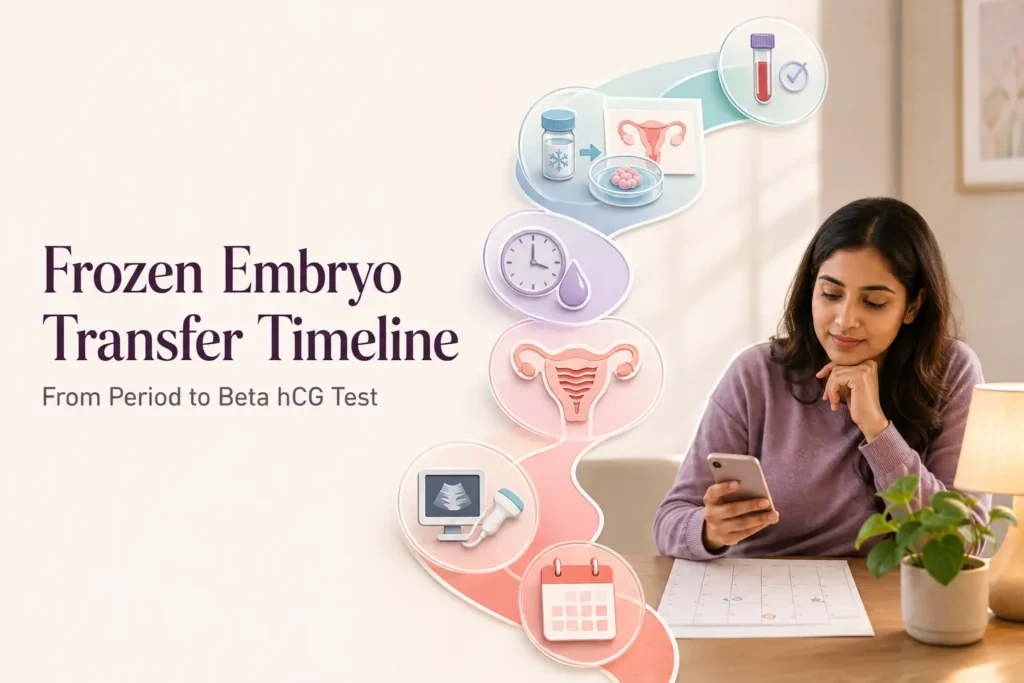
Table Of Content
- What Is a Frozen Embryo Transfer Cycle?
- Frozen Embryo Transfer Timeline: Step-by-Step Process
- Around Ovulation or Progesterone Start: Timing the Transfer
- After Embryo Transfer: The Two-Week Wait
- Beta hCG Test After Frozen Embryo Transfer
- Frozen Embryo Transfer Timeline at a Glance
- What Factors Can Change the FET Timeline?
- What Should You Do During the FET Preparation Period?
- When Should You Contact Your Fertility Doctor After FET?
