




Laparoscopic Surgery for PCOS: Treatment, Benefits, Fertility Support & Recovery
Laparoscopic surgery for PCOS is a minimally invasive treatment option that may be considered for selected women with Polycystic Ovary Syndrome, especially when medicines, lifestyle changes, and ovulation induction have not helped enough. PCOS is one of the common hormonal conditions affecting women during reproductive age. It can disturb periods, ovulation, weight, skin, hair growth, and fertility.
But one important thing should be clear from the beginning: not every woman with PCOS needs surgery.
Most PCOS cases are managed with lifestyle correction, hormonal treatment, ovulation-support medicines, fertility planning, and regular monitoring. Laparoscopic surgery is usually considered only in specific situations, mainly when ovulation is not happening despite proper treatment or when fertility support needs an additional step.
At Ova Fertility and Women Care, women can receive care for PCOS, menstrual irregularities, hormonal imbalance, fertility concerns, IVF/ICSI, ultrasound, laparoscopy, hysteroscopy, and complete women’s health needs under one roof. Ova Care’s approach focuses on personalized treatment rather than one standard plan for every woman.
This blog explains laparoscopic surgery for PCOS in simple language — what it means, when it may be advised, how it is done, benefits, recovery, fertility impact, and what women should know before choosing this treatment.
PCOS, or Polycystic Ovary Syndrome, is a hormonal condition where the ovaries may not release eggs regularly. This can lead to irregular periods, delayed cycles, acne, facial hair growth, weight gain, oily skin, hair thinning, and difficulty conceiving.
In PCOS, the ovaries may develop multiple small follicles. These are often seen on ultrasound, but PCOS is not diagnosed only by ultrasound. A doctor usually considers symptoms, cycle pattern, hormone profile, ovulation pattern, and ultrasound findings together.
Common symptoms of PCOS include:
- Irregular periods
- Missed periods
- Delayed cycles
- Acne
- Oily skin
- Facial hair growth
- Weight gain
- Difficulty losing weight
- Hair thinning
- Darkening of skin around neck or underarms
- Difficulty getting pregnant
- Mood changes
- Hormonal imbalance
Ova Fertility and Women Care provides gynecology care for PCOS, menstrual irregularities, hormonal imbalance, fertility issues, and related women’s health concerns.
Laparoscopic surgery for PCOS is a minimally invasive surgical procedure where the doctor uses a laparoscope, which is a thin camera, to look inside the pelvis and treat the ovaries through small cuts on the abdomen.
In PCOS-related fertility care, one commonly discussed laparoscopic procedure is laparoscopic ovarian drilling. In this procedure, small points are made on the ovary using controlled surgical energy. The aim is to reduce excess androgen-producing ovarian tissue and support ovulation in selected women.
Again, this treatment is not for every PCOS patient. It is usually considered when:
- Ovulation is not happening properly
- Medicines have not worked well
- The woman is trying to conceive
- Other causes of infertility have been checked
- The doctor feels surgery may help in that specific case
Ova Care offers laparoscopic surgery and fertility-related endoscopy as part of its gynecology and fertility services. Endoscopy is described by Ova Care as a minimally invasive technique used in infertility diagnosis and treatment, including diagnostic and operative laparoscopy and hysteroscopy.
Featured Snippet Answer: What is laparoscopic surgery for PCOS?
Laparoscopic surgery for PCOS is a minimally invasive procedure used in selected women with PCOS, especially when ovulation does not improve with medicines. It may involve laparoscopic ovarian drilling, where tiny controlled points are made on the ovaries to support ovulation and improve fertility chances in suitable cases.
Why Is Surgery Sometimes Needed in PCOS?
PCOS is usually managed without surgery. Many women improve with lifestyle changes, weight management, cycle regulation, insulin resistance correction, and ovulation-inducing medicines.
But in some women, the ovaries do not respond well to medicines. This is especially important for women who are trying to conceive. If ovulation does not happen despite proper treatment, the fertility specialist may consider laparoscopic surgery.
Surgery may be considered when:
- Ovulation medicines are not working
- Periods remain irregular despite treatment
- The woman is trying to get pregnant
- There is resistance to ovulation induction
- The ovaries show typical PCOS changes
- Other fertility factors have been evaluated
- The doctor wants to reduce androgen effect on ovulation
- There are additional pelvic concerns needing laparoscopy
At Ova Fertility and Women Care, PCOS and pregnancy-related concerns are managed with personalized fertility planning. Ova Care’s PCOS content highlights treatment options such as ovulation induction, hormonal balance support, and individualized care based on the woman’s condition.
Laparoscopic Ovarian Drilling for PCOS
Laparoscopic ovarian drilling is a surgical method used in selected PCOS patients who do not ovulate regularly. It is not the first treatment for PCOS, but it may be useful when medicines fail to trigger ovulation.
During the procedure, the doctor makes very small openings in the abdomen and inserts a laparoscope. The ovaries are visualized, and controlled tiny punctures are made on the ovarian surface.
The goal may be to:
- Reduce excess androgen production
- Improve hormonal balance
- Help restore ovulation
- Support natural conception in selected women
- Improve response to future fertility treatment
- Reduce the need for repeated high-dose ovulation medicines in some cases
This procedure should be done only when medically indicated. It needs proper evaluation and counselling because every woman with PCOS is different.
How PCOS Affects Fertility
PCOS can affect fertility mainly because it may disturb ovulation. If the ovary does not release an egg regularly, natural pregnancy becomes difficult.
A woman with PCOS may still get periods, but ovulation may not happen every month. Some women have very delayed cycles, such as periods once in two or three months. Some may need medicines to induce ovulation.
PCOS may affect fertility through:
- Irregular ovulation
- No ovulation in some cycles
- Hormonal imbalance
- Insulin resistance
- Poor egg release
- Irregular menstrual cycles
- Weight-related hormonal changes
- Higher androgen levels
Ova Care offers fertility services such as ovulation induction, IUI, IVF/ICSI, ultrasound monitoring, male infertility care, blastocyst culture, laser-assisted hatching, Pre-implantation Genetic Testing, and embryo freezing as part of its fertility care ecosystem.
Is Laparoscopic Surgery the First Treatment for PCOS?
No. Laparoscopic surgery is usually not the first treatment for PCOS.
Most women are first treated with non-surgical methods. The treatment depends on whether the woman wants regular periods, skin improvement, weight management, fertility support, or pregnancy planning.
First-line PCOS management may include:
- Lifestyle correction
- Weight management
- Balanced diet
- Regular exercise
- Period regulation
- Hormonal medicines
- Insulin resistance management
- Ovulation induction if pregnancy is planned
- Ultrasound monitoring
- Fertility counselling
Surgery is usually considered only after careful assessment. It should not be done casually just because PCOS is diagnosed.
Who May Benefit from Laparoscopic Surgery for PCOS?
Laparoscopic surgery for PCOS may benefit selected women, especially those who are trying to conceive and have not responded to ovulation medicines.
It may be considered for women who have:
- PCOS with irregular or absent ovulation
- Difficulty conceiving due to ovulation issues
- Poor response to ovulation induction medicines
- Repeated treatment cycles without ovulation
- High androgen-related symptoms with fertility concern
- Need for pelvic evaluation along with fertility treatment
- Additional suspected conditions like endometriosis or adhesions
A fertility specialist will usually check whether the fallopian tubes are open, semen analysis is normal, and the uterus is suitable before recommending surgery for PCOS-related infertility.
Many women with PCOS do not need surgery. If symptoms are mild or managed well with medicines and lifestyle changes, surgery may not be needed.
Surgery may not be required if:
- Periods are manageable with medicines
- Ovulation improves with treatment
- Pregnancy is not currently planned
- PCOS symptoms are controlled with lifestyle and medical care
- There is no fertility concern
- The patient responds well to ovulation induction
- Other simpler treatment options have not been tried yet
A good treatment plan should avoid unnecessary procedures.
How Is Laparoscopic Surgery for PCOS Done?
The procedure is usually performed in a hospital or surgical setup. The exact steps may vary depending on the patient’s condition and the surgeon’s plan.
General steps may include:
- The patient is prepared for surgery
- Anesthesia is given so the patient does not feel pain during the procedure
- Small cuts are made on the abdomen
- A laparoscope is inserted to view pelvic organs
- The ovaries are examined
- Controlled drilling points may be made on the ovaries if planned
- Other pelvic issues may be checked if needed
- Instruments are removed
- Small cuts are closed
- Recovery monitoring is done
Ova Care’s laparoscopic surgery page explains laparoscopy as a modern surgical method performed through small cuts rather than large open cuts, helping reduce post-surgery discomfort and support faster recovery in suitable cases.
Is Laparoscopic Surgery for PCOS Painful?
During the surgery, the patient does not feel pain because anesthesia is used. After surgery, mild to moderate discomfort may happen for a few days.
After laparoscopy, some women may feel:
- Mild abdominal pain
- Shoulder pain due to gas used during surgery
- Bloating
- Tiredness
- Pain near small incision sites
- Mild nausea after anesthesia
- Slight pulling sensation while moving
This discomfort usually improves with medicines, rest, and gradual movement as advised by the doctor.
Benefits of Laparoscopic Surgery for PCOS
Laparoscopic surgery may offer benefits in selected PCOS cases, especially when fertility is the main concern and medicines have not worked.
Possible benefits include:
- May help restore ovulation
- May improve chances of natural conception in selected women
- May reduce androgen levels
- May help women who do not respond to ovulation medicines
- May reduce need for repeated high-dose ovulation drugs in some cases
- Allows pelvic organs to be checked directly
- Smaller cuts compared to open surgery
- Faster recovery in suitable cases
- Less post-surgery discomfort compared to traditional open surgery
- May help identify other fertility-related pelvic issues
Ova Care positions laparoscopy as part of advanced minimally invasive gynecological care and fertility-related endoscopy, supporting diagnosis and treatment when needed.
Limitations of Laparoscopic Surgery for PCOS
Laparoscopic surgery for PCOS has benefits, but it also has limitations. It should not be presented as a guaranteed cure.
Important limitations include:
- It does not cure PCOS permanently
- It may not work for every woman
- Ovulation improvement may be temporary
- Lifestyle care may still be needed
- Pregnancy is not guaranteed
- Other fertility factors may still affect conception
- It is a surgical procedure and needs proper selection
- Over-treatment of ovaries should be avoided
PCOS is a long-term hormonal condition. Even after surgery, women may need lifestyle support, menstrual tracking, fertility follow-up, weight care, and hormonal monitoring.
Can Laparoscopic Surgery Cure PCOS?
No, laparoscopic surgery does not permanently cure PCOS.
PCOS is a hormonal and metabolic condition. Surgery may help improve ovulation in selected women, but it does not remove the tendency for hormonal imbalance. Lifestyle, weight management, cycle tracking, and medical follow-up may still be required.
A better way to understand it is this:
Laparoscopic surgery may support ovulation in selected PCOS patients, but PCOS still needs long-term management.
Recovery After Laparoscopic Surgery for PCOS
Recovery after laparoscopy is usually faster than open surgery because only small cuts are made. However, recovery varies from patient to patient.
Some women feel better within a few days, while others may need more time depending on the procedure and their overall health.
General recovery tips include:
- Take medicines as prescribed
- Rest for the first few days
- Avoid heavy lifting until advised
- Keep incision sites clean and dry
- Walk slowly as advised
- Drink enough water
- Eat light food if nauseous
- Avoid strenuous exercise until cleared
- Attend follow-up visit
- Report fever, severe pain, heavy bleeding, or wound discharge
Ova Care’s laparoscopy recovery guidance mentions keeping incisions clean and dry, resting before resuming normal activity, and contacting the doctor if redness, swelling, or discharge appears around incision sites.
When Can You Resume Normal Routine?
This depends on the type of laparoscopy, the extent of treatment, and the doctor’s advice.
In many simple laparoscopic procedures, light activity may begin within a few days. However, heavy workouts, lifting, and physically demanding work may need to be avoided for longer.
You may need to ask your doctor:
- When can I return to work?
- When can I start walking normally?
- When can I resume exercise?
- When can I have intercourse?
- When should I start trying for pregnancy?
- When should I come for follow-up?
- Do I need ovulation medicines after surgery?
Do not rush recovery just because the cuts are small. Internal healing still needs time.
Pregnancy Chances After Laparoscopic Surgery for PCOS
Some women may ovulate better after laparoscopic ovarian drilling and may have improved chances of conception. But pregnancy depends on more than ovulation alone.
Pregnancy chances may depend on:
- Age of the woman
- Egg quality
- Sperm quality
- Tube condition
- Uterus health
- Ovulation response after surgery
- Weight and metabolic health
- Duration of infertility
- Other fertility factors
- Timing of intercourse or treatment
After surgery, the doctor may monitor ovulation and suggest timed intercourse, ovulation induction, IUI, or IVF depending on the couple’s complete fertility picture.
At Ova Fertility and Women Care, fertility services are available along with gynecology, ultrasound, laparoscopy, IVF/ICSI, and counselling, which helps couples move step by step in a planned way.
Laparoscopy vs IVF for PCOS: Which Is Better?
This depends on the patient.
Some women with PCOS may conceive with lifestyle changes and ovulation medicines. Some may need IUI. Some may benefit from laparoscopic surgery. Some may need IVF, especially if there are additional fertility factors.
Laparoscopy may be considered when:
- Ovulation medicines have not worked
- Tubes and sperm factors are acceptable
- Natural conception or IUI is still possible
- The doctor suspects other pelvic issues
- The woman is a suitable surgical candidate
IVF may be considered when:
- Other treatments have failed
- Tubes are blocked
- Male infertility is present
- Age is a concern
- Long-standing infertility is present
- Severe fertility factors exist
- Time-sensitive fertility treatment is needed
The best option should be decided after complete evaluation, not based on one diagnosis alone.
Laparoscopic Surgery and Weight Management in PCOS
Weight management is still important even if surgery is done. In PCOS, even modest weight improvement may help hormones, ovulation, insulin resistance, and cycle regularity in many women.
Surgery does not replace lifestyle care.
Lifestyle support after surgery may include:
- Balanced diet
- Regular physical activity
- Sleep improvement
- Stress management
- Avoiding crash diets
- Tracking periods
- Monitoring weight
- Managing insulin resistance
- Follow-up with gynecologist or fertility specialist
Ova Care’s PCOS content also highlights lifestyle modification and motivation as important parts of PCOS fertility care.
Risks of Laparoscopic Surgery for PCOS
Laparoscopy is minimally invasive, but it is still surgery. So, risks should be discussed before the procedure.
Possible risks may include:
- Pain after surgery
- Bleeding
- Infection
- Reaction to anesthesia
- Injury to nearby organs, rarely
- Adhesion formation, rarely
- Need for further treatment
- Ovarian reserve concern if excessive drilling is done
This is why the procedure must be done carefully and only when appropriate.
A patient should understand why the surgery is being advised, what benefits are expected, and what alternatives are available.
Questions to Ask Before Laparoscopic Surgery for PCOS
Before choosing surgery, ask your doctor clear questions.
Useful questions include:
- Do I really need laparoscopic surgery for PCOS?
- Have we tried enough non-surgical treatment first?
- Is this mainly for fertility improvement?
- Will ovarian drilling be done?
- How many points will be made on the ovary?
- Are my tubes and uterus normal?
- Is my partner’s semen report normal?
- What are my chances of ovulation after surgery?
- How soon can I try for pregnancy?
- Will I need medicines after surgery?
- What are the risks?
- What is the recovery time?
- What is the next plan if pregnancy does not happen?
A good consultation should make the treatment plan feel clear, not confusing.
People Also Ask: Is laparoscopic surgery required for all PCOS patients?
No. Laparoscopic surgery is not required for all PCOS patients. Most women with PCOS are managed with lifestyle changes, hormonal treatment, ovulation medicines, and fertility planning. Surgery is considered only in selected cases.
People Also Ask: Can laparoscopic surgery help PCOS fertility?
Yes, laparoscopic surgery may help fertility in selected PCOS patients, especially when ovulation does not happen despite medicines. It may support ovulation, but pregnancy also depends on age, egg quality, sperm quality, tube health, and uterus condition.
People Also Ask: Is laparoscopic ovarian drilling painful?
The procedure is done under anesthesia, so pain is not felt during surgery. After the procedure, mild abdominal pain, bloating, shoulder pain, or tiredness may happen for a few days and is usually manageable with medicines.
People Also Ask: How long is recovery after laparoscopic surgery for PCOS?
Recovery is usually faster than open surgery because small cuts are used. Many women resume light routine within a few days, but full recovery and activity restrictions depend on the procedure and doctor’s advice.
People Also Ask: Can PCOS come back after laparoscopic surgery?
PCOS is a long-term hormonal condition, so symptoms may return or continue even after surgery. Laparoscopy may support ovulation in selected women, but lifestyle care, medical follow-up, and hormonal management may still be needed.
Why Choose Ova Fertility and Women Care for Laparoscopic Surgery for PCOS?
Ova Fertility and Women Care provides complete women’s care under one roof, including gynecology, fertility, IVF, IUI, ultrasound, laparoscopy, hysteroscopy, pregnancy care, and lifestyle support. This integrated setup is useful for PCOS because PCOS can affect periods, hormones, ovulation, fertility, weight, skin, and long-term reproductive health.
For PCOS-related fertility concerns, treatment often needs more than one approach. A woman may need ultrasound monitoring, hormonal evaluation, ovulation induction, fertility counselling, laparoscopy in selected cases, or IVF planning if required.
Ova Care supports women with:
- PCOS evaluation
- Menstrual disorder care
- Hormonal imbalance management
- Fertility consultation
- Ovulation induction
- Ultrasound monitoring
- Laparoscopic surgery
- Hysteroscopic surgery
- IVF and ICSI
- IUI
- Lifestyle guidance
- Emotional support and counselling
The goal is not to recommend surgery to every PCOS patient. The goal is to understand the exact problem and choose the right treatment at the right time.
Conclusion
Laparoscopic surgery for PCOS can be helpful for selected women, especially those who are trying to conceive and not ovulating despite proper medicines. It is usually performed as a minimally invasive procedure, often in the form of laparoscopic ovarian drilling, to support ovulation in suitable PCOS cases.
But surgery is not the first step for every woman with PCOS. Many women improve with lifestyle correction, cycle regulation, hormonal treatment, ovulation induction, and fertility planning. Laparoscopy should be chosen only after proper evaluation and counselling.
At Ova Fertility and Women Care, women with PCOS can receive personalized care for menstrual irregularities, hormonal imbalance, fertility concerns, ovulation problems, laparoscopy, IVF/ICSI, and complete reproductive health support. With the right diagnosis and treatment plan, PCOS can be managed better, and fertility goals can be approached with more clarity.
FAQ
1. What is laparoscopic surgery for PCOS?
2. Is laparoscopic surgery necessary for PCOS?
3. Can laparoscopic surgery improve fertility in PCOS?
4. Is laparoscopic surgery for PCOS painful?
5. How long does recovery take after laparoscopic surgery for PCOS?
6. Does PCOS go away after laparoscopic surgery?
7. Is laparoscopic surgery for PCOS available at Ova Fertility and Women Care?
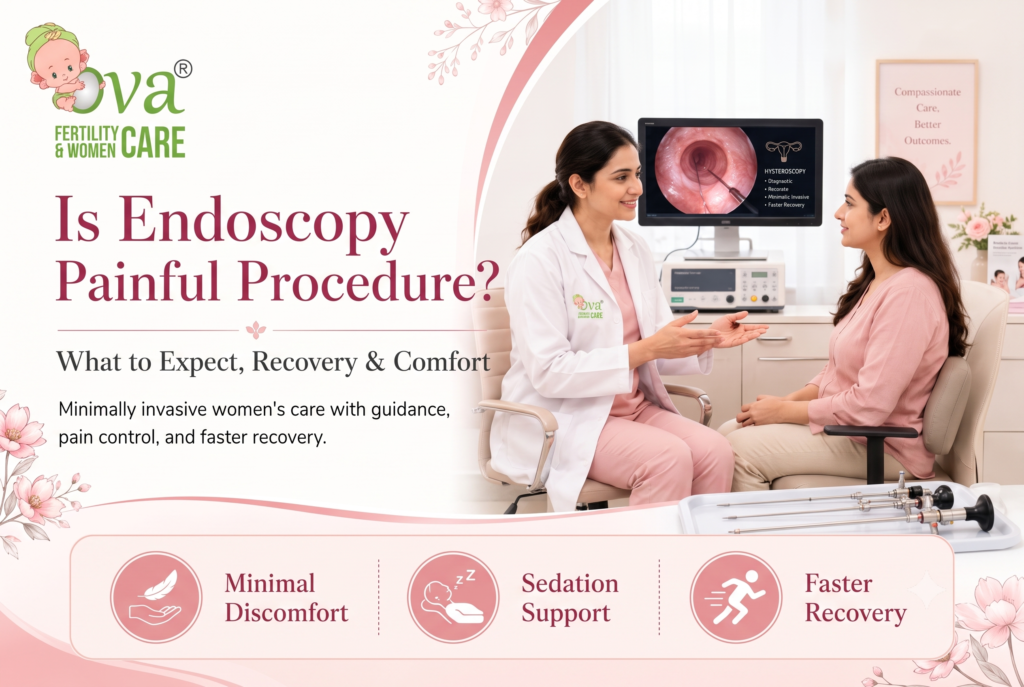
Table Of Content
- Laparoscopic Surgery for PCOS: Treatment, Benefits, Fertility Support & Recovery
- What Is PCOS?
- What Is Laparoscopic Surgery for PCOS?
- Why Is Surgery Sometimes Needed in PCOS?
- Laparoscopic Ovarian Drilling for PCOS
- How PCOS Affects Fertility
- Is Laparoscopic Surgery the First Treatment for PCOS?
- Who May Benefit from Laparoscopic Surgery for PCOS?
- Who May Not Need Laparoscopic Surgery for PCOS?
- How Is Laparoscopic Surgery for PCOS Done?
- Is Laparoscopic Surgery for PCOS Painful?
- Benefits of Laparoscopic Surgery for PCOS
- Limitations of Laparoscopic Surgery for PCOS
- Can Laparoscopic Surgery Cure PCOS?
- Recovery After Laparoscopic Surgery for PCOS
- When Can You Resume Normal Routine?
- Pregnancy Chances After Laparoscopic Surgery for PCOS
- Laparoscopy vs IVF for PCOS: Which Is Better?
- Laparoscopic Surgery and Weight Management in PCOS
- Risks of Laparoscopic Surgery for PCOS
- Questions to Ask Before Laparoscopic Surgery for PCOS
- Why Choose Ova Fertility and Women Care for Laparoscopic Surgery for PCOS?
- Conclusion
- FAQ

 No need to worry, your data is 100% Safe with us!