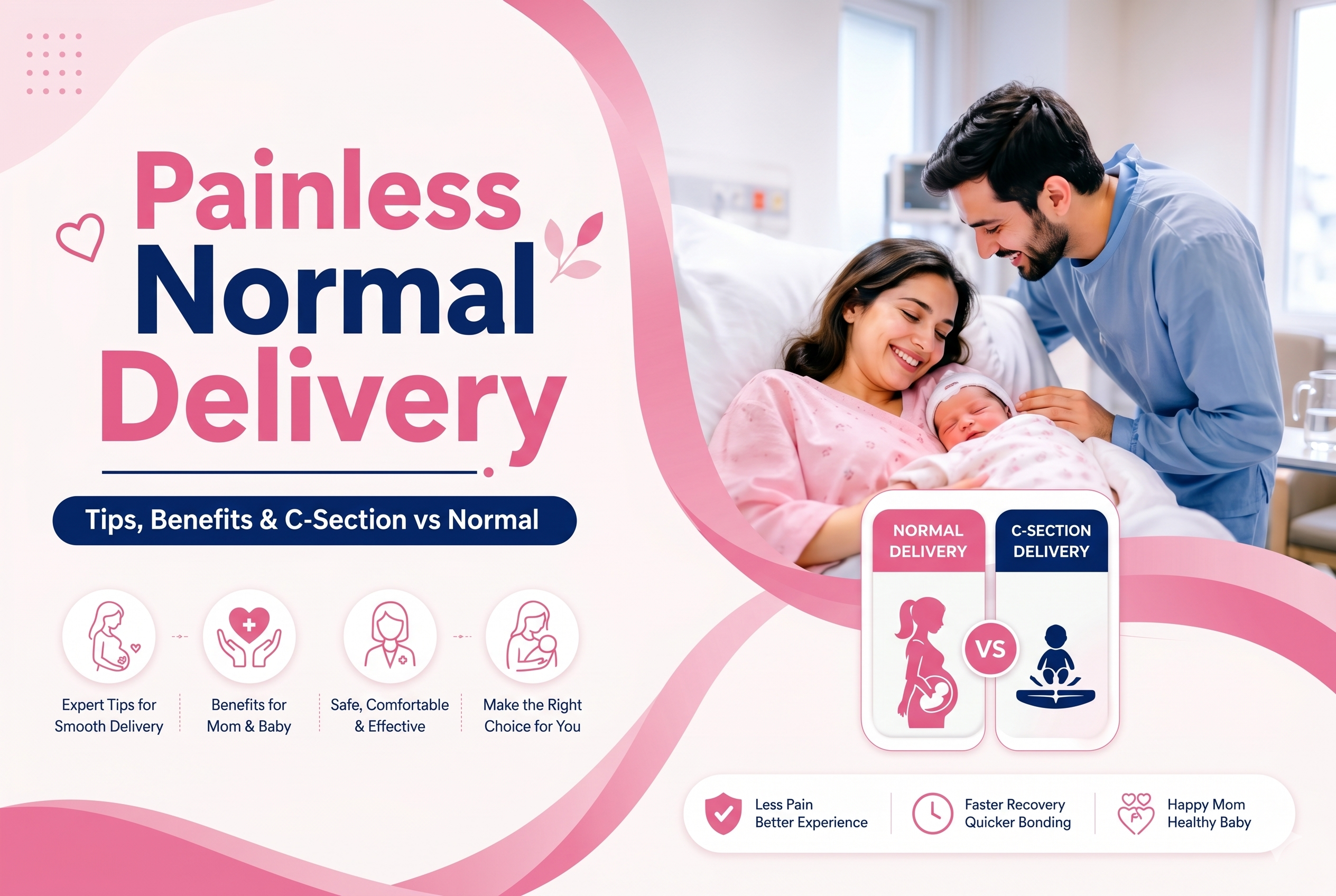


Bringing a baby into the world is one of the most powerful experiences in a woman’s life-but the fear of labor pain often creates anxiety. That’s where painless normal delivery comes in. It’s not about removing the beauty of natural childbirth; it’s about making the process more comfortable, controlled, and less stressful.
In this guide, you’ll understand what painless delivery really means, how it works, its benefits, and how it compares to a C-section. If you’re planning your pregnancy journey, this will help you make a confident and informed decision.
What is Painless Normal Delivery?
Painless normal delivery refers to a vaginal birth where medical techniques are used to reduce or manage labor pain without affecting the natural birthing process.
The most common method used is:
- Epidural analgesia
This technique allows you to:
- Stay awake and aware
- Feel pressure but not intense pain
- Deliver your baby naturally
It’s important to understand-this is still a normal delivery, just with better pain management.
How Does Painless Delivery Work?
During labor, an anesthesiologist injects medication into the lower back (epidural space). This blocks pain signals from the lower part of your body.
What you experience:
- Reduced or no pain during contractions
- Ability to rest during long labor
- Controlled pushing when required
The process is safe when done by experienced professionals and is widely used across modern maternity care.
Benefits of Painless Normal Delivery
Choosing painless delivery is not just about comfort-it also has practical and emotional benefits.
1. Reduced Fear and Anxiety
Many women delay or avoid pregnancy due to fear of labor pain. Painless delivery removes this mental barrier.
2. Better Energy During Labor
When pain is managed:
- You don’t feel exhausted quickly
- You can focus on breathing and pushing
3. Higher Chances of Normal Delivery
When the body is relaxed, the chances of complications may reduce, increasing the likelihood of a successful vaginal birth.
4. Faster Recovery Compared to C-Section
Since there’s no major surgery:
- Hospital stay is shorter
- Healing is quicker
- You can return to routine faster
5. Positive Birth Experience
A calm and controlled labor often leads to:
- Better emotional bonding
- Less trauma
- A more confident motherhood journey
Who Can Opt for Painless Delivery?
Not everyone may need it, but many women are ideal candidates.
Suitable for:
- First-time mothers
- Women with low pain tolerance
- Long or induced labor cases
- High anxiety during pregnancy
May not be suitable if:
- Certain medical conditions exist
- Blood clotting issues
- Spine-related complications
A proper consultation with your doctor is necessary before deciding.
Tips for a Smooth Painless Normal Delivery
Even with pain management, preparation plays a huge role. Here are practical tips that actually make a difference:
1. Choose the Right Doctor & Hospital
Your experience depends heavily on the team handling your delivery. A well-equipped setup with experienced specialists ensures safety and comfort.
If you’re planning your pregnancy journey, consulting a trusted center like https://theovacare.com/ivf-clinic-in-thane/
can help you get personalized guidance from experts.
2. Stay Physically Active During Pregnancy
Light activities like:
- Walking
- Prenatal yoga
- Stretching
These improve flexibility and help your body prepare for labor.
3. Learn Breathing Techniques
Controlled breathing:
- Reduces panic
- Helps during contractions
- Improves oxygen flow
4. Eat a Balanced Diet
A healthy pregnancy diet supports:
- Baby’s growth
- Your strength during labor
Focus on:
- Protein
- Iron-rich foods
- Hydration
5. Attend Prenatal Classes
Understanding the process removes fear. You’ll learn:
- Labor stages
- Pain management options
- Pushing techniques
6. Stay Mentally Prepared
Your mindset matters more than you think.
- Avoid negative stories
- Trust your body
- Stay calm and confident
Painless Normal Delivery vs C-Section
Many women get confused between these two. Let’s break it down clearly.
1. Procedure
Painless Normal Delivery
- Natural vaginal birth
- Pain managed with epidural
C-Section (Cesarean Delivery)
- Surgical procedure
- Baby delivered through abdominal incision
2. Recovery Time
Normal Delivery
- Faster recovery
- Short hospital stay
C-Section
- Longer healing time
- Requires post-surgery care
3. Risks
Normal Delivery
- Fewer complications
- Lower infection risk
C-Section
- Surgical risks
- Possible complications in future pregnancies
4. Cost
Normal Delivery
- Generally more affordable
C-Section
- Higher cost due to surgery
5. When is C-Section Necessary?
Sometimes, a C-section is not a choice-it’s required for safety.
Examples include:
- Baby in a wrong position
- Fetal distress
- Placenta complications
- Multiple pregnancies
Is Painless Delivery Safe?
Yes, when performed under proper medical supervision.
Common concerns:
- “Will it affect the baby?” → No
- “Will I feel anything?” → You’ll feel pressure, not pain
- “Is it risky?” → Minimal risk when handled by experts
Modern medical advancements have made epidural anesthesia safe and reliable.
Common Myths About Painless Normal Delivery
Myth 1: It’s not a “real” normal delivery
Reality: It is completely natural-only pain is managed.
Myth 2: It causes long-term back pain
Reality: Temporary discomfort is possible, but long-term issues are rare.
Myth 3: It slows down labor
Reality: In some cases it may slightly prolong labor, but it helps manage pain effectively.
Myth 4: It affects the baby
Reality: No proven harm when done correctly.
How to Decide What’s Best for You?
Every pregnancy is different.
Instead of choosing based on fear or opinions:
- Understand your medical condition
- Discuss with your doctor
- Evaluate your comfort level
If you’re unsure where to start, you can explore expert consultation and personalized care here: https://theovacare.com/ivf-clinic-in-thane/
Final Thoughts
Painless normal delivery is changing the way women experience childbirth. It combines the natural process of vaginal delivery with modern pain relief techniques, making the journey smoother and less stressful.
While C-sections are life-saving when needed, a normal delivery-especially painless-offers quicker recovery, fewer complications, and a more natural bonding experience.
The goal is not to choose what’s “better” universally, but what’s right for you and your baby.