Understanding What Happens After Embryo Transfer
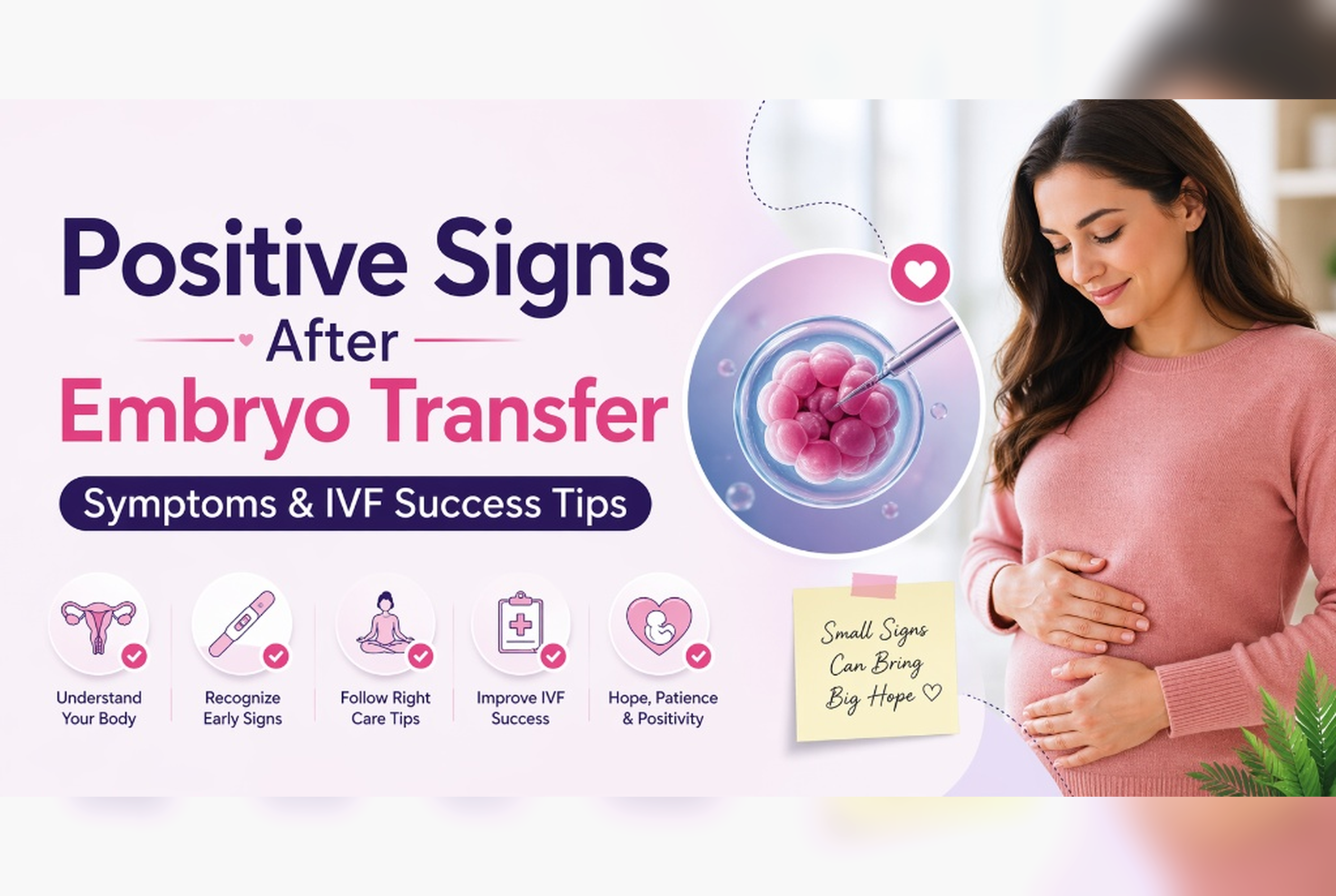
After the embryo is placed inside the uterus, the next step is implantation. This is when the embryo attaches to the uterine lining and begins developing.
This process usually happens within:
- 1–2 days post ET: Embryo begins to hatch
- 3–5 days post ET: Implantation may start
- 6–10 days post ET: hCG hormone begins to rise
This is why symptoms vary from person to person – your body may respond differently depending on timing, hormone levels, and overall health.
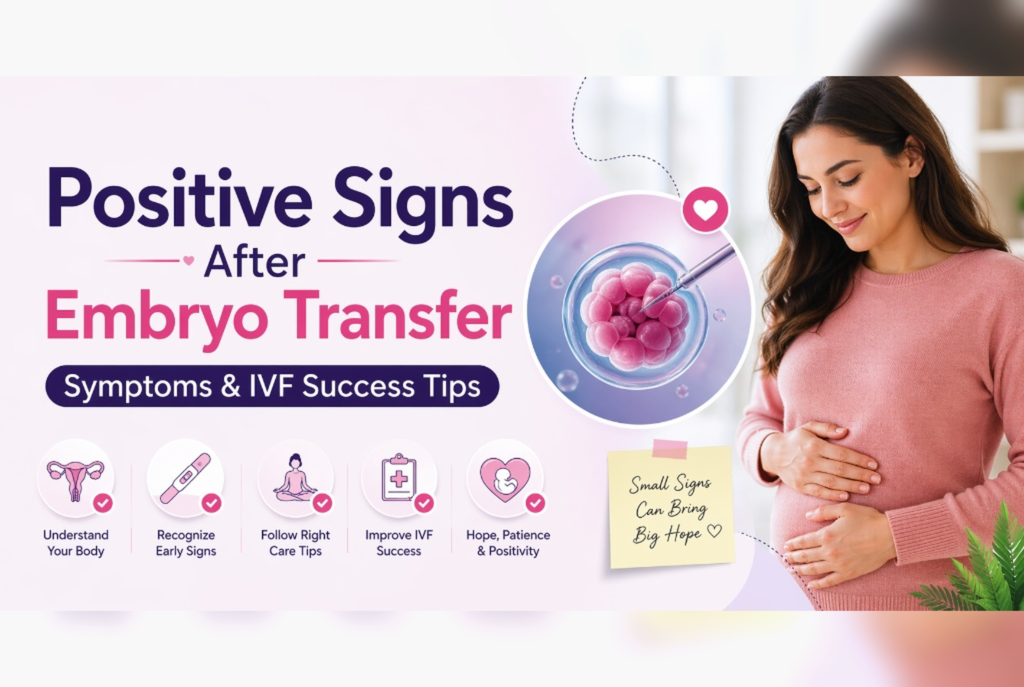
Most Common Positive Signs After Embryo Transfer
Let’s break down the signs that many women experience when implantation is happening successfully.
1. Mild Cramping or Pulling Sensation
A light cramping feeling in the lower abdomen is one of the most commonly reported signs.
- Usually mild, not sharp
- Comes and goes
- Feels similar to early period cramps
👉 Why it happens:
The embryo attaching to the uterine wall can create this sensation.
2. Light Spotting (Implantation Bleeding)
Some women notice slight spotting a few days after transfer.
- Light pink or brown discharge
- Very minimal (not like a period)
- Lasts a few hours to 1–2 days
👉 Important:
Not everyone experiences this, so absence of spotting doesn’t mean failure.
3. Breast Tenderness or Fullness
Hormonal changes can cause:
- Soreness
- Heaviness
- Increased sensitivity
👉 This happens due to rising progesterone and early pregnancy hormones.
4. Fatigue or Unusual Tiredness
Feeling more tired than usual?
That’s a common early sign.
- You may feel drained without doing much
- Sleepiness during the day
👉 Reason:
Your body is using energy to support early pregnancy changes.
5. Increased Urination
Some women notice they are visiting the washroom more often.
👉 This can be linked to hormonal shifts and increased blood flow.
6. Mood Changes
Emotional ups and downs are completely normal.
- Sudden mood swings
- Feeling anxious or emotional
👉 This is due to hormonal fluctuations, not just pregnancy.
7. No Symptoms at All (Yes, This Can Still Be Positive)
This is something many people don’t talk about enough.
👉 No symptoms ≠ no success
Many successful IVF pregnancies had:
- Zero cramping
- No spotting
- No noticeable changes
Your body may be quietly doing everything right.
Signs You Should Not Overthink
After embryo transfer, it’s easy to overanalyze everything.
Here are some things that are not reliable indicators:
- Slight bloating
- Mild back pain
- Temporary discomfort
👉 These can be caused by medications, not implantation.
What Actually Confirms IVF Success?
The only reliable confirmation is:
👉 Beta hCG blood test
This test is usually done:
- 10–14 days after embryo transfer
Avoid early home pregnancy tests – they can give:
- False positives (due to medication)
- False negatives (too early)





 Instead: