

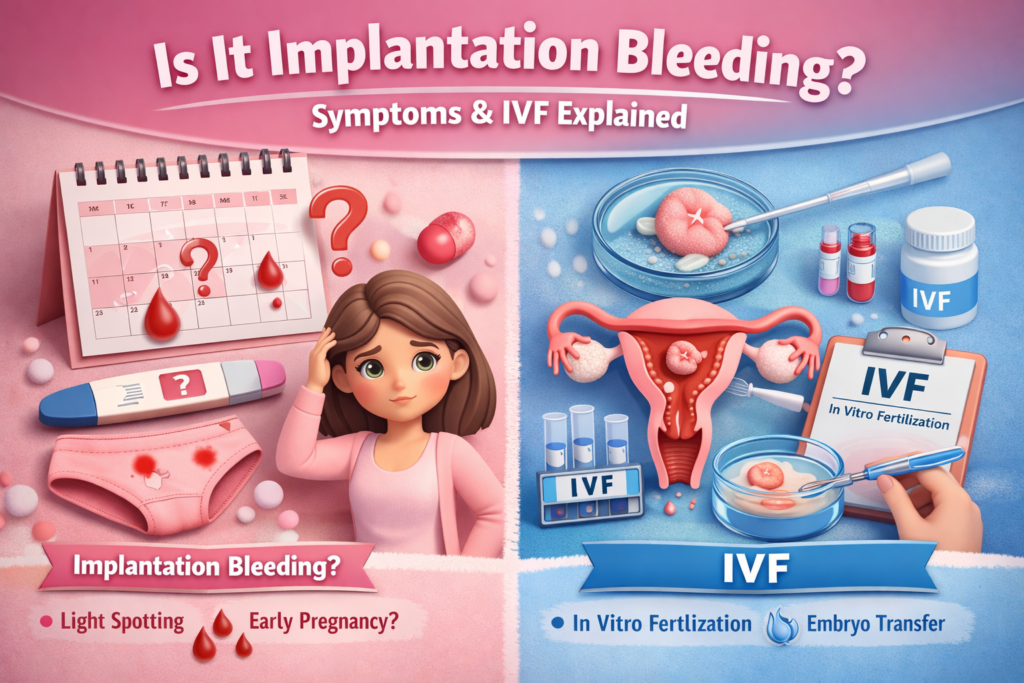
Feeling Confused About Spotting? You’re Not Alone
You go to the washroom… and notice light spotting.
Not heavy. Not like your usual period. Just… different.
And suddenly your mind starts racing:
Is this my period? Or could this be pregnancy?
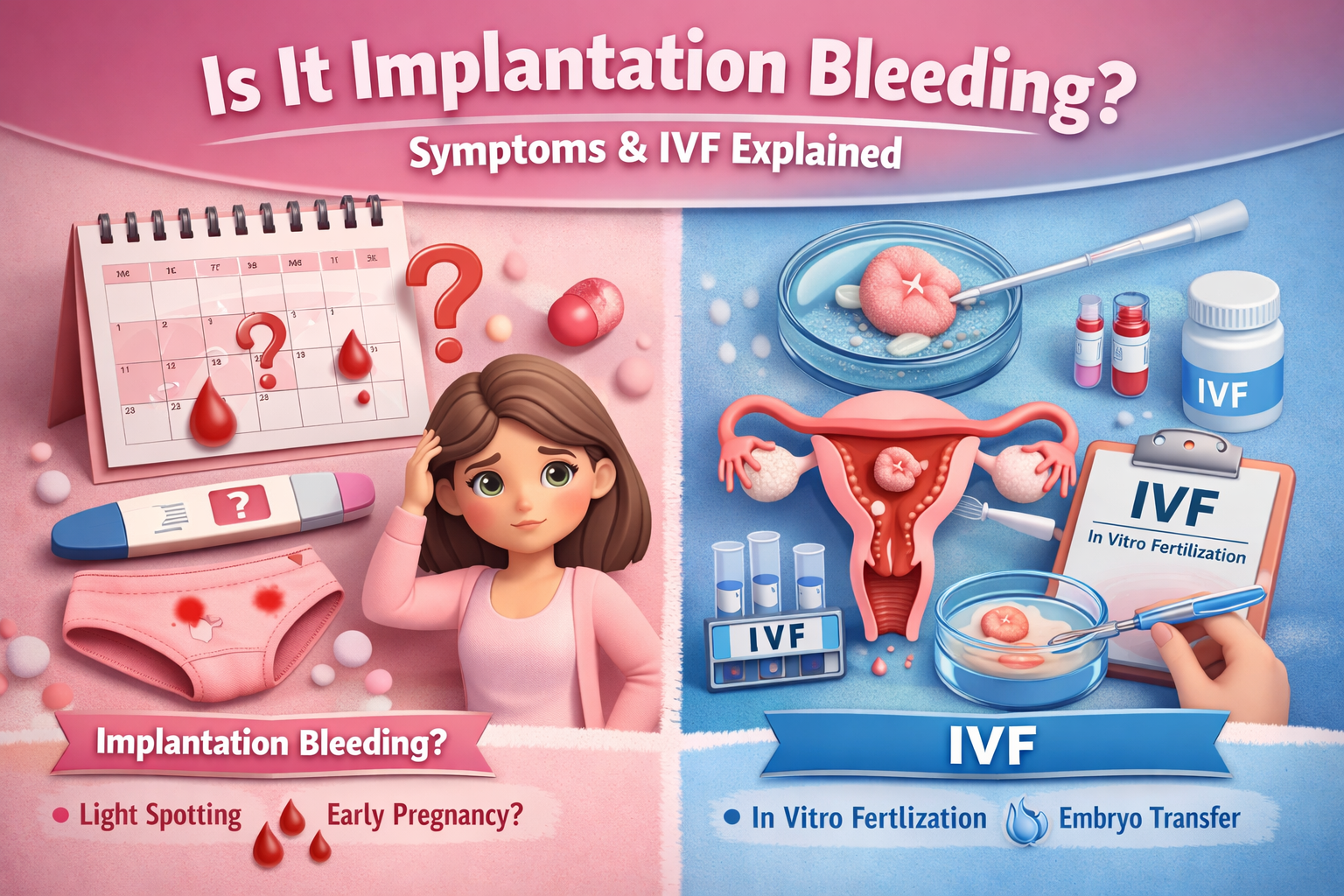
This is exactly where most women land when they experience implantation bleeding symptoms. It’s subtle, confusing, and honestly… a little emotional.
Let’s break it down simply so you know what your body is trying to tell you.
What is Implantation Bleeding? (Quick Answer)
Sometimes you might see a little spotting when a pregnancy first starts and the egg settles into the womb.
This is one of the earliest embryo implantation signs and can appear before you even take a pregnancy test.
It usually:
- Happens 6–12 days after ovulation
- Appears as light spotting
- Lasts a few hours to 2–3 days
“Am I Experiencing This?” – Check Your Symptoms
Here are the most common implantation bleeding symptoms you should look for:
- Light pink or brown spotting
- Very mild cramping (almost unnoticeable)
- No heavy blood flow
- No clots
- Short duration (1–3 days max)
If your bleeding feels light and unusual compared to your normal cycle, it might be implantation.
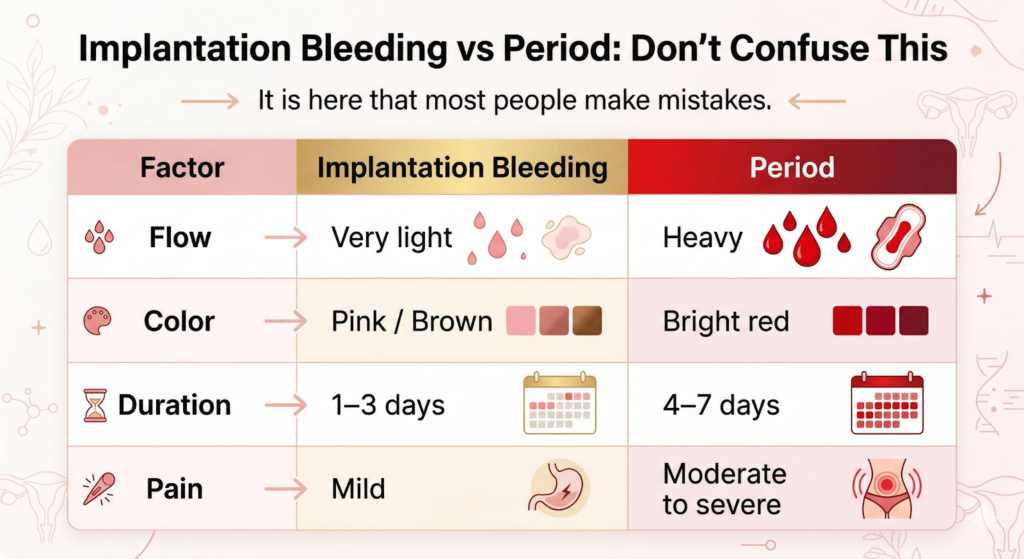
Implantation Bleeding vs Period (Don’t Confuse This)
It is here that most people make mistakes.
Factor | Implantation Bleeding | Period |
Flow | Very light | Heavy |
Color | Pink / Brown | Bright red |
Duration | 1–3 days | 4–7 days |
Pain | Mild | Moderate to severe |
If you need a pad change every few hours it’s likely not implantation.
When Does Implantation Actually Happen?
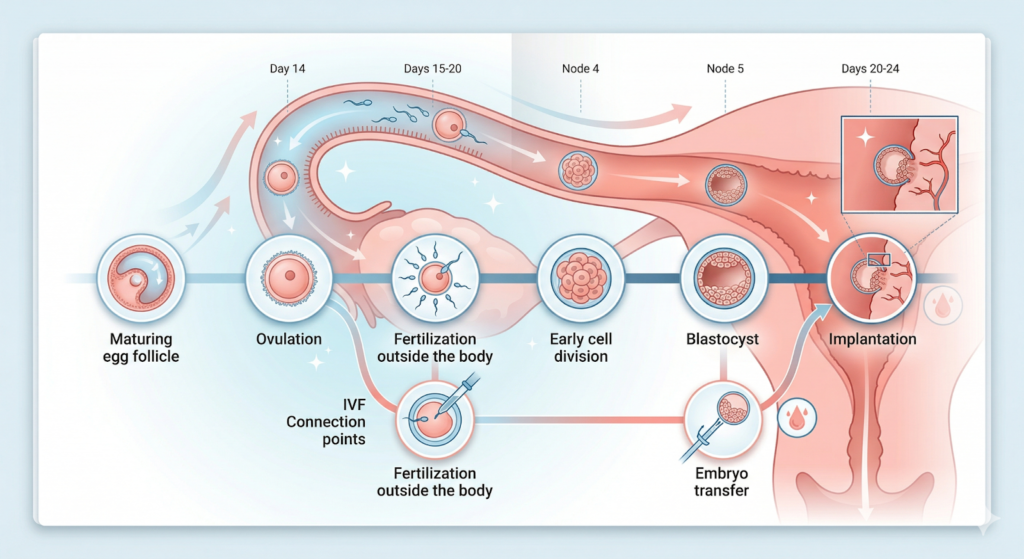
Let’s simplify the timeline:
- Day 1–14: Ovulation cycle
- Day 14: Egg released
- Day 15–20: Fertilization (if sperm meets egg)
- Day 20–24: Implantation
This is when implantation bleeding symptoms may appear.
What Most People Get Wrong (Important)
Let’s clear some common misunderstandings:
- Not every woman experiences implantation bleeding
- Bleeding doesn’t confirm pregnancy
- No bleeding doesn’t mean no pregnancy
Your body can react differently. Don’t panic either way.
Implantation Bleeding After IVF (Important for Many Couples)
If you’re undergoing fertility treatment, this part matters even more.
After embryo transfer, many women notice spotting and immediately wonder:
Is this a good sign?
First, let’s understand IVF full form:
IVF (In Vitro Fertilization) is a process where an egg is fertilized outside the body and then transferred into the uterus.
After this transfer, the embryo needs to attach just like natural pregnancy.
So, can implantation bleeding happen after IVF?
Yes.
Implantation bleeding after IVF can occur:
- A few days after embryo transfer
- As light spotting or discharge
Most people don’t tell you this, but the truth is:
It’s not a guaranteed sign of success
And absence of bleeding doesn’t mean failure
Early Pregnancy Symptoms in IVF (What to Notice)
Along with spotting, some women may notice:
- Mild cramps
- Breast tenderness
- Fatigue
- Slight bloating
These are common early pregnancy symptoms IVF patients observe, but they can also be due to hormonal medications.
So don’t rely only on symptoms always confirm with tests.
“We Saw Spotting… Does It Mean Anything?”
This is the most emotional part.
Couples often feel hopeful when they see spotting after trying for months or years.
And yes… sometimes it can be a positive sign.
But sometimes, it’s just the body adjusting.
The safest approach is:
- Stay calm
- Avoid assumptions
- Follow your doctor’s guidance
If you’re going through fertility treatment and need expert support, you can explore care options here:
https://theovacare.com/best-ivf-treatment-in-thane-book-expert-ivf-care/
When Should You Be Concerned?
Not all bleeding is harmless.
Consult a doctor if you notice:
- Heavy bleeding
- Bright red flow
- Severe abdominal pain
- Clots
- Dizziness
These are not typical implantation bleeding symptoms and need medical attention.
When Can You Relax?
You can stay calm if:
- Spotting is light
- No severe pain
- It stops within 1–3 days
Still, if you’re unsure getting clarity is always better than guessing.
Why Understanding This Matters
Many couples delay treatment because they keep guessing signs.
Instead of clarity, they get:
- Stress
- Confusion
- Emotional burnout
Understanding implantation bleeding symptoms and fertility basics (like IVF full form) helps you make better decisions at the right time.
If you’ve been trying for a while and still feel unsure, it might be the right moment to speak with a specialist:
https://theovacare.com/best-ivf-treatment-in-thane-book-expert-ivf-care/
Quick Recap (Save This)
- Implantation bleeding = light spotting during early pregnancy
- Happens 6–12 days after ovulation
- Not every woman experiences it
- Can happen in natural and IVF pregnancies
- Doesn’t confirm pregnancy testing is needed
FAQs
1. How long does implantation bleeding last?
2. Can implantation bleeding be heavy?
3. What is the sign of pregnancy if implantation bleeding occurs?
4. What is IVF full form?
5. Does implantation bleeding happen in every IVF case?
6. What are early pregnancy symptoms after IVF?
Final Thought
Your body doesn’t always give clear signals and that’s okay.
Instead of guessing every symptom, focus on understanding what’s normal and when to seek help.
Because sometimes, clarity is the first step toward your journey to parenthood.