




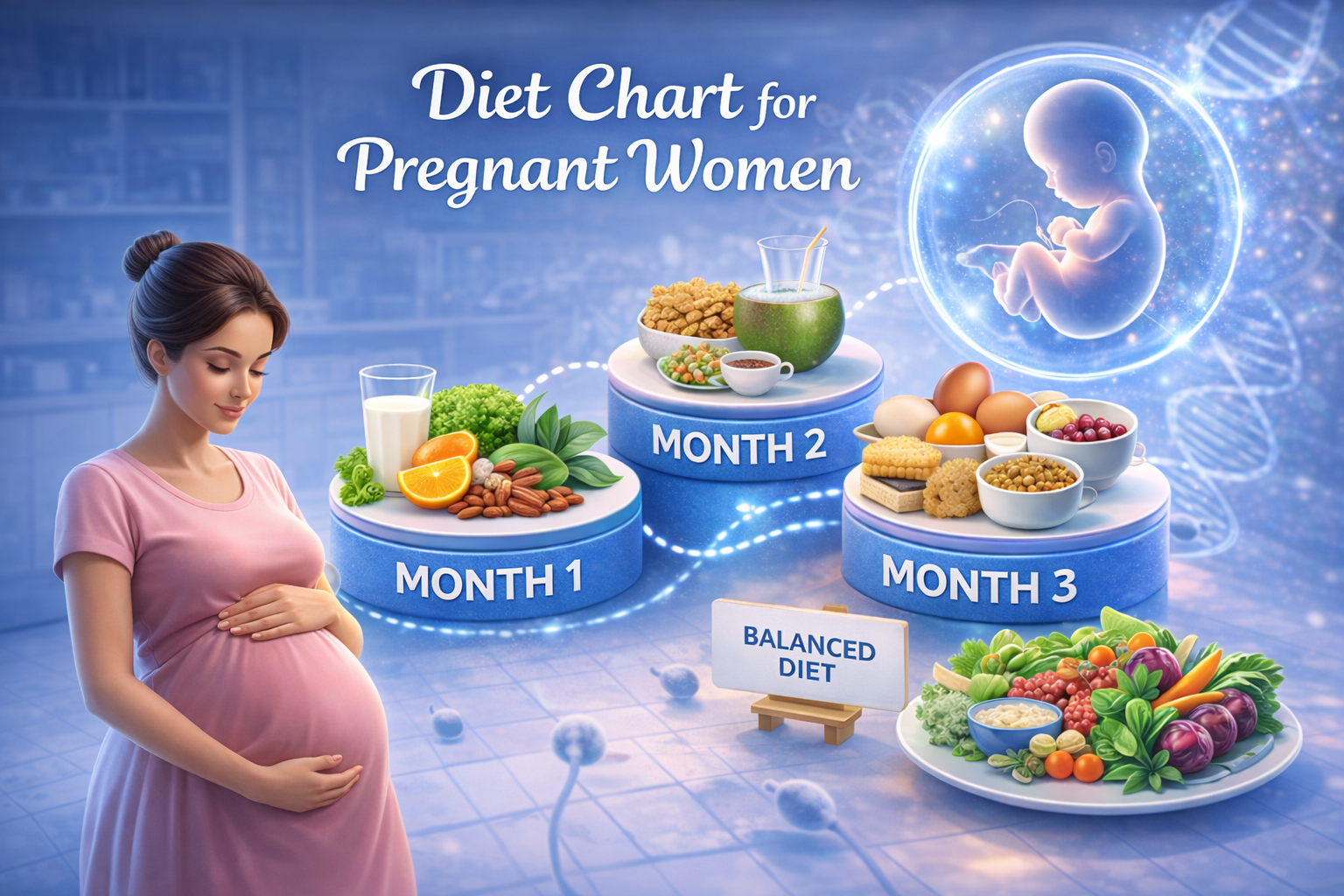
Pregnancy is not just about eating more. It is about eating right, at the right time, and in the right quantity. Every month of pregnancy brings new changes in a woman’s body and new needs for the growing baby. That is why following a diet chart for pregnant women month by month is important.
Many women feel confused after seeing too much information online. Some are scared of eating the wrong food. Others worry whether their baby is getting enough nutrition. This blog is written to clear that confusion in a simple and practical way.
Here, we explain what to eat in each month of pregnancy, why those foods matter, and how a balanced diet supports both fertility health and a safe pregnancy.
Why a Month-by-Month Diet Matters During Pregnancy
Pregnancy is divided into three stages called trimesters:
- First trimester: Month 1–3
- Second trimester: Month 4–6
- Third trimester: Month 7–9
Each stage focuses on different baby developments like:
- Organ formation
- Bone and muscle growth
- Brain development
- Weight gain and immunity
A single diet plan cannot meet all these changing needs. A month-wise pregnancy diet ensures:
- Proper baby growth
- Reduced pregnancy weakness
- Better digestion and energy
- Lower risk of complications
Key Nutrients Every Pregnant Woman Needs (Explained Simply)
Before moving month by month, let’s understand some important nutrients:
- Folic Acid – Helps prevent birth defects (especially brain and spine)
- Iron – Prevents anemia and weakness
- Calcium – Builds baby’s bones and teeth
- Protein – Helps baby’s growth and tissue repair
- Omega-3 Fatty Acids – Supports brain development
- Fiber – Prevents constipation
- Iron – Improves blood supply to baby
These nutrients will appear again and again in the diet chart.
Month 1 Pregnancy Diet: Preparing the Body
In the first month, many women do not even know they are pregnant. Still, this is when the baby starts forming.
What to Eat
- Green leafy vegetables (spinach, methi)
- Fruits like oranges, bananas, apples
- Milk and curd
- Whole grains (roti, brown rice)
- Nuts like almonds and walnuts
Why It Matters
- Folic acid supports early baby development
- Light foods reduce nausea
- Proper hydration supports hormonal balance
Month 2 Pregnancy Diet: Managing Nausea & Fatigue
Morning sickness often starts in this month.
What to Eat
- Small meals every 2–3 hours
- Dry snacks like roasted chana or crackers
- Coconut water
- Boiled vegetables
Foods to Avoid
- Very spicy or oily food
- Raw or undercooked foods
Month 3 Pregnancy Diet: Supporting Organ Formation
This is a critical month as baby organs start forming.
What to Eat
- Protein-rich foods: dal, paneer, eggs
- Fruits rich in vitamin C
- Yogurt for digestion
- Iron-rich foods like dates and beetroot
Tip
If vomiting is severe, eat smaller portions but do not skip meals.
Month 4 Pregnancy Diet: Energy & Growth Phase Begins
The second trimester is usually more comfortable.
What to Eat
- Milk, cheese, paneer (calcium)
- Whole grains
- Seasonal fruits
- Sprouts (well-cooked)
Why It Matters
- Baby starts growing faster
- Calcium strengthens bones
- Energy levels improve
Month 5 Pregnancy Diet: Strengthening Muscles & Bones
The baby’s movements become noticeable.
What to Eat
- Protein: dal, tofu, eggs
- Nuts and seeds
- Green vegetables
- Homemade soups
Important Nutrient
Protein – helps build baby’s muscles and tissues.
Month 6 Pregnancy Diet: Brain Development Stage
Baby’s brain and nervous system develop rapidly.
What to Eat
- Omega-3 rich foods (walnuts, flaxseeds)
- Fruits in moderation (one small serving per day)
- Iron-rich foods
- Plenty of water
Avoid
- Junk food
- Excess sugar
Month 7 Pregnancy Diet: Weight Gain & Immunity
The baby gains weight quickly now.
What to Eat
- Balanced meals with carbs, protein, and fats
- Ghee in small quantity
- Fresh vegetables
- Curd and buttermilk
Why It Matters
- Supports healthy weight gain
- Improves immunity
Month 8 Pregnancy Diet: Preparing for Delivery
Digestion may slow down this month.
What to Eat
- Fiber-rich foods (fruits, vegetables)
- Light meals
- Warm milk
- Dates (if doctor allows)
Avoid
- Heavy fried foods
- Overeating at night
Month 9 Pregnancy Diet: Light, Nourishing & Safe
The goal is to stay comfortable and energetic.
What to Eat
- Soft foods
- Khichdi, soups, dal-rice
- Fruits in moderation (one small serving per day)
- Plenty of fluids
Focus
- Easy digestion
- Strength for delivery
- Avoid constipation
Foods Pregnant Women Should Avoid Completely
- Raw eggs or meat
- Unpasteurized milk
- Alcohol and smoking
- Excess caffeine
- Packaged junk food
How a Proper Pregnancy Diet Supports Fertility Health
A balanced pregnancy diet:
- Supports hormonal balance
- Improves uterine health
- Reduces pregnancy complications
- Helps in postpartum recovery
Clinics like Ova Fertility and Women Care focus not only on conception but also on safe pregnancy nutrition and guidance, ensuring both mother and baby remain healthy throughout the journey.
When to Consult a Fertility or Pregnancy Specialist
You should seek expert advice if:
- You have anemia or thyroid issues
- You had IVF or fertility treatment
- You face repeated vomiting or weakness
- You have gestational diabetes or PCOS
Personalized diet planning is always better than general advice.
 No need to worry, your data is 100% Safe with us!