




A blocked fallopian tube may prevent sperm and egg from meeting naturally. But when that blocked tube also fills with fluid, the concern can extend beyond natural conception and become important during IVF as well. This condition is called hydrosalpinx.
The relationship between hydrosalpinx and IVF matters because fluid from the affected tube may sometimes flow back into the uterus, where an embryo needs to implant. Studies and fertility guidelines have linked untreated hydrosalpinx with poorer implantation and pregnancy outcomes during IVF.
This does not mean every blocked tube must be removed before IVF. Doctors first consider whether hydrosalpinx is truly present, whether one or both tubes are affected, the degree of tubal damage, previous pelvic surgery, ovarian reserve and the overall fertility plan.
What Is Hydrosalpinx?
A hydrosalpinx is a fallopian tube that has become blocked, usually at its outer end, and filled with fluid.
Normally, the fallopian tube helps:
- Pick up the egg after ovulation
- Provide the usual site for fertilisation
- Transport the developing embryo toward the uterus
When the tube becomes severely damaged and blocked, fluid can accumulate inside it and cause the tube to become enlarged.
Hydrosalpinx is a form of tubal factor infertility because the damaged tube may no longer function normally.
What Causes a Hydrosalpinx?
Hydrosalpinx usually develops after inflammation or damage to the fallopian tube.
Possible causes include:
Pelvic Infections
Previous pelvic inflammatory disease can damage the delicate lining of the fallopian tubes and cause scarring.
Previous Pelvic Surgery
Surgery in the pelvis or abdomen can sometimes lead to adhesions around the tubes.
Endometriosis
Endometriosis may cause inflammation and scar tissue that affects the tubes and surrounding pelvic structures.
Previous Ectopic Pregnancy
A history of ectopic pregnancy may indicate existing tubal damage or may result in changes to the affected tube.
ASRM notes that previous pelvic inflammatory disease, ectopic pregnancy, endometriosis and pelvic surgery are all reasons to consider tubal disease during fertility evaluation.
How Does Hydrosalpinx Affect Natural Fertility?
The impact on hydrosalpinx fertility depends partly on whether one or both fallopian tubes are affected.
If both tubes are severely blocked, natural fertilisation becomes difficult because sperm and egg cannot normally meet.
If only one tube has hydrosalpinx and the other tube appears healthy, natural pregnancy may still be possible in selected cases. However, other fertility factors such as age, ovarian reserve, sperm health and the condition of the remaining tube also matter.
Hydrosalpinx may additionally increase concern about ectopic pregnancy because the affected tube is structurally abnormal.
Why Can Hydrosalpinx Affect IVF if IVF Bypasses the Tubes?
This is one of the most important questions patients ask.
IVF does bypass the fallopian tubes during fertilisation:
- Eggs are retrieved directly from the ovaries.
- Fertilisation takes place in the laboratory.
- Embryos develop outside the body.
- A selected embryo is placed directly into the uterus.
So, at first, a blocked tube may seem irrelevant.
The problem with blocked tube fluid in IVF is that hydrosalpinx fluid may communicate with the uterine cavity.
Several mechanisms have been proposed for why this may affect implantation.
Fluid May Enter the Uterine Cavity
Fluid can sometimes move from the damaged tube back toward the uterus.
This may create an unfavourable environment around the time an embryo is trying to implant.
Embryo Attachment May Be Affected
Hydrosalpinx has been associated with reduced endometrial receptivity, meaning the uterine environment may be less favourable for implantation.
Mechanical Flushing Has Been Proposed
Another possible explanation is that fluid repeatedly entering the uterus could mechanically interfere with embryo attachment.
ASRM recognises mechanical flushing, reduced endometrial receptivity and possible harmful effects of tubal fluid among explanations for the poorer IVF outcomes seen with hydrosalpinx.
Does Hydrosalpinx Always Need Treatment Before IVF?
Not every abnormal fallopian tube automatically requires surgery.
However, when a communicating hydrosalpinx is clearly identified, particularly when it is visible on ultrasound or significantly distended, treatment before embryo transfer is commonly considered.
ASRM recommends considering laparoscopic salpingectomy or proximal tubal occlusion before IVF for women with communicating hydrosalpinges because treatment can reduce the negative effect on IVF pregnancy outcomes.
The decision still needs to be individualised.
Doctors consider:
- One tube or both tubes affected
- Severity of tubal damage
- Previous abdominal or pelvic surgery
- Pelvic adhesions
- Ovarian reserve
- Access to the ovaries
- Surgical risks
- Overall IVF plan
What Is Salpingectomy?
Salpingectomy means surgical removal of the affected fallopian tube.
When hydrosalpinx is severely damaged and unlikely to function normally, removing it may prevent fluid from entering the uterus.
The ovaries are not removed during a standard salpingectomy.
This distinction is important because many patients worry that removal of a tube will stop egg production. Eggs are produced by the ovaries, not the fallopian tubes.
For women undergoing IVF, eggs can still be retrieved directly from the ovaries after a fallopian tube has been removed.
What Is Proximal Tubal Occlusion?
Another approach is to block or disconnect the affected tube close to where it enters the uterus.
The goal is to prevent hydrosalpinx fluid from reaching the uterine cavity.
ASRM recognises proximal tubal occlusion as an alternative that may reduce the negative effect of hydrosalpinx on IVF outcomes in suitable patients.
Whether salpingectomy or occlusion is preferred depends on the anatomy and surgical circumstances.
Can Hydrosalpinx Be Repaired Instead?
Selected mild hydrosalpinges may sometimes be treated with procedures designed to reopen the end of the tube, such as neosalpingostomy.
However, the suitability of repair depends heavily on how damaged the tube is.
ASRM notes that reparative surgery may be considered in younger women with mild distal tubal disease and no major additional infertility factors. Severely damaged hydrosalpinges generally have a poorer prognosis, and salpingectomy followed by IVF may be more appropriate.
Repair also carries the possibility that:
- The tube may become blocked again
- Tubal function may remain poor
- Ectopic pregnancy risk may remain
- IVF may ultimately still be needed
How Is Hydrosalpinx Diagnosed?
Doctors may identify hydrosalpinx through several tests.
HSG
Hysterosalpingography uses contrast and X-ray imaging to evaluate tubal patency and may reveal distal tubal blockage or a dilated tube.
ASRM considers HSG a standard first-line investigation for tubal patency.
Transvaginal Ultrasound
Some larger hydrosalpinges can be seen on ultrasound as elongated fluid-filled structures near the ovary.
Laparoscopy
Laparoscopy provides a direct view of the pelvis, fallopian tubes and ovaries.
It can help determine:
- How damaged the tube is
- Whether pelvic adhesions are present
- Whether endometriosis is present
- Whether tubal repair or removal is appropriate
Ova Fertility & Women Care includes hydrosalpinx among abnormalities that can be identified during laparoscopy and notes that laparoscopy may be advised following abnormal tubal tests such as HSG or SIS.
You can learn more about the role of endoscopy in fertility treatment and how laparoscopy may help evaluate and treat selected tubal and pelvic conditions.
What If Only One Tube Has Hydrosalpinx?
A unilateral hydrosalpinx should not automatically be ignored simply because the other tube is open.
ASRM reports that even unilateral hydrosalpinx can be associated with poorer IVF pregnancy outcomes when the affected tube communicates with the uterus.
For natural conception, the condition of the opposite tube becomes especially important.
The fertility specialist may review:
- Whether the healthy tube is genuinely open
- Age
- Ovarian reserve
- Duration of infertility
- Semen parameters
- Whether natural conception or IVF is planned
When Should You Discuss Hydrosalpinx Treatment Before IVF?
Speak with your fertility specialist if:
- HSG shows a fluid-filled blocked tube
- Ultrasound suggests hydrosalpinx
- You have significant tubal-factor infertility
- IVF or frozen embryo transfer is being planned
- You have previous IVF implantation failure with known hydrosalpinx
- You have a history of pelvic infection or ectopic pregnancy
The purpose is not simply to “remove a tube before IVF.” It is to determine whether the hydrosalpinx is likely to interfere with treatment and which option offers the best balance between fertility benefit and surgical risk.
Final Thoughts
The relationship between hydrosalpinx and IVF is different from a simple blocked fallopian tube. IVF bypasses the tube for fertilisation, but fluid from a hydrosalpinx may still reach the uterus and interfere with the environment where an embryo needs to implant.
Depending on the severity of tubal damage, treatment before IVF may involve salpingectomy, proximal tubal occlusion or another carefully selected approach.
If hydrosalpinx has been found during your fertility evaluation, the specialists at Ova Fertility & Women Care can review the HSG or ultrasound findings, ovarian reserve, previous treatment history and overall IVF plan before recommending whether tubal treatment should be considered.
FAQ
1. Can hydrosalpinx reduce IVF implantation?
Yes. Hydrosalpinx has been associated with poorer IVF implantation and pregnancy outcomes. Fluid entering the uterus, changes in endometrial receptivity and other effects have been proposed as possible reasons.
2. Is hydrosalpinx treatment necessary before IVF?
Treatment is often considered when a communicating hydrosalpinx is clearly present. Salpingectomy or proximal tubal occlusion may be recommended depending on tubal damage and individual clinical factors.
3. Can I get pregnant naturally with one hydrosalpinx?
Natural pregnancy may still be possible when only one tube is affected and the other tube functions normally. Age, ovarian reserve, sperm health and other fertility conditions also influence the chances.
4. Will removing a fallopian tube reduce my eggs?
Removing a fallopian tube does not directly remove eggs because eggs are stored in the ovaries. Surgical planning still needs care to protect the ovarian blood supply and surrounding tissues, especially in women already undergoing fertility treatment.
5. Can IVF be done without removing hydrosalpinx?
IVF can technically be performed, but untreated communicating hydrosalpinx may reduce the likelihood of implantation. This is why fertility specialists commonly discuss treating significant hydrosalpinx before embryo transfer rather than ignoring the tubal fluid.
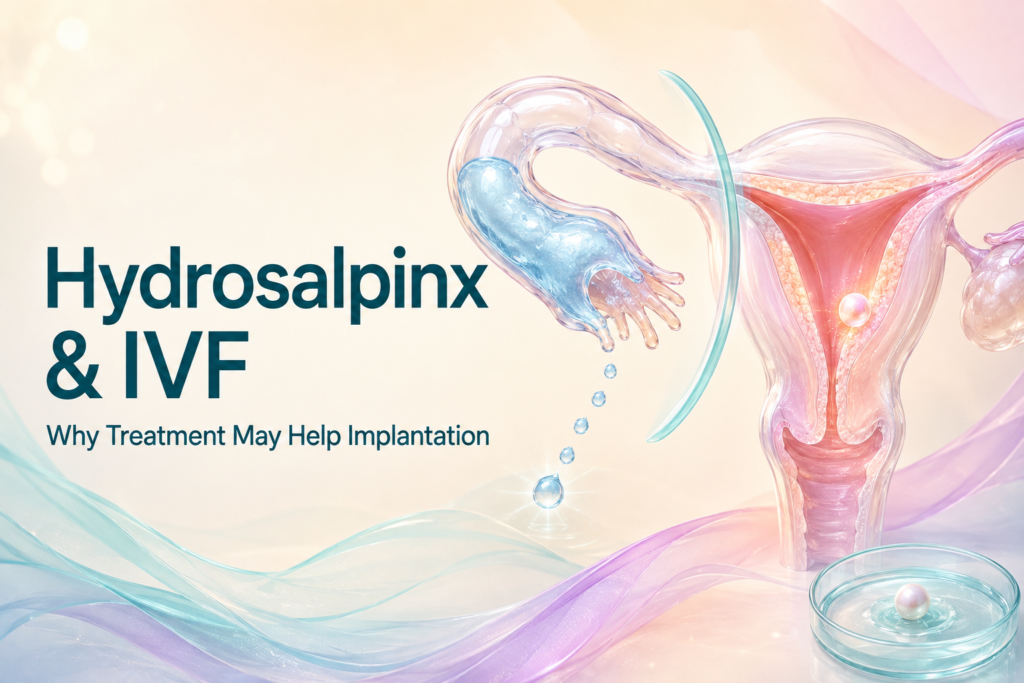
Table Of Content
- What Is Hydrosalpinx?
- What Causes a Hydrosalpinx?
- How Does Hydrosalpinx Affect Natural Fertility?
- Why Can Hydrosalpinx Affect IVF if IVF Bypasses the Tubes?
- Does Hydrosalpinx Always Need Treatment Before IVF?
- What Is Proximal Tubal Occlusion?
- Can Hydrosalpinx Be Repaired Instead?
- What If Only One Tube Has Hydrosalpinx?
- When Should You Discuss Hydrosalpinx Treatment Before IVF?
