




Endometriosis can affect fertility, but having the condition does not mean pregnancy is impossible. Some women with endometriosis conceive naturally, while others may need fertility evaluation or treatment depending on the extent of the disease and other reproductive factors.
The connection between endometriosis and fertility is complex. Endometriosis may cause inflammation, pelvic adhesions, ovarian cysts called endometriomas, or changes in the position and function of reproductive organs. In more advanced cases, it may affect the ovaries or fallopian tubes and make it harder for the egg and sperm to meet.
Treatment is therefore not based on endometriosis alone. Age, ovarian reserve, pain, duration of infertility, fallopian tube health, sperm results, previous surgery and pregnancy plans all need to be considered.
What Is Endometriosis?
Endometriosis is a condition in which tissue similar to the lining of the uterus grows outside the uterine cavity.
It may be found around:
- Ovaries
- Fallopian tubes
- Pelvic lining
- Tissue behind the uterus
- Other pelvic structures
Some women experience significant symptoms, while others discover endometriosis only during fertility evaluation.
Common symptoms can include:
- Painful periods
- Pelvic pain
- Pain during intercourse
- Pain with bowel movements around periods
- Difficulty conceiving
The severity of pain does not always match the extent of the disease.
How Can Endometriosis Affect Fertility?
Several mechanisms may contribute to endometriosis infertility.
1. Pelvic Adhesions and Distorted Anatomy
Endometriosis can cause inflammation and scar tissue. In some cases, this changes the normal relationship between the ovaries, fallopian tubes and uterus.
If the tube cannot properly pick up the released egg, natural fertilisation may become more difficult.
2. Fallopian Tube Problems
More extensive disease may affect or surround the fallopian tubes.
Natural conception generally requires at least one functioning tube so that sperm and egg can meet.
3. Ovarian Endometriomas
An endometrioma is an endometriosis-related ovarian cyst.
Depending on its size, location and previous treatment, it may affect ovarian tissue or complicate fertility planning.
Surgery for an endometrioma is not automatically recommended before IVF because ovarian surgery can sometimes reduce ovarian reserve. ESHRE recommends individualising this decision rather than routinely operating before assisted reproduction.
4. Inflammation
Endometriosis creates inflammatory changes within the pelvis. Researchers have investigated whether these changes may affect fertilisation, embryo development or implantation, although not every biological mechanism is fully understood.
5. Age and Ovarian Reserve
Endometriosis may coexist with age-related fertility decline or reduced ovarian reserve.
This matters because delaying fertility treatment for repeated surgery or prolonged medical treatment may not always be the best approach when age or ovarian reserve is already a concern.
Can You Get Pregnant Naturally With Endometriosis?
Yes. Pregnancy with endometriosis can occur naturally.
Whether natural conception is reasonable to try depends on factors such as:
- Age
- Severity and location of endometriosis
- Whether the fallopian tubes are open
- Ovarian reserve
- Sperm parameters
- Duration of infertility
- Previous treatment history
A younger woman with mild disease, open tubes and reassuring semen results may have a different fertility plan from someone with advanced endometriosis, low ovarian reserve or significant tubal damage.
This is why treatment should not be decided from the endometriosis diagnosis alone.
Does Medicine for Endometriosis Improve Fertility?
Hormonal medicines can be useful for controlling endometriosis-related pain, but medicines that suppress ovarian function are not used to improve natural fertility while actively trying to conceive.
Hormonal treatments may temporarily suppress ovulation or menstruation. Older ASRM evidence and current ESHRE guidance do not support ovarian-suppressing hormonal treatment alone as a method to increase spontaneous pregnancy rates in women trying to conceive.
This distinction is important:
- Pain treatment and
- fertility treatment
may have different goals.
Your doctor should choose the approach based on whether the current priority is symptom control, pregnancy, or both.
When May Laparoscopy Be Considered?
Laparoscopy is a minimally invasive surgical procedure that allows doctors to directly examine the ovaries, fallopian tubes and pelvis.
It may be considered when there is:
- Significant pelvic pain
- Suspected endometriosis requiring treatment
- Pelvic adhesions
- Abnormal tubal findings
- An ovarian endometrioma requiring evaluation
- Another surgical reason to inspect the pelvis
Ova Fertility & Women Care explains that laparoscopy allows direct visualisation of abnormalities involving the tubes, ovaries and pelvis and can sometimes allow treatment during the same procedure, including adhesiolysis or treatment of endometriotic lesions.
However, surgery is not automatically required for every woman with endometriosis who is trying to conceive. Current ESHRE guidance has moved away from using diagnostic laparoscopy routinely when imaging and clinical assessment can provide adequate information.
If your fertility specialist believes surgical evaluation may influence treatment, you can learn more about the role of endoscopy in fertility treatment.
Can Surgery Improve Fertility?
Surgery may help selected patients, particularly when endometriosis has distorted pelvic anatomy or when treatment of visible disease is otherwise indicated.
However, the decision requires balance.
Doctors consider:
- Age
- Pain
- Ovarian reserve
- Endometrioma size
- Previous surgery
- Disease severity
- Whether IVF may be needed anyway
Repeated ovarian surgery can potentially remove or damage healthy ovarian tissue, so another operation may not always be the best fertility strategy.
For women who have already undergone surgery and continue to experience infertility, moving toward assisted reproduction may sometimes be more appropriate than repeated surgery.
When May IUI Be Considered?
IUI may be considered in selected women with milder endometriosis when:
- At least one fallopian tube is open
- Semen parameters are suitable
- Ovarian reserve is acceptable
- Age and duration of infertility make IUI reasonable
IUI is often combined with ovarian stimulation in appropriate cases.
For more advanced endometriosis, significant tubal damage or other major fertility factors, IUI may be less suitable.
When May IVF Be Recommended for Endometriosis?
Endometriosis IVF treatment may be considered when:
- Both fallopian tubes are significantly damaged or blocked
- There is moderate or severe endometriosis
- Fertility treatment has already been unsuccessful
- Male-factor infertility is also present
- Ovarian reserve is reduced
- Reproductive age makes delaying treatment less suitable
- Previous endometriosis surgery has not resulted in pregnancy
IVF allows fertilisation to take place outside the body, which means damaged fallopian tubes can be bypassed.
ESHRE recommends assisted reproductive technology when tubal function is compromised, male-factor infertility is present, other treatments have failed, or the Endometriosis Fertility Index suggests a lower chance of spontaneous conception.
Should an Endometrioma Always Be Removed Before IVF?
No.
This is an important part of endometriosis fertility treatment planning.
Surgery may be appropriate when an endometrioma:
- Causes significant pain
- Has concerning features
- Interferes with access to follicles during egg retrieval
- Requires treatment for another clinical reason
But routine surgery simply to improve IVF outcomes is not generally recommended because evidence of benefit is limited and surgery may reduce ovarian reserve.
The fertility specialist should review AMH, antral follicle count, age, previous ovarian surgery and cyst characteristics before recommending an operation.
How Do Doctors Choose the Right Treatment?
There is no single endometriosis fertility pathway.
Doctors usually consider:
Age
Increasing reproductive age may favour moving toward fertility treatment sooner rather than spending long periods on expectant management.
Ovarian Reserve
AMH and antral follicle count may help with IVF planning and assessment of how surgery could affect ovarian function.
Disease Severity
Mild superficial disease may require a different approach from severe adhesions, endometriomas or tubal damage.
Fallopian Tubes
Tubal patency is important when considering natural conception or IUI.
Sperm Health
Male fertility evaluation remains important even when the woman has known endometriosis.
Previous Treatment
Previous surgery, IUI cycles and duration of infertility can influence whether another step is worthwhile.
When Should You Consult a Fertility Specialist?
Consider fertility consultation if you have endometriosis and:
- Pregnancy is taking longer than expected
- You are 35 or older
- Your periods are extremely painful
- You have an endometrioma
- You have had previous ovarian or pelvic surgery
- There is known tubal disease
- You want to understand whether to try naturally, consider IUI or proceed to IVF
The aim is to avoid both unnecessary treatment and unnecessary delay.
Final Thoughts
The relationship between endometriosis and fertility differs from one woman to another. Some may conceive naturally, while others may benefit from surgery, IUI, IVF or a combination of carefully selected treatments.
The key is to avoid treating endometriosis in isolation. Age, ovarian reserve, fallopian tube health, sperm results, previous surgery and fertility goals should all influence the decision.
If endometriosis is affecting your pregnancy plans, the fertility team at Ova Fertility & Women Care can review your symptoms, fertility reports and reproductive history and help determine whether natural attempts, surgical evaluation, IUI or IVF may be appropriate.
FAQ
1. Can endometriosis cause infertility?
Endometriosis can contribute to infertility by causing pelvic adhesions, altering reproductive anatomy, affecting the ovaries or tubes, and creating inflammatory changes. However, not every woman with endometriosis experiences infertility.
2. Can I get pregnant naturally with endometriosis?
Yes. Natural pregnancy with endometriosis is possible, particularly when disease is mild, tubes are open and other fertility factors are favourable. Age, ovarian reserve, sperm health and duration of infertility also matter.
3. Does endometriosis always need surgery before fertility treatment?
No. Surgery is not routinely required for every fertility patient with endometriosis. Doctors consider pain, disease severity, ovarian reserve, previous surgery, cyst characteristics and whether IUI or IVF may be more appropriate.
4. When is IVF recommended for endometriosis?
IVF may be considered when there is significant tubal damage, moderate or severe disease, reduced ovarian reserve, male infertility, increasing reproductive age or unsuccessful previous fertility treatment.
5. Should an ovarian endometrioma be removed before IVF?
Not automatically. Surgery may be useful for pain, concerning findings or problems accessing follicles, but routine removal solely to improve IVF success is generally not recommended because surgery can affect ovarian reserve.
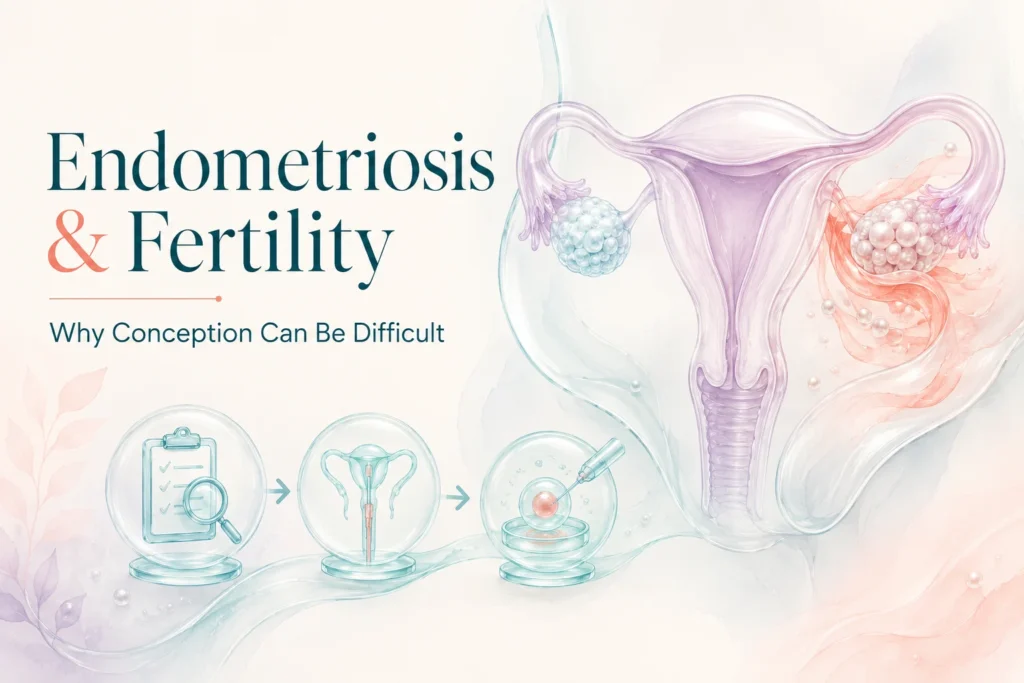
Table Of Content
- What Is Endometriosis?
- How Can Endometriosis Affect Fertility?
- Can You Get Pregnant Naturally With Endometriosis?
- Does Medicine for Endometriosis Improve Fertility?
- When May Laparoscopy Be Considered?
- Can Surgery Improve Fertility?
- When May IUI Be Considered?
- When May IVF Be Recommended for Endometriosis?
- Should an Endometrioma Always Be Removed Before IVF?
- How Do Doctors Choose the Right Treatment?
