




Regular ovulation is an important part of natural conception, but it is only one step in the process. If you are ovulating but not getting pregnant, it does not necessarily mean there is a problem with ovulation itself. Other factors such as sperm health, fallopian tube patency, egg quality, age, the uterus and timing of intercourse may also need to be considered.
Women with predictable menstrual cycles of around 21–35 days are usually likely to be ovulating regularly. Even so, pregnancy still requires several other reproductive steps to happen successfully.
This is why fertility evaluation usually looks beyond periods and ovulation and assesses both partners rather than focusing only on the woman.
If You Ovulate Regularly, Why Might Pregnancy Still Not Happen?
For natural conception to occur:
- An egg needs to develop and be released.
- Sperm must be present in sufficient number and function well enough to reach the egg.
- At least one fallopian tube needs to allow the egg and sperm to meet.
- Fertilisation needs to occur.
- The embryo must continue developing.
- The embryo needs to reach and implant within the uterus.
A problem at any of these stages may delay conception even when ovulation appears normal.
Ova Fertility & Women Care also identifies sperm factors, blocked tubes, reduced ovarian reserve, uterine conditions, endometriosis, age-related changes and unexplained infertility among possible reasons pregnancy may not occur despite regular attempts.
Regular Periods but Not Pregnant: Does That Confirm Normal Fertility?
No.
Regular periods are reassuring because they often suggest regular ovulation, but they do not confirm that every other fertility factor is normal.
For example, someone may have regular cycles but still have:
- Blocked fallopian tubes
- Reduced egg quality
- Low ovarian reserve
- Endometriosis
- Fibroids or polyps affecting the uterine cavity
- Male-factor infertility
- Age-related fertility changes
A menstrual cycle therefore gives useful information about ovulation but cannot be used as a complete fertility test.
1. Sperm Health Needs to Be Checked
Male fertility is one of the first areas that should be assessed when a couple is having difficulty conceiving.
A semen analysis commonly evaluates:
- Sperm concentration
- Sperm motility
- Sperm morphology
Professional fertility guidance recommends that the male partner’s evaluation begin alongside the female partner’s assessment rather than waiting until all female tests are completed.
Sperm-related problems may be present even when there are no obvious symptoms.
Factors that can affect sperm health include:
- Varicocele
- Previous infection
- Hormonal conditions
- Certain medicines
- Smoking
- Alcohol
- Previous surgery
- Some genetic conditions
If the semen analysis is abnormal, further evaluation may be advised depending on the findings.
2. Fallopian Tube Blockage
Ovulation may happen normally, but the egg and sperm still need a pathway to meet.
If a fallopian tube is blocked, damaged or significantly affected by adhesions, natural fertilisation may become more difficult.
Possible causes include:
- Previous pelvic infection
- Endometriosis
- Previous ectopic pregnancy
- Pelvic or abdominal surgery
- Tubal scarring
Doctors may recommend a fallopian tube patency test such as HSG or hysterosalpingo-contrast sonography depending on the situation. ASRM specifically includes tubal patency assessment as part of standard infertility evaluation.
Having regular ovulation does not tell you whether your tubes are open.
3. Egg Quality and Age
Another important factor among the causes of infertility with ovulation is egg quality.
A woman may release an egg every month, but the biological quality of eggs changes with age.
Age can influence:
- Fertilisation
- Embryo development
- Chromosomal health
- Implantation potential
This is why fertility evaluation considers a woman’s age even when periods are regular.
Ovarian reserve tests such as AMH and antral follicle count provide information mainly about available egg quantity and expected ovarian response. They do not directly measure egg quality or predict natural pregnancy on their own.
4. Endometriosis
Endometriosis may affect fertility even when ovulation is regular.
It can potentially influence:
- Pelvic anatomy
- Fallopian tube function
- Ovarian function
- Inflammation around reproductive organs
Some women have symptoms such as:
- Severe period pain
- Pain during intercourse
- Chronic pelvic pain
Others may have fewer obvious symptoms.
Doctors consider symptoms, examination findings, ultrasound and reproductive history when deciding whether endometriosis needs further investigation.
5. Uterine Conditions
After fertilisation, the embryo needs to implant inside the uterus.
Certain uterine conditions may interfere with this process depending on their location and severity.
Examples include:
Endometrial Polyps
Polyps arise from the uterine lining and may sometimes affect the cavity.
Fibroids
Fibroids are non-cancerous growths of uterine muscle. Those that distort the uterine cavity may be more relevant to fertility than fibroids located elsewhere.
Intrauterine Adhesions
Scar tissue inside the uterus may alter the normal uterine cavity.
Other Uterine Abnormalities
Some people may have structural differences that require further evaluation.
Tests such as transvaginal ultrasound, saline sonography or hysteroscopy may be recommended depending on the suspected problem.
6. Timing Intercourse Around the Fertile Window
Even with regular ovulation, pregnancy depends partly on whether sperm is present around the time the egg is released.
Ovulation predictor kits detect the LH surge that typically precedes ovulation by around one to two days, helping identify the fertile period.
Couples do not need to identify one exact hour of ovulation. Regular intercourse during the fertile period generally provides more opportunity for sperm and egg to meet.
If cycles are regular but the fertile window remains difficult to identify, follicular monitoring may sometimes be useful.
7. Ovarian Reserve May Still Need Assessment
A woman may have regular periods while ovarian reserve is lower than expected.
Tests used when appropriate include:
- AMH blood test
- Antral follicle count
- Day 2 or Day 3 FSH and estradiol
Ovarian reserve testing is most useful as part of an infertility assessment or fertility treatment plan. It should not be treated as a standalone test that tells someone whether pregnancy is possible.
8. Sometimes Routine Fertility Tests Are Normal
Some couples have:
- Regular ovulation
- Open fallopian tubes
- A normal uterine assessment
- Semen parameters within expected ranges
but pregnancy still does not occur.
This may be described as unexplained infertility.
It does not mean there is no biological reason. Instead, currently available routine tests may not identify a specific problem involving fertilisation, embryo development or other subtle reproductive factors.
Ova Fertility & Women Care similarly notes that some couples have unexplained infertility even when routine investigations appear normal.
Which Fertility Tests May Be Recommended?
If you are trying to conceive with no pregnancy despite regular ovulation, your doctor may consider a structured evaluation rather than ordering every available test.
Possible fertility tests include:
For the Female Partner
- Menstrual and reproductive history
- Transvaginal ultrasound
- AMH or antral follicle count when appropriate
- Tubal patency testing
- Uterine cavity evaluation when indicated
- Selected hormone tests based on symptoms
For the Male Partner
- Medical and reproductive history
- Semen analysis
- Additional male fertility evaluation when indicated
ACOG and ASRM both recommend evaluating reproductive factors in both partners rather than assuming difficulty conceiving is caused by ovulation alone.
When Should You See a Fertility Specialist?
A fertility evaluation is generally recommended after:
- 12 months of regular unprotected intercourse when the woman is under 35
- 6 months when the woman is 35 or older
- More immediate evaluation may be appropriate after age 40
Earlier evaluation may also be appropriate when there is a known condition associated with infertility, such as suspected tubal disease, endometriosis, irregular periods or known male fertility concerns.
If you have regular cycles but pregnancy is still not occurring, a structured fertility and infertility evaluation in Thane can help assess sperm health, fallopian tubes, ovarian factors, uterine conditions and other possible reasons together.
Final Thoughts
Being ovulating but not getting pregnant can be confusing because regular cycles may create the impression that fertility should be normal. In reality, conception requires several steps beyond ovulation.
Sperm health, fallopian tube patency, age-related egg factors, ovarian reserve, the uterine cavity and the timing of intercourse may all need consideration. In some couples, routine testing may still not reveal a clear cause.
If you have regular periods but have been trying to conceive without success, the fertility specialists at Ova Fertility & Women Care can review both partners’ reproductive health and recommend only the investigations that are relevant to your situation.
FAQ
1. Why am I ovulating but not getting pregnant?
Ovulation is only one requirement for pregnancy. Sperm health, open fallopian tubes, egg quality, age, fertilisation, embryo development and uterine conditions can also influence conception. A complete fertility evaluation may help identify whether another factor needs attention.
2. Can I have infertility even if my periods are regular?
Yes. Regular cycles usually suggest ovulation, but they do not confirm that sperm parameters, fallopian tubes, egg quality or the uterus are normal. These areas may still need assessment when pregnancy is not occurring.
3. How do doctors check whether my fallopian tubes are open?
Doctors commonly use tests such as HSG or hysterosalpingo-contrast sonography to assess tubal patency. The appropriate test depends on medical history, symptoms and what information the fertility specialist needs.
4. Should my husband be tested if I am ovulating normally?
Yes. Both partners should generally be assessed when pregnancy is delayed. Semen analysis is an important initial fertility test because sperm count, motility and morphology can affect conception.
5. What if all fertility tests are normal but I am still not pregnant?
When standard tests do not identify a clear cause, doctors may describe the situation as unexplained infertility. The next step depends on age, how long you have been trying, previous pregnancy history and other individual factors.
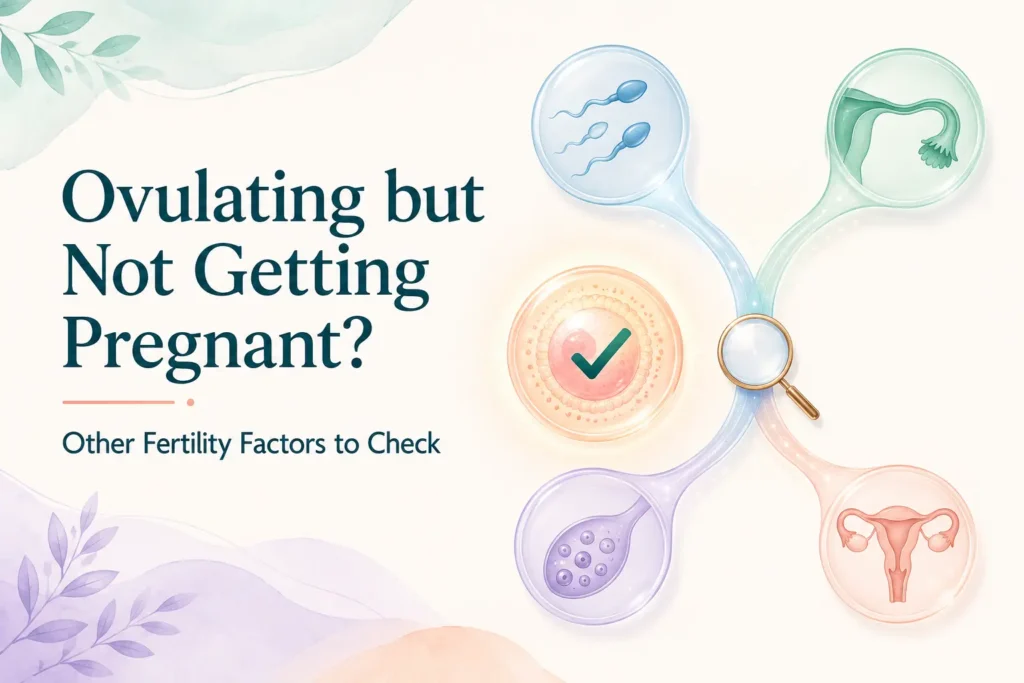
Table Of Content
