




When couples are trying to conceive, doctors often evaluate several hormones that influence reproductive health. One of these important hormones is prolactin. While prolactin is best known for its role in breast milk production, abnormal levels can also affect reproductive hormones and ovulation.
The connection between high prolactin and infertility is important because elevated prolactin levels may interfere with the normal hormonal signals required for ovulation. This condition is known as hyperprolactinemia.
High prolactin does not affect every person in the same way. Some women may experience irregular periods or difficulty tracking ovulation, while others may have no obvious symptoms. A fertility specialist usually evaluates prolactin along with menstrual history, other hormone tests, ultrasound findings, and overall fertility factors.
What Is Prolactin and Why Is It Important?
Prolactin is a hormone produced by the pituitary gland, a small gland located in the brain.
Its primary role is related to:
- Breast development
- Milk production after childbirth
During pregnancy and breastfeeding, prolactin levels naturally increase. However, when prolactin levels become elevated outside these normal situations, it may affect reproductive hormone balance.
In women who are trying to conceive, prolactin plays a role in maintaining the hormonal environment needed for regular ovulation.
What Is Hyperprolactinemia?
Hyperprolactinemia means having higher-than-normal levels of prolactin in the blood.
High prolactin levels may affect fertility by interfering with the hormones involved in ovulation. Elevated prolactin can reduce normal reproductive hormone signals, including those responsible for regulating FSH and LH, which are important for ovarian function.
The effect of high prolactin depends on:
- How elevated the levels are
- The underlying cause
- Duration of the hormonal imbalance
- Individual reproductive health
How Does High Prolactin Affect Ovulation?
The relationship between prolactin and ovulation is one of the main reasons doctors check prolactin during infertility evaluation.
High prolactin may interfere with the normal communication between the brain and ovaries.
This can affect:
- Release of reproductive hormones
- Follicle development
- Regular ovulation
- Menstrual cycle timing
When ovulation becomes irregular or does not happen consistently, conceiving naturally may become more difficult.
Symptoms of High Prolactin in Women
Symptoms can vary depending on the level of prolactin and the underlying cause.
Possible symptoms may include:
Irregular Periods
High prolactin may affect menstrual cycle regularity. Some women may experience delayed, irregular, or absent periods.
Difficulty Conceiving
Since ovulation may become irregular, some women may find it harder to identify fertile days.
Breast Discharge
Unexpected milk-like discharge from the breasts (when not pregnant or breastfeeding) can sometimes occur.
Ovulation Problems
Changes in ovulation patterns may affect natural conception.
Other Symptoms
In some cases, very high prolactin levels caused by pituitary-related conditions may be associated with headaches or vision changes.
Causes of High Prolactin Levels
There are several possible reasons why prolactin levels may become elevated.
1. Pregnancy and Breastfeeding
During pregnancy and breastfeeding, increased prolactin is a normal biological response.
2. Pituitary Conditions
A prolactinoma is a usually non-cancerous pituitary gland tumour that can produce excess prolactin. It is one possible cause of significantly elevated prolactin levels.
3. Thyroid Disorders
Certain thyroid conditions, especially hypothyroidism, may influence prolactin levels.
4. Medications
Some medicines may increase prolactin levels. If you are taking regular medications, your doctor may review whether they could be contributing.
5. Stress and Physical Factors
Stress, poor sleep, and certain physical conditions may temporarily influence prolactin levels.
A single elevated result may need interpretation based on the testing conditions and overall clinical picture.
How Is High Prolactin Diagnosed?
Doctors usually diagnose high prolactin through a blood test.
During evaluation, your doctor may consider:
- Prolactin blood level
- Menstrual history
- Pregnancy status
- Thyroid function
- Other reproductive hormones
In some situations, additional investigations may be recommended depending on the level of prolactin and symptoms.
A fertility specialist may also evaluate other causes of infertility because high prolactin is only one possible factor.
Can High Prolactin Cause Infertility?
Yes, high prolactin can contribute to infertility, especially when it affects regular ovulation.
The impact may include:
- Irregular egg release
- Changes in menstrual cycles
- Difficulty identifying fertile periods
However, fertility depends on multiple factors, including:
- Egg quality
- Sperm health
- Fallopian tube condition
- Uterine health
- Age
High prolactin is often considered a treatable factor when it is identified as a cause of ovulation problems.
Can You Get Pregnant With High Prolactin?
Many patients search for information about hyperprolactinemia pregnancy because they are concerned about whether conception is possible.
Pregnancy may be possible after identifying and managing the cause of elevated prolactin.
Treatment decisions depend on:
- Prolactin levels
- Reason for elevation
- Ovulation pattern
- Other fertility factors
Once prolactin levels are appropriately managed, ovulation may improve in some cases.
High Prolactin Treatment Options
The treatment approach depends on why prolactin levels are elevated.
Medicines
Doctors may prescribe medicines that help reduce prolactin production and restore hormonal balance when appropriate.
Treating Underlying Conditions
If another condition, such as thyroid imbalance, is contributing to high prolactin, managing that condition may help normalise levels.
Monitoring
Some patients may need repeat blood tests to check whether prolactin levels are improving.
Treatment should always be planned according to the individual cause and medical history.
Does High Prolactin Affect IVF Treatment?
If a patient is undergoing fertility treatment, doctors usually evaluate and manage hormonal factors before planning treatment.
High prolactin may be reviewed before procedures such as:
- Ovulation induction
- IUI
- IVF
The fertility team may consider:
- Prolactin levels
- Ovarian reserve
- Ovulation pattern
- Other hormone reports
Managing hormonal imbalances may help create a more suitable environment for fertility treatment.
For patients exploring fertility evaluation, female infertility treatment in Thane at Ova Fertility & Women Care includes assessment of hormonal and reproductive factors that may affect conception.
Questions to Ask Your Doctor About High Prolactin
If your prolactin report is elevated, you may ask:
- What does my prolactin level indicate?
- Could this be affecting my ovulation?
- Do I need repeat testing?
- Are other hormone tests required?
- How may this affect my fertility treatment plan?
Understanding the reason behind elevated prolactin is more useful than focusing only on the number.
When Should You Consult a Fertility Specialist?
You may consider consulting a fertility specialist if:
- Your periods are irregular.
- You are unable to track ovulation.
- You have been trying to conceive without success.
- Your prolactin levels are elevated.
- You have concerns about hormone reports.
At Ova Fertility & Women Care, fertility specialists evaluate hormone levels, ovulation patterns, and other fertility factors to understand the possible causes affecting conception.
Final Thoughts
Understanding high prolactin and infertility can help couples recognise how hormonal balance affects reproductive health. Elevated prolactin may interfere with ovulation, but it is often a manageable factor when properly evaluated.
A complete fertility assessment helps doctors understand whether prolactin is contributing to difficulty conceiving or whether other factors are involved.
If you have high prolactin levels or concerns about ovulation and fertility, the specialists at Ova Fertility & Women Care can help evaluate your reports and guide you through suitable fertility care options.
FAQ
1. How does high prolactin affect fertility?
High prolactin can affect fertility by interfering with reproductive hormone balance and ovulation. When ovulation becomes irregular, it may reduce the chances of conception. The effect depends on the prolactin level and individual health factors.
2. Can high prolactin cause irregular periods?
Yes. Elevated prolactin may interfere with normal menstrual cycle regulation and can lead to irregular or missed periods in some women.
3. Can I get pregnant with high prolactin levels?
Pregnancy may be possible after identifying and managing the cause of elevated prolactin. Doctors evaluate prolactin levels along with other fertility factors before planning treatment.
4. What is the connection between prolactin and ovulation?
Prolactin can influence the hormones responsible for ovulation. When prolactin levels are too high, it may interfere with normal egg release and menstrual cycle patterns.
5. How is high prolactin treated?
High prolactin treatment depends on the cause. Doctors may use medicines, manage underlying conditions, or monitor hormone levels based on individual findings.
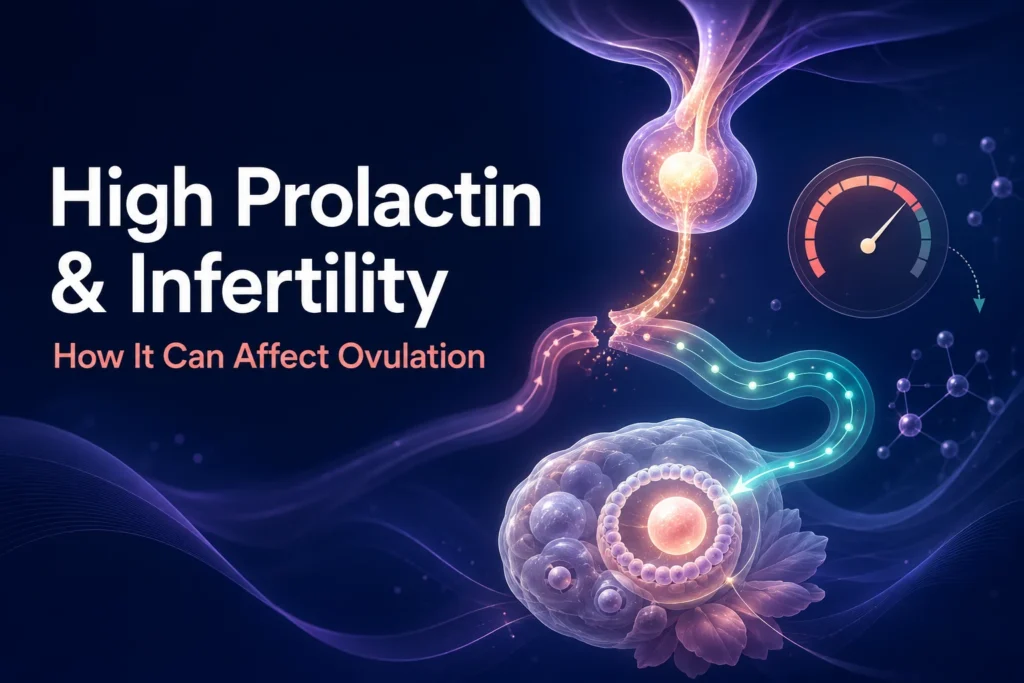
Table Of Content
- What Is Prolactin and Why Is It Important?
- What Is Hyperprolactinemia?
- How Does High Prolactin Affect Ovulation?
- Symptoms of High Prolactin in Women
- Causes of High Prolactin Levels
- How Is High Prolactin Diagnosed?
- Can High Prolactin Cause Infertility?
- Can You Get Pregnant With High Prolactin?
- High Prolactin Treatment Options
- Does High Prolactin Affect IVF Treatment?
- When Should You Consult a Fertility Specialist?
