




After an IVF embryo transfer, many patients wonder what happens inside the uterus and when implantation may occur. The waiting period after transfer can feel uncertain, especially when there are questions about implantation after embryo transfer, possible symptoms, and the right time for a pregnancy test.
Implantation is the process where an embryo attaches to and begins interacting with the uterine lining. The exact timing can vary depending on factors such as embryo stage, uterine preparation, and individual biological differences.
For patients undergoing IVF, implantation timing is often more predictable compared with natural conception because the embryo’s development stage is already known at the time of transfer. A Day 5 blastocyst, for example, is already at a more advanced stage compared with a Day 3 embryo when it is placed into the uterus.
Understanding the IVF implantation days after transfer can help you know what may be happening during the two-week wait.
What Happens After Embryo Transfer?
Embryo transfer is the procedure where a selected embryo is placed inside the uterus using a thin catheter.
After transfer, the embryo still needs to complete several steps before implantation:
- Continue developing
- Hatch from its outer protective layer (zona pellucida)
- Attach to the uterine lining
- Begin implantation
- Start producing pregnancy hormone (hCG) after successful implantation
It is important to remember that implantation does not happen immediately after transfer. The embryo requires time to interact with the uterine lining before attachment begins.
Implantation After Embryo Transfer: Day-by-Day Timeline
The following timeline explains what may happen after a blastocyst transfer. The exact timing can differ between individuals.
Day 0: Embryo Transfer Day
On the transfer day, the embryo is placed inside the uterus.
At this stage:
- The embryo is already developing in the laboratory before transfer.
- The uterus has been prepared through medications or natural hormonal changes.
- The embryo is placed in the ideal location inside the uterine cavity.
The embryo does not immediately implant after transfer. It first continues its development and prepares for attachment.
Day 1 After Embryo Transfer: Embryo Development Continues
During the first day after transfer, the embryo may continue expanding and preparing for implantation.
For a Day 5 blastocyst, the embryo may begin the process of hatching from its outer shell. This step allows the embryo cells to interact more closely with the uterine lining.
At this stage, most patients do not feel any noticeable changes, and symptoms cannot confirm whether implantation is occurring.
Day 2–3 After Embryo Transfer: Attachment May Begin
Around this period, a blastocyst may begin attaching to the uterine lining.
This is an important stage in day 5 embryo implantation, where the embryo starts establishing contact with the endometrium.
The embryo and uterine lining need to be properly synchronised for implantation to occur.
Some patients may experience:
- Mild cramping
- Light spotting
- Pelvic sensations
However, many people experience no symptoms at all, and this does not indicate whether implantation has happened.
Day 4–5 After Embryo Transfer: Implantation Progresses
During these days, the embryo may continue embedding deeper into the uterine lining.
The cells that will eventually contribute to pregnancy-supporting structures continue developing.
The implantation process is gradual rather than a single moment. It involves several biological steps as the embryo establishes contact with the endometrium.
Day 6–7 After Embryo Transfer: hCG Production May Begin
After successful implantation begins, the developing pregnancy may start producing human chorionic gonadotropin (hCG).
hCG is the hormone detected through pregnancy tests.
During this period:
- hCG levels begin rising gradually
- The embryo continues early development
- The body may begin responding to hormonal changes
Some patients may notice symptoms, but many early pregnancy symptoms overlap with the effects of progesterone medications used during IVF.
Day 8–10 After Embryo Transfer: Pregnancy Hormone Increases
During this stage of the embryo transfer implantation timeline, hCG levels may continue increasing if implantation has occurred.
Possible experiences may include:
- Fatigue
- Breast tenderness
- Mild abdominal sensations
- Increased emotional changes
However, these symptoms are not reliable indicators of pregnancy because IVF medications can cause similar effects.
The only way to confirm pregnancy is through a beta hCG blood test recommended by your fertility clinic.
Day 10–14 After Embryo Transfer: Beta hCG Test
The beta hCG test is usually performed around this time to check whether implantation has occurred.
A blood test can detect pregnancy earlier and more accurately than home urine tests.
If the test is positive, your fertility specialist may recommend:
- Repeat hCG testing if needed
- Medication continuation
- Ultrasound monitoring at the appropriate stage
If the result is negative, your doctor can discuss the next steps based on your IVF history and treatment plan.
Does Implantation Timing Differ After Frozen Embryo Transfer?
Yes, implantation timing after FET can depend on:
- Embryo stage at freezing and transfer
- Type of FET cycle
- Endometrial preparation
- Progesterone timing
- Individual response
In a frozen embryo transfer cycle, the uterus is prepared separately before transfer. This allows doctors to synchronise the embryo stage with the uterine lining.
For example, a Day 5 blastocyst transfer requires progesterone exposure to match the developmental stage of the embryo before transfer.
What Are Possible Signs After Embryo Transfer?
Many patients search for signs that implantation has occurred. Possible experiences may include:
Mild Cramping
Some patients report mild lower abdominal sensations after transfer. This may occur due to the procedure, medications, or natural uterine changes.
Light Spotting
Small amounts of spotting may occur in some cases, but spotting does not confirm implantation.
Fatigue
Progesterone supplementation can cause tiredness and symptoms similar to early pregnancy.
No Symptoms
Having no symptoms is also common. Many successful IVF pregnancies do not cause noticeable symptoms in the early days.
Can You Feel Implantation After IVF Transfer?
Some people report sensations during the implantation window, but implantation itself cannot be reliably felt.
Symptoms such as cramps, spotting, or breast tenderness are not enough to confirm whether implantation has occurred.
The body responds differently for every person, and symptoms are affected by:
- Progesterone medicines
- Hormonal changes
- Individual sensitivity
The beta hCG test remains the reliable method for confirming pregnancy.
Factors That Affect Implantation After Embryo Transfer
Several factors influence whether implantation may occur, including:
Embryo Quality
The embryo’s development stage and quality assessment are important factors considered before transfer.
Uterine Lining
A receptive uterine lining is needed for embryo attachment. Doctors monitor endometrial thickness and preparation before transfer.
Timing
The embryo and uterine lining need to be properly synchronised, especially in frozen embryo transfer cycles.
Individual Health Factors
Age, fertility history, hormonal response, and underlying medical conditions may also influence IVF outcomes.
What Should You Avoid During the Implantation Period?
After embryo transfer, follow your fertility specialist’s instructions.
Generally, patients are advised to:
- Continue prescribed medicines
- Avoid stopping progesterone or other medications without medical advice
- Maintain normal daily activities as recommended
- Attend scheduled follow-up appointments
Strict bed rest is generally not required after embryo transfer unless specifically advised by your doctor.
When Should You Contact Your Fertility Doctor?
Contact your fertility team if you experience:
- Heavy bleeding
- Severe abdominal pain
- Fever
- Significant discomfort
- Concerns about medications
Your doctor can guide you based on your specific IVF cycle.
If you are undergoing IVF treatment and want to understand your embryo transfer process, the fertility specialists at Ova Fertility & Women Care can help explain each stage, from embryo preparation to pregnancy testing.
Final Thoughts
Understanding implantation after embryo transfer can make the waiting period after IVF easier to follow. From embryo attachment to rising hCG levels, several important steps happen before pregnancy can be confirmed.
While the timeline provides a general idea of what may happen after transfer, every IVF journey is different. Embryo quality, uterine preparation, timing, and individual health factors all play a role.
If you are planning IVF or have questions about your embryo transfer timeline, the fertility specialists at Ova Fertility & Women Care can guide you through the process and explain what each stage means for your individual treatment plan.
FAQ
1. When does implantation happen after embryo transfer?
Implantation timing depends on the embryo stage and individual factors. After a Day 5 blastocyst transfer, implantation may begin within a few days after transfer as the embryo attaches to the uterine lining. However, exact timing can vary between patients.
2. What happens during day 5 embryo implantation?
During day 5 embryo implantation, the transferred blastocyst continues developing, may hatch from its outer layer, and begins attaching to the uterine lining. The process involves multiple steps and does not happen instantly after transfer.
3. Can you feel implantation after IVF transfer?
Some patients notice mild cramps or spotting, but many do not feel anything during implantation. Symptoms cannot confirm whether implantation has occurred because IVF medications can create similar sensations.
4. When does hCG start after embryo transfer?
After successful implantation, the developing pregnancy begins producing hCG. The hormone gradually rises and becomes detectable through a beta hCG blood test at the time recommended by the fertility clinic.
5. Is implantation timing different after frozen embryo transfer?
Implantation timing may vary slightly depending on embryo stage, FET preparation method, and individual factors. The fertility team plans progesterone timing and embryo transfer carefully to synchronise the embryo with the uterine lining.
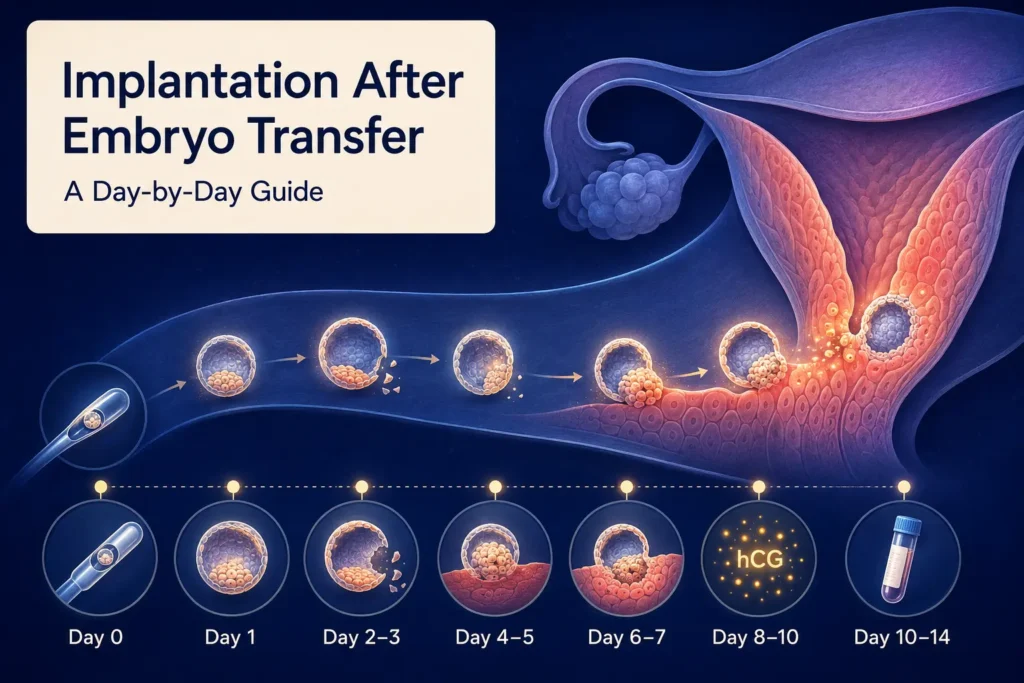
Table Of Content
- What Happens After Embryo Transfer?
- Implantation After Embryo Transfer: Day-by-Day Timeline
- Day 1 After Embryo Transfer: Embryo Development Continues
- Day 2–3 After Embryo Transfer: Attachment May Begin
- Day 4–5 After Embryo Transfer: Implantation Progresses
- Day 6–7 After Embryo Transfer: hCG Production May Begin
- Day 8–10 After Embryo Transfer: Pregnancy Hormone Increases
- Day 10–14 After Embryo Transfer: Beta hCG Test
- Does Implantation Timing Differ After Frozen Embryo Transfer?
- What Are Possible Signs After Embryo Transfer?
- Can You Feel Implantation After IVF Transfer?
- Factors That Affect Implantation After Embryo Transfer
- When Should You Contact Your Fertility Doctor?
- Final Thoughts
