




During IVF treatment, the embryo is not the only factor that doctors evaluate before transfer. The condition of the uterus, especially the uterine lining, also plays an important role. This is why fertility specialists carefully monitor endometrial thickness for embryo transfer before deciding whether the uterus is ready.
The endometrium is the inner lining of the uterus where an embryo needs to attach and continue developing after transfer. During an IVF or frozen embryo transfer (FET) cycle, doctors use ultrasound scans to assess the thickness and appearance of this lining.
Many patients ask, “What should my uterine lining thickness be before embryo transfer?” The answer depends on several factors, including the type of IVF cycle, embryo stage, and individual health conditions. While thickness is an important measurement, it is considered along with other factors rather than as a single predictor of IVF outcome.
Why Is Endometrial Thickness Important in IVF?
The embryo needs a receptive environment inside the uterus for implantation. The endometrium changes naturally throughout the menstrual cycle under the influence of hormones such as estrogen and progesterone.
During IVF, fertility specialists aim to prepare the uterine lining for IVF so that it is synchronized with the embryo’s development stage.
A suitable endometrial environment involves:
- Appropriate thickness
- Proper response to hormones
- Correct timing with embryo transfer
- Healthy uterine conditions
A lining that is too thin may make implantation more challenging in some cases, while other uterine factors can also influence outcomes. Research has shown that very thin endometrium, particularly below certain thresholds, may be associated with lower implantation and pregnancy rates, but thickness alone does not determine success.
How Is Endometrial Thickness Measured Before Embryo Transfer?
Doctors usually measure endometrial thickness through a transvaginal ultrasound scan.
During the scan, the fertility specialist evaluates:
- Thickness of the endometrium in millimetres (mm)
- Pattern and appearance of the lining
- Response to medications
- Overall uterine condition
The measurement may be taken during:
- IVF stimulation cycles
- Frozen embryo transfer cycles
- Hormone preparation cycles
In a frozen embryo transfer cycle, monitoring endometrium thickness FET helps doctors decide when the uterus is ready for embryo transfer.
What Is the Ideal Endometrial Thickness for Embryo Transfer?
There is no single thickness number that guarantees pregnancy. Doctors generally look for a lining that appears suitable based on the complete clinical picture.
Many IVF clinics consider an endometrial thickness around 7 mm or above as a commonly used reference point before transfer, while some studies show outcomes may vary across different thickness ranges and IVF protocols.
Some studies have found that outcomes improve as thickness increases up to certain ranges, after which benefits may plateau. For example, research evaluating fresh and frozen transfer cycles found different patterns depending on the type of cycle, with frozen transfer outcomes showing a plateau after approximately 7–10 mm in that analysis.
However, fertility specialists do not make decisions based only on one measurement. They also consider:
- Embryo quality
- Patient age
- Previous IVF history
- Hormone levels
- Uterine health
- Type of embryo transfer planned
What Does a Good Embryo Transfer Lining Look Like?
Apart from thickness, doctors may also assess the pattern of the lining.
A commonly observed favourable pattern is the triple-line or trilaminar pattern, which refers to a specific appearance of the endometrium on ultrasound.
The fertility team may consider:
- Thickness measurement
- Lining pattern
- Hormonal preparation
- Timing of progesterone exposure
This helps ensure that the uterus and embryo are appropriately synchronized during transfer.
What Happens If the Endometrial Lining Is Thin?
A thin lining IVF situation means that the endometrium has not developed enough thickness or the expected response before embryo transfer.
A thin lining does not always mean IVF cannot proceed, but doctors may investigate why the lining is not responding as expected.
Possible reasons for a thin endometrium may include:
- Previous uterine procedures or surgeries
- Scar tissue inside the uterus
- Hormonal factors
- Previous infections or inflammation
- Reduced response of the endometrium
The approach depends on the cause. Your fertility specialist may modify medications, adjust the timing, or evaluate the uterus further before planning transfer.
How Do Doctors Prepare the Endometrium Before Frozen Embryo Transfer?
During a frozen embryo transfer cycle, the goal is to prepare the uterus before transferring the frozen embryo.
The preparation method may vary.
Hormone Replacement FET Cycle
In this approach, medicines are used to prepare the uterine lining.
The doctor may monitor:
- Endometrial growth
- Hormone response
- Timing of progesterone start
- Transfer date
Natural FET Cycle
In a natural cycle, the doctor tracks your own ovulation and aligns embryo transfer with the natural hormonal changes of your body.
The choice between approaches depends on your menstrual cycle pattern and medical situation.
Can Embryo Transfer Happen With a Thin Lining?
A thin lining does not automatically mean embryo transfer is impossible.
Doctors consider several factors before making a decision. In some cases, they may recommend improving the lining before transfer, while in others, the complete clinical picture may support proceeding.
The fertility specialist may discuss:
- Previous cycle response
- Embryo availability
- Cause of thin lining
- Potential benefits of delaying transfer
Every IVF case is different, so decisions are personalised rather than based on one measurement alone.
Factors That Can Affect Endometrial Thickness
Several factors may influence how the uterine lining develops during IVF.
These can include:
Hormonal Response
Estrogen plays an important role in building the endometrium. Some patients may require adjustments in hormonal preparation depending on their response.
Previous Uterine Procedures
Procedures involving the uterus may sometimes affect the lining, especially if scar tissue develops.
Age and Individual Biology
The way the endometrium responds to hormones can vary between individuals.
Uterine Conditions
Conditions such as fibroids, polyps, or other uterine concerns may require evaluation before embryo transfer.
Does Thicker Endometrium Always Mean Better IVF Results?
Not necessarily.
A thicker lining is not automatically better, and IVF outcomes depend on multiple factors. A successful embryo transfer involves the interaction between embryo quality, uterine receptivity, timing, and overall reproductive health.
The goal is not to achieve the highest possible number but to achieve a suitable uterine environment at the correct time for embryo transfer.
What Should You Ask Your Fertility Doctor About Your Lining?
If you are preparing for embryo transfer, useful questions include:
- What is my current endometrial thickness?
- Is my lining pattern suitable for transfer?
- Is my preparation cycle progressing as expected?
- Are there any concerns with my uterine lining?
- Should anything be adjusted before transfer?
Understanding your reports can help you feel more informed during your IVF journey.
When Should You Consult an IVF Specialist?
If you have experienced repeated embryo transfer failures, previous thin lining concerns, or questions about your IVF preparation, discussing your case with a fertility specialist can help identify the next appropriate steps.
At Ova Fertility & Women Care, fertility specialists evaluate factors such as embryo quality, uterine preparation, and individual treatment history before planning embryo transfer.
Final Thoughts
Monitoring endometrial thickness for embryo transfer is an important part of IVF preparation. The uterine lining needs to be assessed carefully so that embryo transfer is planned at the right time.
While doctors look for a suitable thickness and appearance, they also consider many other factors that contribute to the IVF process.
If you are preparing for IVF or have concerns about your embryo transfer lining, the fertility specialists at Ova Fertility & Women Care can help you understand your reports and guide you through the next steps based on your individual treatment plan.
FAQ
1. How long does a frozen embryo transfer cycle take?
A frozen embryo transfer cycle can vary depending on the preparation method. Some cycles may take a few weeks, while others may require additional monitoring. The duration depends on whether a natural or medicated cycle is used and how the uterus responds.
2. What happens after a frozen embryo transfer?
After FET, the embryo may implant into the uterine lining if conditions are favourable. Patients usually continue prescribed medications and wait for the scheduled beta hCG blood test to confirm whether implantation has occurred.
3. When is the beta hCG test done after frozen embryo transfer?
The beta hCG test is commonly performed around 9 to 14 days after embryo transfer, depending on the embryo stage and clinic protocol. Your fertility specialist will provide the exact date based on your individual treatment cycle.
4. Is cramping normal after frozen embryo transfer?
Mild cramping can occur after embryo transfer due to the procedure, medications, or normal uterine changes. However, severe pain or heavy bleeding should be discussed with your fertility doctor.
5. Can a frozen embryo transfer result in pregnancy?
Yes, frozen embryo transfer is an established IVF approach that can result in pregnancy when suitable embryos are transferred and other factors are favourable. Outcomes depend on several factors, including embryo quality, uterine conditions, and individual patient factors.
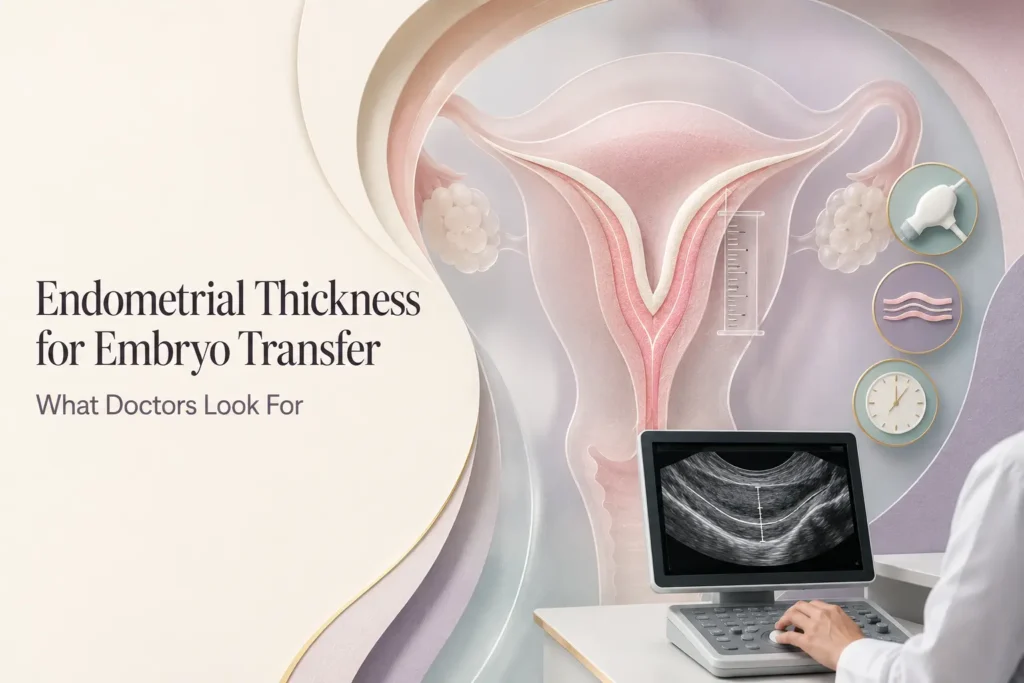
Table Of Content
- Why Is Endometrial Thickness Important in IVF?
- How Is Endometrial Thickness Measured Before Embryo Transfer?
- What Is the Ideal Endometrial Thickness for Embryo Transfer?
- What Does a Good Embryo Transfer Lining Look Like?
- What Happens If the Endometrial Lining Is Thin?
- How Do Doctors Prepare the Endometrium Before Frozen Embryo Transfer?
- Can Embryo Transfer Happen With a Thin Lining?
- Factors That Can Affect Endometrial Thickness
- Does Thicker Endometrium Always Mean Better IVF Results?
- What Should You Ask Your Fertility Doctor About Your Lining?
- Final Thoughts
